



Our Cities Are Getting Hotter
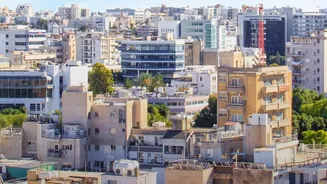
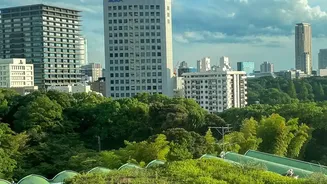
Walk through any major Indian city in May, and you can feel the heat radiating from the concrete and asphalt. This is the urban heat island effect, a phenomenon where cities become significantly warmer than surrounding rural areas. Dark roofs, roads,
and dense construction absorb and trap the sun’s energy, raising temperatures, increasing air pollution, and putting immense strain on our power grid as millions of air conditioners switch on. This cycle not only drives up electricity bills but also makes life increasingly uncomfortable and unhealthy, especially for the most vulnerable.
More Than Just a Coat of White
The idea of painting a roof white to reflect sunlight is not new. It's a simple, effective form of 'passive cooling'—a way to cool a space without using energy. Traditional white paints, however, have their limits. While they reflect most visible light, they still absorb invisible ultraviolet (UV) and near-infrared radiation, which are major sources of heat. Commercial heat-rejecting paints typically reflect only 80-90% of sunlight and can't cool a surface below the surrounding air temperature. The latest breakthroughs go far beyond a simple colour choice, introducing new science to achieve what was once thought impossible.
The Science of 'Super-White' and 'Sweating' Paint
The game-changer is a new class of paints engineered for 'passive daytime radiative cooling' (PDRC). One of the most significant breakthroughs comes from Purdue University, where researchers developed an ultra-white paint that reflects a record 98.1% of sunlight. Its secret lies in a high concentration of a chemical compound called barium sulfate, the same material used in photo paper. The particles are of various sizes, allowing the paint to scatter almost the entire solar spectrum. Crucially, it also radiates heat away from the surface at a specific infrared wavelength that passes directly through the atmosphere and into deep space. This allows a painted surface to become cooler than the surrounding air, even in direct sunlight. Other innovations are inspired by nature itself. Researchers in Singapore have developed a cement-based paint that mimics how humans sweat. Its porous structure holds water, which then evaporates to provide an active cooling effect, a process that works particularly well in humid climates where radiative paints can be less effective.
From Rooftops to Lower Bills
The real-world impact of these innovations is staggering. A roof coated in Purdue's ultra-white paint can stay more than 10 degrees Celsius cooler than its surroundings. This drastically reduces the amount of heat transferred into the home, with studies showing it can lower indoor temperatures by 2-5°C. For a household, this means significantly less reliance on air conditioners and fans. Researchers estimate that painting a 1,000-square-foot roof could provide a cooling power of 10 kilowatts, more powerful than the central AC in most houses. In cities like Hyderabad, cool roofs have already led to energy savings of 13-22 kWh per square metre annually, translating into substantial cuts in electricity bills.
Painting a Cooler Future for India
The widespread adoption of these advanced paints could be transformative for India. By reducing the need for air conditioning, they lower both household expenses and the immense strain on the national power grid during peak summer months. Furthermore, applying these coatings on a large scale—on rooftops, roads, and other surfaces—can help mitigate the urban heat island effect, cooling entire neighbourhoods. Initiatives are already underway. Telangana, for instance, has set a target to cover 300 square kilometres with cool roofs by 2028. While challenges like cost and ensuring long-term durability remain, the path is clear. These are not just cans of paint; they are a scalable, affordable, and powerful tool in building more sustainable and liveable cities for a warmer future.