
A New Digital Moon Map
NASA, in a long-standing collaboration with IBM, recently launched the NASA-IBM Lunar Foundation Model. This isn't just another map; it's a sophisticated AI designed specifically to help scientists make sense of the mountains of data we have about our
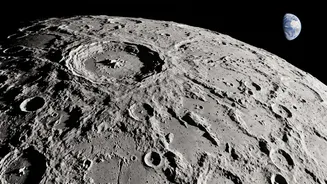
celestial neighbour. Over decades, missions like the Lunar Reconnaissance Orbiter (LRO) have beamed back petabytes of information—more data than all other NASA planetary missions combined. Sifting through this manually is an immense task. This new AI model acts as a powerful analysis tool, trained on vast, unlabeled datasets to recognize patterns and features across the entire lunar surface with unprecedented speed and efficiency.
From Data Overload to Actionable Insights
The key innovation of the Lunar Foundation Model is its ability to synthesize information from many different sources. Past missions used a variety of sensors—high-resolution cameras, laser altimeters, and spectrometers—creating a massive but disjointed picture of the Moon. This AI model pieces together these multimodal, multiresolution data streams into a cohesive and detailed whole. Instead of researchers needing to build specialized algorithms for each specific task, they can now use this pre-trained "foundation model" and quickly fine-tune it for their needs. It's an open-source tool, available on platforms like Hugging Face, allowing scientists worldwide to adapt it for their own research.
Finding Safe Harbors and Precious Resources
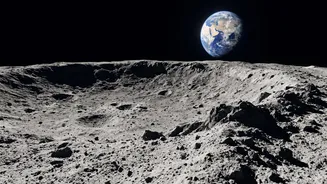
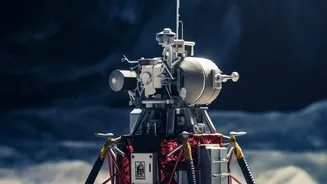
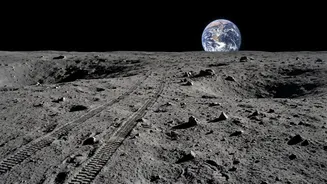
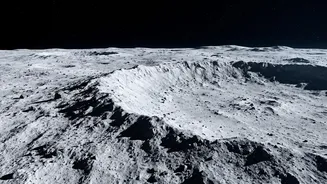
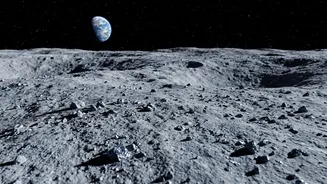
One of the most critical tasks for the upcoming Artemis missions is selecting safe landing zones. The lunar surface, especially near the poles, is riddled with craters, boulders, and steep slopes that pose a significant risk to landers and astronauts. The AI model excels at rapidly and accurately mapping these hazards. In benchmark tests, it outperformed previous models by a significant margin in identifying craters and other surface features. Beyond safety, the AI is a crucial tool in the search for resources, particularly water ice. This ice is believed to be trapped in permanently shadowed regions near the poles—areas that are incredibly cold and difficult to observe. By analyzing temperature and reflectance data, the AI can help pinpoint where ice is most likely to be found, both on and below the surface. This is vital, as water can provide drinking water, breathable oxygen, and even be converted into rocket fuel for future missions to Mars.
Illuminating the Moon's Mysteries
The model's applications extend beyond mission logistics into fundamental science. By automating crater counts, the AI helps scientists more accurately date different parts of the lunar surface, piecing together the history of impacts in our solar system. It can also identify rare and unusual geological features, such as irregular mare patches, which are strange-looking volcanic formations that challenge existing theories about how long the Moon remained geologically active. By spotting these features more easily, scientists can gain a clearer understanding of the Moon’s thermal evolution. The AI essentially acts as a tireless digital assistant, flagging anomalies and points of interest that might otherwise be missed in the sheer volume of data, thereby accelerating the pace of new discoveries.
A Blueprint for Exploring New Worlds
This lunar AI is more than just a tool for one mission; it’s a template for the future of space exploration. The same principles of using a foundation model trained on vast datasets can be applied to other celestial bodies, like Mars. As NASA and its partners push farther into the solar system, the ability to quickly map and understand new environments will be essential. AI-driven systems can enhance autonomous navigation, allowing spacecraft to make real-time decisions to avoid hazards without waiting for commands from a distant Earth. This reduces mission risk, lowers costs, and enables a more sustainable and ambitious program of exploration. By making complex data more accessible and useful, this technology is paving the way for humanity to not just visit, but to one day live and work on other worlds.