



Visby: The Walled City of Roses and Ruins
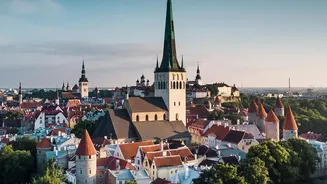
On the island of Gotland, the Hanseatic town of Visby stands as one of Northern Europe's best-preserved medieval cities. A UNESCO World Heritage site, its most striking feature is the magnificent 3.4-kilometre stone wall that encircles the old town, complete
with defensive towers dating back to the 13th century. Once a dominant trading hub in the Baltic Sea, Visby's former wealth is evident in the ruins of numerous grand churches that dot the landscape, their high arches now open to the sky. Wandering the narrow, winding streets reveals a town nicknamed 'the city of roses and ruins', where colourful flowers bloom against ancient stone walls and historic merchant houses. Despite its dramatic history, which includes Viking beginnings and a brutal Danish conquest in 1361, today's Visby offers a captivating and surprisingly peaceful glimpse into a powerful past.
Sigtuna: The First Town of Sweden
Nestled on the shores of Lake Mälaren, Sigtuna holds the unique title of Sweden's very first town, founded around 980 AD by the Viking king Erik the Victorious. Its main street, Stora Gatan, is believed to follow the same path it did over a thousand years ago. This small town is remarkably rich in history, boasting more runestones than anywhere else in the world, many of which can still be seen today. Sigtuna was established as Sweden's first Christian town, and the atmospheric ruins of its early stone churches—St. Peter's, St. Lawrence's, and St. Olof's—tell the story of its religious importance. A stroll through town will also lead you to Sweden's smallest town hall, a charming 18th-century building that adds to the village's intimate feel.
Lund: The Ancient Center of Learning
Lund, Sweden's second oldest town, is a vibrant city where medieval history and academic life have been intertwined for centuries. Its skyline is dominated by the magnificent Lund Cathedral, a Romanesque masterpiece consecrated in 1145 that was once the seat of the archbishop for all of Scandinavia. The area around the cathedral retains its medieval street plan, inviting exploration of its historic corners. The city is also home to Lund University, founded in 1666, with many of its historic buildings clustered in the central Lundagård park. This blend of ancient religious authority and esteemed academia gives Lund a unique atmosphere, where centuries-old stone buildings house both sacred spaces and lively student cafes, creating a seamless link between the past and present.
Ystad: The Coastal Town of Half-Timbered Houses
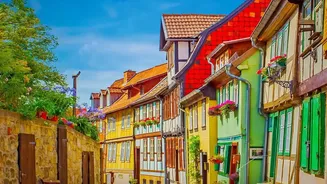
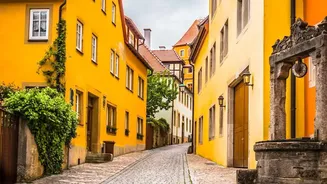
Located on the southern coast of Skåne, Ystad feels like a storybook illustration come to life. The town is famous for its hundreds of well-preserved half-timbered houses, lining cobblestone streets that have remained largely unchanged since the Middle Ages. Walking through Ystad's old town is a journey into the past, with pastel-coloured buildings and quiet courtyards at every turn. Key historical sites include the imposing St. Mary's Church (Mariakyrkan), which has stood for nearly 800 years, and the Greyfriars Abbey, one of Sweden's best-preserved medieval monasteries, founded in 1267. This charming coastal town combines its rich architectural heritage with the fresh sea air of the Baltic, creating a tranquil and picturesque destination.
Vadstena: The Spiritual Heart on the Lake
On the serene shores of Lake Vättern lies Vadstena, a town defined by its spiritual legacy and imposing historical landmarks. Its history is inextricably linked to Saint Bridget of Sweden, who founded the Bridgettine Order here in the 14th century. The magnificent Vadstena Abbey Church, consecrated in 1430, was built according to her visions and became a major pilgrimage destination. The town is also home to Vadstena Castle, a formidable Renaissance fortress built by King Gustav Vasa in the 16th century. For centuries, Vadstena was the spiritual and cultural centre of Sweden, housing a double monastery for both monks and nuns that was renowned for its library and scholarly work. Its quiet streets and lakeside setting still evoke a profound sense of peace and history, inviting reflection and exploration.