




The Next Great Leap for India
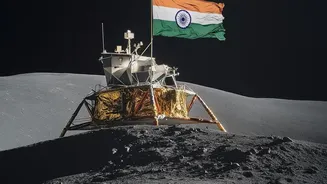
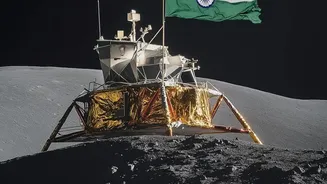
Chandrayaan-4 is not just another Moon mission; it represents a monumental leap in India's space exploration capabilities. While Chandrayaan-3 successfully placed a lander and rover on the lunar surface to conduct experiments there, Chandrayaan-4 is designed
to perform a round trip. The primary objective is to soft-land on the Moon, collect samples of lunar soil and rock (known as regolith), and return them safely to Earth for detailed scientific analysis. If successful, India will join an exclusive club of nations — the United States, the former Soviet Union, and China — that have accomplished this feat. The mission is a clear indicator of India's growing confidence and technical prowess on the global space stage.
A Mission of Unprecedented Complexity
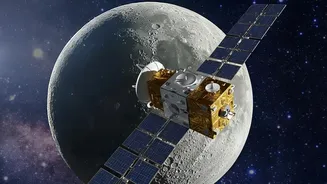
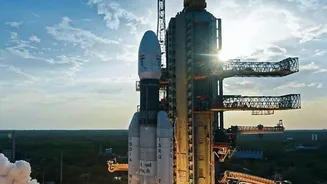
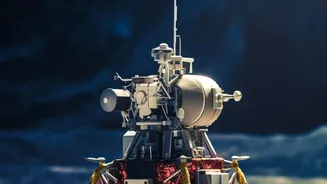
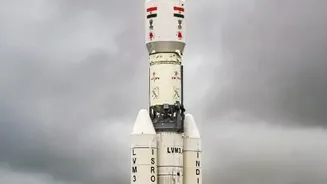
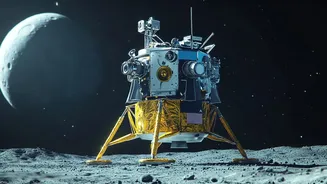
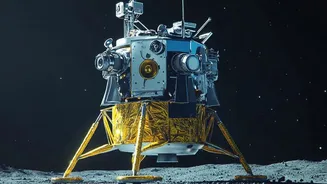
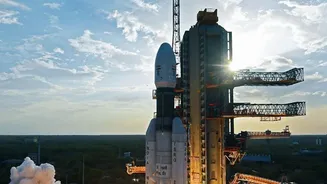
Bringing Moon rocks home is exponentially more difficult than just landing there. ISRO Chairman S. Somanath has described the mission as 'extremely challenging'. The plan requires five different spacecraft modules working in perfect harmony. Due to the substantial weight, the mission will necessitate two separate launches using India's heaviest rocket, the LVM3. The modules include a Descender for landing, an Ascender to lift off from the Moon, a Transfer Module to journey between lunar and Earth orbit, and a Re-entry Module to bring the precious cargo through our atmosphere. This intricate sequence of operations involves several technologies India has never attempted in a single mission, including launching from another celestial body and automated docking in lunar orbit.
How Will It Work?
The mission is a multi-stage cosmic ballet. First, the modules will be launched into Earth's orbit and dock together before proceeding to the Moon. Once in lunar orbit, the lander and ascender will separate and descend to the surface, targeting the geologically rich southern polar region. On the ground, a robotic arm and a drill will collect surface and sub-surface samples, expected to weigh around 2-3 kilograms. These samples will be sealed in a container inside the Ascender module. The Ascender will then launch from the Moon — a critical first for India — and rendezvous with the Transfer and Re-entry modules waiting in orbit. After another automated docking and sample transfer, the Re-entry module will begin its journey home, ultimately performing a high-speed entry into Earth's atmosphere to deliver its unique scientific payload.
The Scientific Goldmine in Lunar Soil
Why go through all this trouble for a few kilograms of soil? Because lunar samples studied in labs on Earth can reveal secrets that rovers and orbiters cannot. Instruments on Earth are far more powerful and sophisticated than anything that can be packed onto a spacecraft. Scientists can analyze the returned regolith with advanced equipment to understand the origin and evolution of the Moon, Earth, and our solar system. The samples brought back by the Apollo missions over 50 years ago are still yielding new discoveries today. By collecting samples from the relatively unexplored south pole, which may contain water ice, Chandrayaan-4 could provide groundbreaking insights into lunar resources and the history of water in the inner solar system.
Timeline and India's Future in Space
ISRO is currently targeting a launch for Chandrayaan-4 around 2028. The designs for the mission have been completed, and it received official approval from the Union Cabinet in September 2024. Key technologies, like the crucial in-space docking capability, have already been successfully demonstrated with the SPADEX mission in 2025, paving the way for Chandrayaan-4. This mission is more than just a scientific endeavour; it's a vital stepping stone. The technologies and experience gained from launching from the Moon and returning to Earth are foundational for India's long-term goal of sending astronauts to the lunar surface by 2040, as envisioned by Prime Minister Narendra Modi.