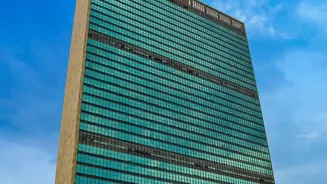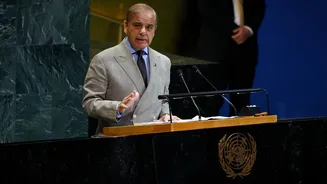





The Process on Paper
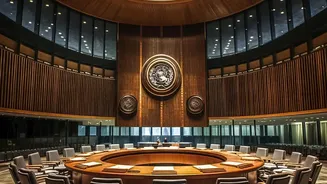
Officially, the selection process is straightforward. According to Article 97 of the UN Charter, the Secretary-General is appointed by the 193-member General Assembly upon the recommendation of the 15-member Security Council. For decades, this meant the General Assembly's
role was largely to rubber-stamp the single candidate presented to them by the Council. While recent reforms have introduced more transparency, such as public dialogues where candidates present their vision, the core power dynamic remains. To be recommended, a candidate must secure at least nine votes in the Security Council and, crucially, no vetoes from any of its five permanent members (P5): China, France, Russia, the United Kingdom, and the United States.
The Real Game: Straw Polls
The real selection happens not in public but through a series of informal, secret ballots within the Security Council known as straw polls. In these polls, each of the 15 council members casts a vote for every official candidate, choosing between 'encourage,' 'discourage,' or 'no opinion'. The results, while officially confidential, are almost always leaked, giving a clear indication of which candidates are viable and which are not. These polls serve to progressively narrow the field, as candidates who consistently receive high numbers of 'discourage' votes are expected to withdraw from the race. It's a filtering mechanism designed to gauge support and build consensus before a formal, binding vote is ever held.
The Power of the Veto
The most critical stage of the straw poll process comes when the ballots become colour-coded. The five permanent members use ballots of a different colour than the ten elected members. This simple change reveals a vital piece of information: a 'discourage' vote on a coloured ballot signals a potential veto. Since a formal veto from a P5 member automatically kills a candidacy, even the threat of one in a straw poll is usually enough to end a campaign. This gives the P5 enormous influence, allowing them to eliminate candidates they find objectionable without ever having to cast a public, formal veto. The process continues until a candidate emerges who has at least nine 'encourage' votes and no 'discourage' votes from the permanent five.
A Process Shrouded in Secrecy
This system has long faced criticism for its opacity and for concentrating power in the hands of just five countries. For most of the UN's history, the selection was conducted almost entirely behind closed doors. Critics argue that this secrecy and the veto power of the P5 can lead to the selection of a 'lowest common denominator' candidate—someone who is not necessarily the most qualified but is simply the least objectionable to the world's major powers. The process has been compared to a papal conclave, a secretive affair where geopolitical interests often outweigh other considerations. This has led to persistent calls for reform from other member states and civil society organizations who desire a more democratic and accountable process.
The Push for Transparency
The 2016 selection process marked a significant shift towards greater openness, largely due to a 2015 General Assembly resolution. For the first time, there was a public list of candidates who submitted vision statements and participated in televised town hall-style dialogues with the wider UN membership and civil society. These reforms were intended to give the General Assembly a more meaningful role and make the process less of a P5-dominated affair. The current selection process to find a successor to António Guterres, whose term ends on December 31, 2026, has followed this more open template. However, as of late November 2026, a series of indecisive straw polls shows that despite the new transparency, the fundamental challenge remains: finding a candidate who can survive the private deliberations and veto threats within the Security Council.