


A Glimpse of Watery Origins
The most definitive breakthrough comes not from a fully formed planet, but from a stellar nursery where new worlds are born. In the PDS 70 system, located 370 light-years away, the Webb telescope detected a significant amount of water vapour in the inner
disk of gas and dust. This is precisely the region where rocky, Earth-like planets are expected to assemble. For years, astronomers were unsure if water could even survive the harsh radiation so close to a young star. This discovery is the first time water has been spotted in the terrestrial zone of a disk already known to host planets, suggesting that rocky worlds could have access to water from the very beginning of their formation. It’s a profound insight, implying that the raw materials for a habitable planet are not as rare as once feared and are available right where they are needed.
Reading an Alien Sky
So how does Webb see something as faint as water vapour from trillions of kilometres away? The technique is called transmission spectroscopy, and it is one of the telescope's signature capabilities. When an exoplanet passes in front of its host star from our perspective—an event called a transit—a tiny fraction of the starlight filters through the planet's atmosphere, if it has one. The gases and chemicals in that atmosphere absorb specific colours, or wavelengths, of light. By capturing the resulting spectrum, which is like a barcode of light, astronomers can identify the chemical fingerprints of molecules like water, methane, and carbon dioxide. For rocky planets, this is an immense challenge because their atmospheres are expected to be much thinner than those of gas giants. Webb's incredible sensitivity allows it to detect these minuscule dips in starlight, giving us our first real opportunity to probe the skies of these small, distant worlds.
The Search for an Atmosphere
Beyond planetary nurseries, Webb has turned its gaze to already formed rocky exoplanets, yielding intriguing, though more complex, results. On a super-Earth named GJ 486 b, a scorching hot world about 26 light-years away, the telescope detected a signal that was almost certainly from water. However, scientists are cautiously optimistic. The signal could be coming from the planet's atmosphere, which would be a historic first for a rocky world. But it's also possible the water signature originates from cool, watery spots on the surface of the host star itself. Similarly, observations of another lava world, 55 Cancri e, suggest it has a thick atmosphere, possibly rich in hydrogen and carbon monoxide, which is likely being constantly replenished by a global magma ocean. While not a breathable, Earth-like atmosphere, its mere existence would defy theories that such planets are too hot to retain any gaseous envelope at all.
Patience, Progress, and Perspective
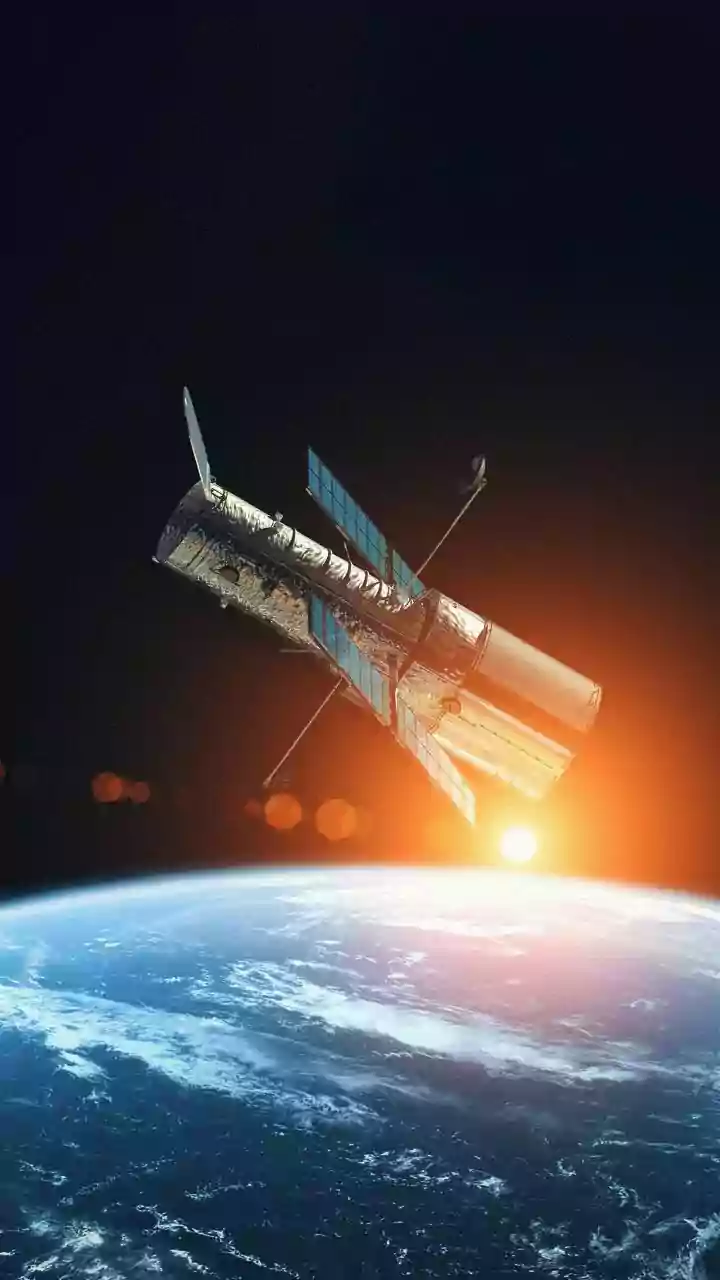
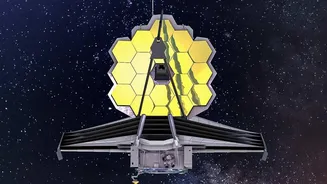
These findings are revolutionary, but it's crucial to place them in perspective. A definitive detection of an atmosphere on a rocky world remains just out of reach. The signals are faint, and a great deal of scientific rigour is needed to rule out alternative explanations like stellar contamination. Finding water vapour does not automatically mean a planet has liquid oceans or is habitable; GJ 486 b, for instance, has a surface temperature of around 430 degrees Celsius. What these early results represent is a monumental proof of concept. They show that the $10 billion James Webb Space Telescope is performing exactly as designed, opening a new frontier in astronomy. We are moving from simply discovering rocky planets to beginning to understand what they are actually like. Each observation, whether definitive or ambiguous, provides a critical piece of the puzzle and guides the next phase of the search.