
Why Indoor Plants Need Humidity
Most common houseplants are native to tropical regions where humidity is naturally high. Indoor environments, particularly those with heating or air conditioning, tend to have very dry air. This lack of moisture can cause frustrating issues for plant owners,
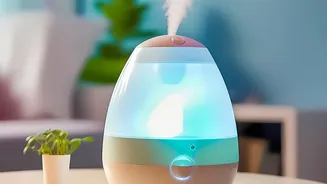
such as brown, crispy leaf tips, curling leaves, and a general failure to thrive, even when watering is perfect. While a room humidifier is an option, a pebble tray offers a low-tech, affordable, and targeted solution. It creates a small pocket of higher humidity right around the plant where it's needed most.
The Science of a Pebble Tray
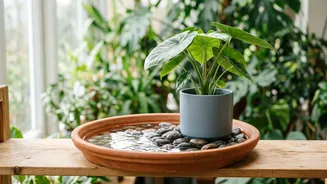
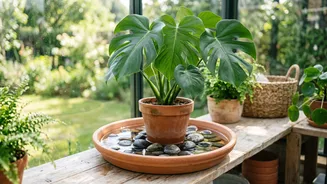
The concept is straightforward: it relies on simple evaporation. A shallow tray is filled with pebbles and water. A potted plant is then placed on top of the pebbles, ensuring the pot itself is not sitting in the water. As the water in the tray evaporates, it rises and creates a localized bubble of humid air around the plant's foliage. This mimics a more natural, moist environment, providing a consistent source of humidity that is often more stable than daily misting, which only offers a temporary boost. It's a gentle and effective way to increase moisture without waterlogging the soil and causing root rot.
A Step-by-Step Guide to Making Your Tray
Creating your own humidity tray is an easy and rewarding project. First, select a waterproof tray or saucer that is at least a few inches wider than the base of your plant's pot; the wider the tray, the greater the surface area for evaporation. Boot trays or large serving dishes work well for grouping multiple plants. Next, fill the tray with a layer of pebbles or gravel, about an inch deep. Rinse the pebbles before use to remove any dust. Pour water into the tray until the level is just below the top of the pebbles. Finally, place your potted plant securely on top of the pebbles. The crucial part is to make sure the bottom of the pot and its drainage holes are above the water line to prevent the roots from becoming saturated.
Choosing the Right Materials
The beauty of a pebble tray is its simplicity and adaptability. You can use garden pebbles, decorative river rocks, gravel, or even glass beads. Some people prefer using lightweight expanded clay aggregate (LECA), as its porous nature allows it to absorb and then slowly release water, potentially enhancing the effect. The choice of pebbles can also be an aesthetic one; polished white stones offer a clean, modern look, while natural river rocks provide a more rustic feel. The tray itself just needs to be waterproof. A simple ceramic plant saucer, a baking dish, or a plastic tray will all work perfectly.
Maintenance and Best Practices
A pebble tray is low-maintenance, but not zero-maintenance. You'll need to top up the water every few days as it evaporates. To prevent the growth of algae or the buildup of mineral deposits from hard water, it's a good practice to clean the tray and the pebbles every few weeks. Simply empty the tray, give the pebbles and the tray a good rinse, and reassemble. For a deeper clean, a soak in a diluted vinegar solution can help remove stubborn mineral crusts, but be sure to rinse thoroughly before reusing. Regular cleaning also prevents stagnant water from becoming a breeding ground for insects.
Plants That Love Humidity Trays
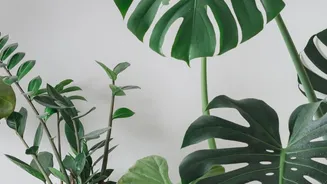
While most houseplants benefit from a little extra humidity, some crave it more than others. Tropical plants with thin leaves are prime candidates. This includes ferns (like Boston and maidenhair ferns), Calatheas, Marantas (prayer plants), Alocasias, and Spathiphyllum (peace lilies). Orchids, begonias, and many types of Philodendron and Monstera also thrive with the added moisture a pebble tray provides. On the other hand, plants adapted to arid conditions, such as succulents and cacti, do not need and should not be placed on a humidity tray.