






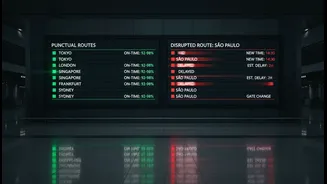


The Official Punctuality Scorecard
Each month, the Directorate General of Civil Aviation (DGCA) releases On-Time Performance (OTP) data for scheduled domestic airlines. This report has become the go-to metric for judging which carriers are most reliable. According to the DGCA, a flight
is considered 'on-time' if it departs from the airport gate within 15 minutes of its scheduled time. This data is tracked at India's major metro airports, which handle the bulk of national air traffic. Based on recent data from 2026, airlines like IndiGo and Akasa Air consistently top these charts, often with OTP scores above 80%. This means more than eight out of every ten of their flights pushed back from the gate on schedule. For a traveller trying to choose between airlines, picking the one with the highest score seems like a straightforward decision.
Why the #1 Rank Doesn't Guarantee Your Flight Is on Time
Here's the catch: an airline's 85% OTP score is an average across thousands of flights. It also means that 15% of their flights were late. The data provides a great overview of an airline's general operational efficiency, but it cannot predict the outcome for your specific journey on a particular day. Punctuality is not just about the airline; it's a complex interplay of many factors. The system-wide average doesn't account for the unique circumstances of a specific route, time of day, or the season you're flying in. Relying solely on the headline number is like judging a student's performance in all subjects based on their average score — you miss the important details.
The Domino Effect of Delays
Aviation is a tightly linked network where one small issue can cause a cascade of disruptions. The most common reason for a flight being delayed is that the incoming aircraft is late. Airlines operate on tight schedules, using the same aircraft for multiple flights a day. A delay on a morning flight from Delhi to Mumbai can mean that the aircraft's subsequent journeys from Mumbai to Bengaluru and then to Chennai are also pushed back. This is known as a reactionary delay. Other significant factors are entirely outside an airline's control. Bad weather, such as dense fog in northern India during winter or heavy monsoon rains, can shut down airport operations for hours. Air Traffic Control (ATC) congestion at busy hubs like Mumbai and Delhi is another major culprit, forcing planes to wait for takeoff or landing slots.
Reading Between the Lines of OTP
The official DGCA data focuses on departure times. A flight is 'on-time' when it pushes back from the gate, but this doesn't guarantee an immediate takeoff. Passengers have often experienced sitting on the tarmac for an extended period after the doors have closed, waiting for ATC clearance. Furthermore, some airlines are known to 'pad' their schedules. This involves building extra time into the published flight duration to create a buffer against potential delays. A flight from Delhi to Mumbai might only take one hour and forty minutes in the air, but the airline schedules it for two and a half hours. This makes it much easier for them to record an 'on-time' arrival, even if there was a minor delay. This practice can make comparing schedules between different airlines misleading.
How to Be a Smarter Flyer
Instead of just looking at the latest monthly OTP winner, use the data as a tool to inform your choice. Look for consistent performance over several months rather than a single good month. Early morning flights are generally more punctual as they are less likely to be affected by reactionary delays from earlier in the day. Consider the airport as well; some, like Chennai, have recently shown better on-time records than more congested hubs. During fog or monsoon season, anticipate potential disruptions and choose airlines that have historically managed these conditions better or have a better cancellation record. Ultimately, punctuality data is about managing expectations. It helps you make an educated guess, but in the unpredictable world of air travel, a flexible attitude and a backup plan are just as important.