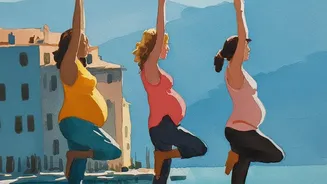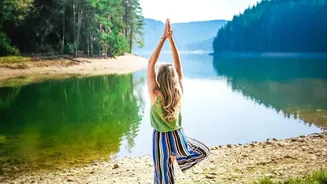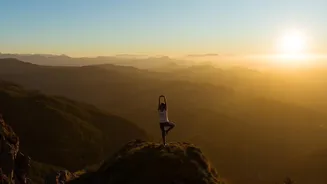


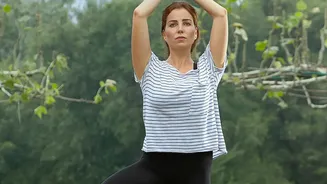
Vrikshasana, or Tree Pose, is a foundational yoga posture that symbolises balance and grace. This guide will help you find your roots, offering simple adjustments to build strength and confidence, no matter your starting point.
The Foundation: Understanding Tree Pose
Tree Pose, or Vrikshasana
in Sanskrit, is a standing balance pose that strengthens the legs, improves focus, and calms the mind. It mirrors the qualities of a tree: grounded through the standing leg (the roots), strong and stable through the core (the trunk), and expansive through the arms (the branches). The primary benefits include enhancing balance and coordination, strengthening ankles and feet, and building core stability. Before you begin, find a spot where you can focus your gaze on a non-moving point, known as a 'drishti', to help maintain your balance. The key to a successful Tree Pose isn't perfection, but presence and steady breathing.
Variation 1: Find Support at the Wall
If you're new to balancing poses or feel unsteady, the wall is your best friend. Using support allows your body to learn the alignment without the fear of falling. Stand with one side of your body next to a wall. Shift your weight to the foot farther from the wall. Bend your other knee and begin by placing the sole of your lifted foot against your inner ankle, keeping your toes on the floor like a kickstand. Rest one hand lightly on the wall for support. Focus on keeping the standing leg strong and your hips level. Hold for 5-8 breaths, then switch sides. This variation builds confidence and muscle memory safely.
Variation 2: The Kickstand or 'Low Branch'
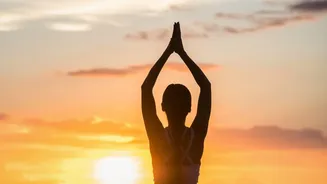
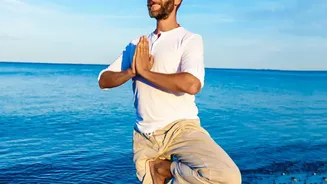
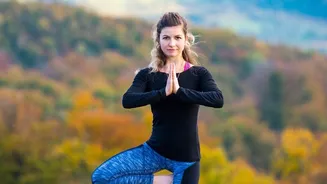
Once you feel more stable with wall support, you can move to the centre of your mat. The 'low branch' or kickstand variation offers a great entry point into the pose. Start in Mountain Pose (Tadasana), standing tall with your weight distributed evenly. Shift your weight onto your left foot. Then, bend your right knee and place the sole of your right foot on the inside of your left ankle, with your right toes resting lightly on the floor. This provides a small point of contact that greatly aids balance. Bring your hands to a prayer position at your heart. Focus on lengthening your spine and keeping your core engaged.
Variation 3: Growing to the Calf or 'Medium Branch'
When you're ready to lift your foot completely off the floor, the next step is the calf. From your starting position, shift your weight to one leg. Lift the opposite foot and place its sole firmly against the inner calf of your standing leg. A crucial safety rule in all Tree Pose variations is to never place your foot directly on the side of your knee joint. The knee is not designed to handle lateral pressure, and doing so can risk injury. Press your foot into your calf and your calf back into your foot to create a stable connection. Keep your hips facing forward and continue to use your drishti to maintain focus.
Variation 4: The Classic 'High Branch' Pose
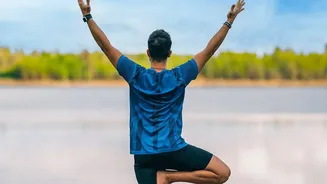
The full expression of Vrikshasana involves placing the foot on the inner thigh. This requires more hip flexibility and balance. After grounding through your standing leg, use your hand to guide your lifted foot to your inner thigh, as high up as is comfortable. Actively press the foot and thigh against each other to create stability. Your hips should remain square to the front. From here, you can keep your hands at your heart or extend them overhead like branches, which further challenges your balance and opens the chest. Remember to breathe deeply and steadily. If you wobble, that's perfectly normal; it's your body learning to find its centre.
Common Mistakes to Avoid
To get the most out of your practice and stay safe, be mindful of a few common misalignments. The most important is to avoid placing your foot directly on your knee. Always position it above or below the joint. Another common habit is to let the hip of the bent-knee leg lift up; focus on keeping both hips level to avoid straining your lower back. Also, avoid holding your breath. A steady, rhythmic breath is essential for maintaining balance and calm. Finally, don't lock the knee of your standing leg. Keep a micro-bend in the joint to protect it and engage the leg muscles properly.