








What Are These 'AI Agents' Anyway?
The term 'AI agent' sounds like something from a sci-fi movie, but the concept is becoming a reality in the apps we use daily. Think of them as smart assistants that can understand what you want and take action on your behalf. Unlike a simple chatbot
that answers questions, an AI agent can perform tasks, like booking a ride, ordering your favorite pizza, or even planning a multi-day vacation. The idea is to move beyond tapping buttons and instead have a conversation with your app, telling it your needs in plain language. These agents are designed to handle more complex, multi-step requests that are currently cumbersome to manage manually.
The Reality of Early Adoption
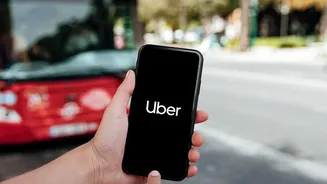
Despite the hype, the initial uptake of these AI agents has been surprisingly low. Recent earnings calls revealed that the number of transactions made through AI agents is minuscule compared to the millions of daily orders and bookings on these platforms. In one week around Halloween, Uber recorded only four rides and about 500 Uber Eats orders placed by AI agents, out of a staggering 320 million total trips. Similarly, DoorDash reported just 'several hundred orders in total' via agents, and Airbnb called agent-driven bookings 'very non-material'. The primary reason is simple: booking a ride or ordering food is already incredibly fast, often taking less than 90 seconds. For many users, telling an AI agent what to do seems like more work than just using the app itself.
Uber and DoorDash: Automating Simple Tasks
For Uber and DoorDash, the core argument for AI agents isn't necessarily about speeding up a single, simple order. Instead, they are positioning their AI to handle more nuanced or repetitive tasks. DoorDash, for example, has been testing a text-to-order feature that lets users place orders via text message, with the AI understanding prompts like 'order my usual'. This bypasses the app entirely. Uber Eats is using AI to help customers build shopping carts from handwritten grocery lists or recipe screenshots, a feature that has resulted in larger basket sizes. Both companies see a future where AI handles complex group orders with multiple dietary needs or helps users discover new restaurants based on conversational queries, a task that goes beyond simple keyword searches. There is also a significant business incentive in using AI to automate restaurant-facing communications and phone orders, reducing operational costs.
Airbnb's Vision: The AI Trip Planner
Airbnb's approach to AI agents is different, focusing on the complex and often aspirational nature of travel planning. The company acknowledges that users enjoy the process of discovering places to stay. A quick, automated booking isn't the goal. Instead, Airbnb plans to roll out its own proprietary AI agent in 2027, designed to act as a comprehensive trip planner. This agent will go beyond simple booking, helping users discover destinations, compare properties with dynamic interfaces using maps and photos, and plan entire itineraries. Because Airbnb controls the entire ecosystem from booking to payment and support, its agent could also handle reservation changes, payment issues, and rebooking, offering a deeper level of integration than third-party agents can provide.
Is It Better, or Just Different?
The headline's question remains: is this making things better? Right now, the data says no, at least not for the simple, one-off tasks these apps were built for. Users have expressed concerns about trust, particularly when it comes to giving an AI agent access to their credit card details and personal data. However, the companies themselves aren't using AI to simply replace a button press. They are building their own tools to solve more complex user problems and to create a strategic moat. By developing proprietary AI, they can control the user experience, maintain their customer relationships, and prevent third-party general AI agents from turning their platforms into mere fulfillment layers. The goal isn't just to be faster, but to become more intuitive, personalized, and capable of handling requests that are currently too complicated for an app interface.