






Echoes from the Deep
A renewed push to uncover Tamil Nadu's submerged past is currently underway, focused on the legendary port city of Poompuhar. Known in Sangam literature as Kaveripoompattinam, this ancient Chola capital was a bustling hub of maritime trade. After a gap
of more than two decades, the Tamil Nadu State Department of Archaeology (TNSDA), in collaboration with the Indian Maritime University, has launched a new phase of underwater exploration. The survey, which began in late 2025, aims to trace, map, and identify potential archaeological remains that literary sources and local traditions say were lost to the sea. This initiative follows previous explorations in the area, including those in the 1980s and 1990s which found evidence of man-made structures like brick walls and stone masonry.
The Eyes Beneath the Waves
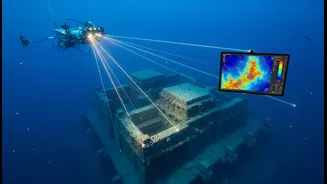
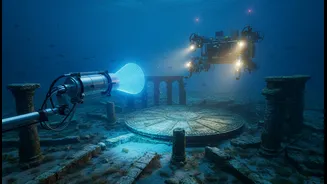
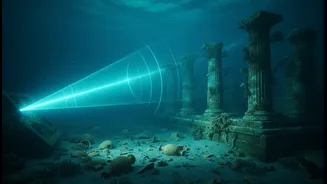
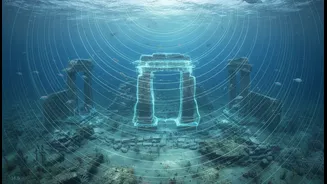
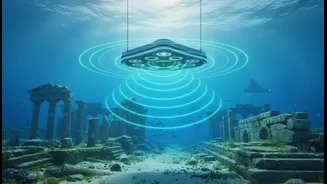
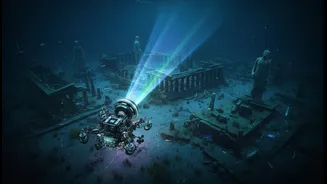
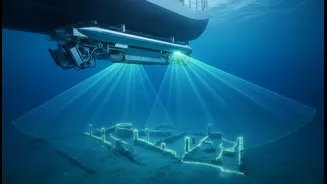
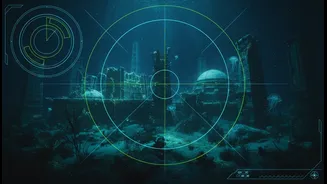
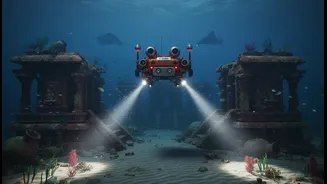
This modern quest relies on technology that allows scientists to see through the murky depths without disturbing the seabed. The team is using a suite of advanced sonar tools, including side-scan sonar, multibeam echosounders, and sub-bottom profilers. In simple terms, these instruments send out sound pulses and measure the returning echoes. Side-scan sonar creates a detailed image of the seafloor's surface, revealing shapes that could be man-made, while sub-bottom profilers can detect structures buried beneath layers of sediment. To get a closer look at any anomalies they find, the archaeologists deploy a Remotely Operated Vehicle (ROV), a small, unmanned submarine equipped with high-resolution cameras that can navigate challenging underwater environments and provide visual confirmation of potential discoveries.
In Search of a Lost Port
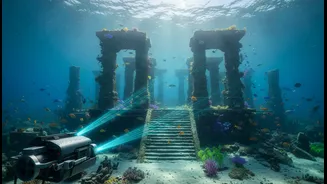
The primary focus is Poompuhar, a city celebrated in the epic 'Silappathikaram' as a place of immense wealth and architectural grandeur before it was claimed by the ocean. Over the years, explorations have revealed tantalising clues. In the 1990s, the National Institute of Oceanography (NIO) found evidence of circular wells and brick structures consistent with Sangam-era architecture. The current survey aims to build on these earlier findings, re-visiting locations identified decades ago by pioneering archaeologist S.R. Rao and expanding the search area. The goal is to systematically map these submerged landscapes to understand the port's layout and scale. While the mythical continent of Kumari Kandam remains a powerful cultural legend in Tamil literature, the scientific focus is on verifiable historical sites like Poompuhar that are known to have existed.
What the Scans Could Reveal
The first phase of the latest survey, completed in late 2025, involved divers and technicians surveying the seabed up to a depth of 23 metres. Data from the sonar scans are now being meticulously analysed to distinguish between natural rock formations and man-made structures. The presence of dressed stone blocks, grid-like patterns, or remnants of walls could confirm the extent of the submerged city. Previous explorations in the wider region, including off Mahabalipuram, have already confirmed the existence of submerged temple remains from the Pallava period. The discoveries at Poompuhar could push the timeline of significant coastal settlements in the region back even further, offering concrete evidence to support the vivid descriptions found in ancient Tamil texts.
The Future of Underwater History
The work off the Tamil Nadu coast is part of a larger national effort to explore India's vast underwater heritage. The National Institute of Ocean Technology (NIOT), based in Chennai, is at the forefront of developing the indigenous technology required for these deep-sea missions. This includes not only ROVs but also a manned submersible named 'Matsya 6000', part of the Deep Ocean Mission, which will eventually allow archaeologists to physically visit these deep sites. NIOT has even floated the idea of future deep-sea tourism, where a larger submersible could one day take visitors to see submerged wonders like Poompuhar and Dwaraka firsthand. But for now, the patient work of scanning the seabed continues, promising to bring India's lost coastal history back to the surface, one sonar pulse at a time.