





The Pan-Indian Classic: Sabudana Khichdi
Sabudana, or tapioca pearls, are a fasting staple, and Sabudana Khichdi is its most beloved form. While popular across much of North and West India, regional variations tell a story of local tastes. In Maharashtra, the khichdi is a fluffy preparation
where non-sticky sago pearls are tossed with roasted peanuts, green chillies, and potatoes. In Gujarat, a hint of sugar is often added for a subtle sweet and sour flavour. This single dish, with its many textures and tastes, demonstrates how a simple ingredient is adapted to suit different palates, making it a unifying yet diverse fasting food.
The Northern Powerhouse: Kuttu and Singhara
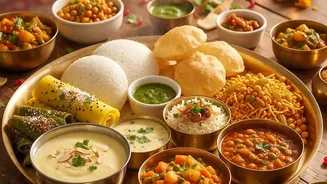
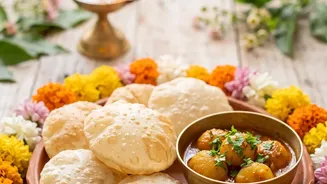
In North India, the fast is often defined by specific flours, primarily Kuttu (buckwheat) and Singhara (water chestnut). These pseudo-grains are used to make everything from crispy puris and parathas to savoury cheelas (pancakes). A typical North Indian vrat thali might feature Kuttu ki Puri served with a simple, fragrant potato curry made without onion or garlic, seasoned with rock salt (sendha namak). This combination is hearty, flavourful, and provides the energy needed during the nine days of devotion, reflecting a culinary tradition deeply rooted in Sattvic principles.
The Gujarati Faral Experience
In Gujarat, fasting food, known as 'Farali,' is a cuisine in its own right. The creativity is boundless, showcasing a mastery of textures and flavours. A standout is the Farali Pattice, a crispy potato casing filled with a sweet and spicy mixture of coconut and nuts. Another unique preparation is the Farali Handvo, a savoury steamed cake made from barnyard millet (Sama or Moriyo) and bottle gourd (lauki), with a crunchy sesame seed topping. These dishes highlight the Gujarati flair for turning simple, permitted ingredients into elaborate and satisfying snacks and meals.
The Humble Grain Alternative: Samak Ke Chawal
Barnyard millet, known as Samak ke Chawal or Bhagar, is the go-to substitute for rice during Navratri fasting. It's incredibly versatile and used across various regions. It can be prepared as a simple pulao, cooked with potatoes and peanuts for a light yet filling meal. It's also used to create porridge, upma, and even a type of dosa or idli, showcasing its adaptability. In some homes, it's used to make a creamy, comforting kheer. Its ability to mimic rice while adhering to fasting rules makes it an indispensable part of the Navratri pantry.
Sweet Endings: Makhana and Shakarkandi
No festive meal is complete without dessert, and Navratri fasting offers plenty of delightful options. Makhana (fox nuts) are roasted and simmered in milk to create a rich and creamy Makhana Kheer, a popular dessert in many parts of the country. Another favourite, particularly in Central India and Bihar, is Shakarkandi Kheer, where sweet potatoes are grated and cooked in milk with cardamom and saffron. These desserts are not only permissible but are also nourishing, providing a sweet and comforting end to a day of fasting.
A Glimpse of the South: Sundal and Tubers
While strict fasting is more common in the North and West, South Indian traditions during Navratri have their own unique culinary customs. In Tamil Nadu, the festival of Golu involves preparing a different 'sundal' each day. Sundal is a simple and nutritious dish made from legumes like chickpeas or peanuts, tempered with mustard seeds, coconut, and curry leaves, and offered as prasadam. In regions like Kerala, various yams and tubers, prepared as simple stir-fries, are consumed, reflecting a different interpretation of festive food that aligns with local produce and traditions.