







The Cloudy Conundrum
The primary challenge for monsoon stargazing isn't just the cloud cover. The entire atmosphere becomes less than ideal for peering into the cosmos. Increased humidity and atmospheric moisture scatter light, reducing the clarity and brightness of celestial
objects. This atmospheric instability, known in astronomy as poor 'seeing', can make even bright stars and planets appear to shimmer or blur, making detailed observation difficult. It’s a frustrating time for anyone with a telescope, as the very air seems to conspire against getting a sharp view of the heavens.
Patience and Strategic Planning
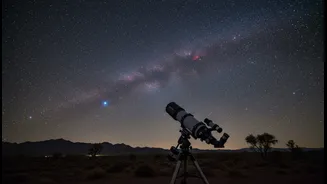
The key to stargazing during the monsoon is to become a master of patience and a keen weather watcher. The rain is not constant; there are often breaks. These brief windows of clear sky, sometimes lasting only an hour or two, are your golden opportunities. Modern weather apps that provide hourly cloud cover forecasts are invaluable. Apps like Astrospheric or Clear Outside can help you identify potential clear patches. Often, the best views come right after a spell of rain, as the downpour can scrub the air of dust and pollutants, leading to exceptionally transparent skies once the clouds part. Planning your session around these fleeting moments can yield surprisingly rewarding results.
Chase Clear Skies in Rain Shadows
If you are truly dedicated, the monsoon is the perfect time to explore India's rain-shadow regions. These are areas that receive significantly less rainfall because they are sheltered by mountain ranges. The undisputed champions for clear monsoon skies are high-altitude cold deserts like Spiti Valley in Himachal Pradesh and Hanle in Ladakh. Hanle, home to the Indian Astronomical Observatory, boasts some of the darkest and clearest skies in the world, with minimal rain even in July and August. Other, more accessible options include parts of the Deccan Plateau to the east of the Western Ghats, though the effect is less pronounced. A trip to these locations can turn a frustrating season into an unforgettable astronomical adventure.
Focus on Bright Targets
When the sky is hazy or only partially clear, hunting for faint nebulae or distant galaxies is a recipe for disappointment. Instead, adjust your targets. The monsoon is a great time to focus on the brightest objects in the sky. The Moon, even with some haze, is a spectacular sight through binoculars or a small telescope. Bright planets like Jupiter and Saturn are also powerful enough to shine through thin cloud cover. For instance, a conjunction of the Moon and Saturn is expected in the pre-dawn hours of early July 2026. Checking an astronomy calendar for events involving these brighter bodies can keep your hobby alive. The Perseid meteor shower, which peaks in mid-August, can also offer bright meteors that are visible during breaks in the clouds, and 2026 promises a new moon during its peak, ensuring perfect dark sky conditions when clear.
Bring the Cosmos Indoors
When the weather simply refuses to cooperate, you can still indulge your passion for the stars. Technology offers a fantastic alternative. Planetarium apps like Stellarium, SkySafari, or Star Walk 2 can turn your phone or computer into a window to the universe, allowing you to explore the sky in real-time, regardless of the clouds outside. Many of these apps have augmented reality (AR) features that let you point your phone at the (cloudy) sky to see what constellations are hidden behind. You can also follow live streams from major observatories around the world, which often host online viewing sessions during significant celestial events.
A Different Kind of Star Show
Another excellent monsoon option is to visit one of India's many impressive planetariums. These institutions offer a perfect escape, providing a guaranteed 'clear sky' and immersive shows that can be both educational and awe-inspiring. Major cities like Kolkata, Mumbai, Chennai, and Delhi have well-known planetariums. The M.P. Birla Planetarium in Kolkata is the largest in Asia, while the Nehru Planetarium in Mumbai is a hub for astronomical education. Many have been upgraded with advanced digital projection systems that create stunningly realistic displays of the cosmos, making a visit a fantastic way to keep your astronomical spirits high during the rainy season.