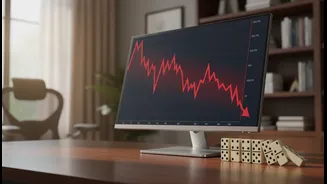








The Illusion of Flawless Code
The journey to deploying an automated trading strategy, often called a bot or agent, is paved with data. You've likely spent weeks, if not months, backtesting a clever idea against historical prices. Then, you moved to paper trading, a simulated environment
where your agent traded in real-time without risking a single rupee. The results were promising, perhaps even spectacular. It’s easy to fall into the trap of believing your code is nearly perfect and that live market profits are a foregone conclusion. This confidence, born from a sterile testing environment, is the first and most significant risk you face. Research shows that paper trading accounts can generate returns three to five times higher than live accounts. The reason isn't a sudden failure of the strategy's logic, but the harsh realities of the live market.
Why Real Money Changes Everything
The transition from simulated to live trading introduces factors that no backtest can fully replicate. The first is slippage. In paper trading, your orders are often filled instantly at the ideal price. In the real market, especially a volatile one, the price can move between the moment your agent issues an order and when it's actually executed. This small difference, or slippage, can erode profits over time. Then there’s latency, the tiny delay between a signal and the order being filled. More importantly, the psychological weight of risking real capital is immense. Watching a paper account experience a 10% drawdown is an academic exercise; watching your actual savings decrease by the same amount triggers fear and panic, emotions that can lead to overriding your own well-tested system at the worst possible moment.
How to Define Your Maximum Loss
Your maximum loss, or maximum drawdown, is the largest peak-to-trough decline your account will be allowed to suffer before you pull the plug. This number should not be arbitrary. It is the ultimate defence for your capital. For many professional traders, a maximum drawdown of 15-20% is a common, though strategy-dependent, red line. To set yours, consider three factors. First, your personal risk tolerance: how much can you lose without it affecting your financial stability or emotional well-being? Second, your strategy’s performance during testing. What was the worst drawdown it experienced historically? Your live limit should be informed by this, perhaps with a buffer. Third, your starting capital. A 20% loss on a small, speculative account is very different from a 20% loss on your life savings. This figure, whether a percentage of total equity or a fixed monetary value, is your kill switch.
Implementing the 'Kill Switch'
Once you have your number, you must enforce it ruthlessly. Most reputable automated trading platforms allow you to set risk management parameters directly in the software. You can establish a maximum daily drawdown or an overall drawdown for the agent. For instance, you might set a rule that if the account equity drops by 10% from its peak, the agent automatically stops all trading. This is not just a suggestion; it is a hard stop that prevents a bad day from turning into a catastrophic one. The discipline here is both technological and psychological. The purpose of the automated agent is to remove emotional decision-making. Letting it run after breaching your pre-defined maximum loss reintroduces emotion—hope—into the equation, defeating the very purpose of automation and exposing you to potentially unlimited risk.
What to Do When the Limit Is Hit
Hitting your maximum loss is not a failure; it is a critical data point. The moment your agent is shut down, the work of analysis begins. Was the loss caused by a flaw in the strategy's logic that wasn't apparent in backtesting? Did unforeseen market conditions, like a major news event, trigger the losses? Or was the issue related to live execution, such as unexpectedly high slippage or poor liquidity? By shutting the system down, you preserve the majority of your capital, allowing you to diagnose the problem from a position of relative financial safety. You can then go back to the testing phase, adjust the agent's parameters, or even discard the strategy entirely without having blown up your account. This process of testing, deploying with a safety net, and analysing results is the hallmark of a disciplined, sustainable approach to trading.