


The Ultimate Ejection Seat
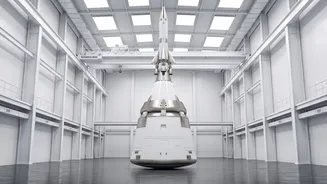
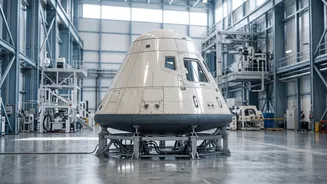
At the heart of the recent tests is the Crew Escape System (CES). Think of it as the most sophisticated and powerful ejection seat ever built, but instead of just firing a pilot out of a jet, it's designed to pull the entire three-person crew capsule
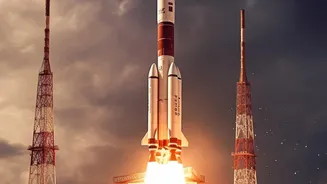
away from its rocket in the blink of an eye. During the perilous moments of launch and ascent, if sensors detect a catastrophic failure with the rocket, the CES is the astronauts' only lifeline. This system is a complex assembly of powerful, quick-acting solid-fuel motors mounted at the very top of the rocket stack. If triggered, these motors ignite to generate immense thrust, yanking the crew module to a safe altitude and distance from the emergency. It is a non-negotiable piece of technology for any nation aspiring to fly humans to space.
A Trial by Fire
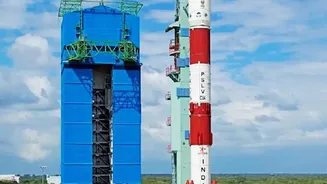
Ensuring this system works flawlessly is a matter of life and death, and ISRO is leaving nothing to chance. The recent verifications are part of a long and rigorous series of trials designed to push the CES to its limits. One of the most significant recent demonstrations was the TV-D1 mission, which tested an in-flight abort. In this test, a vehicle was launched to simulate a failure mid-air, travelling faster than the speed of sound. The Crew Escape System fired perfectly, separating the module, pulling it clear, and allowing it to deploy parachutes for a safe splashdown in the Bay of Bengal. This built upon earlier Pad Abort Tests, which proved the system could save the crew even from an emergency on the launchpad itself, before the rocket has even lifted off.
Safety Beyond the Launch
Astronaut safety for the Gaganyaan mission extends far beyond the launch sequence. ISRO has also been successfully testing the systems required for the final, crucial phase of the mission: recovery. Recent qualification tests have validated the Crew Module Uprighting System (CMUS), an ingenious array of inflatable balloons. This system ensures that if the capsule lands upside down after its ocean splashdown, it can automatically flip itself upright, which is critical for the safe recovery of the astronauts. Other successful trials have confirmed the clean separation of various components before re-entry and ensured the capsule's structure can withstand the pyrotechnic forces involved in deploying the parachutes. Every test demonstrates a comprehensive approach where every potential risk is meticulously addressed.
The Road Ahead for Gaganyaan
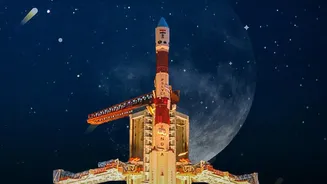
These successful tests are crucial steps that clear the path for the next phases of the Gaganyaan programme. The immediate future involves more uncrewed test flights to further refine and validate all systems. The next major public milestone is expected to be the first full uncrewed orbital mission, designated Gaganyaan-1. This flight, targeted for late 2026, will send a humanoid robot named 'Vyommitra' into orbit. Vyommitra will help test the environmental control and life support systems inside the capsule, simulating human presence and gathering vital data without risking human life. This mission will serve as the final full dress rehearsal before India commits its astronauts, or 'Vyomanauts', to their historic flight.