



The Ramayana is filled with heroes, but few capture the spirit of selfless sacrifice quite like Jatayu. This guide explores the sacred geography of India where the legend of the great vulture lives on, inviting travellers to connect with the epic.
The Symbolism of a Selfless Warrior
In the
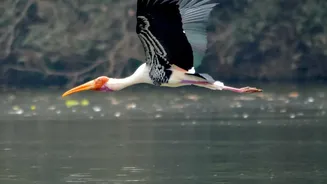
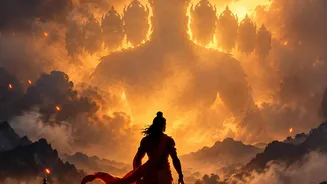
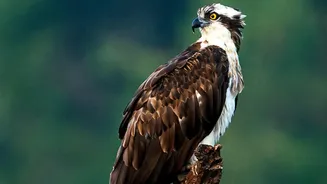
epic Ramayana, Jatayu is a divine bird, often described as the king of vultures and a friend to Lord Rama's father, King Dasharatha. His most legendary act occurs when he witnesses the abduction of Sita by the demon king Ravana. Despite his old age, Jatayu confronts Ravana in a fierce mid-air battle to rescue her. Though he fights with immense bravery, Ravana ultimately clips his wings, and the wounded bird falls to earth. Before succumbing to his injuries, Jatayu provides crucial information to Rama and Lakshmana about Sita's capture and the direction Ravana has taken her. In recognition of his loyalty and sacrifice, Rama performs Jatayu's final rites, granting him moksha, or liberation. This act of courage has made Jatayu an enduring symbol of fighting for righteousness against all odds.
Jatayu Earth's Center, Kerala
Perhaps the most dramatic tribute to the noble bird is the Jatayu Earth's Center in Chadayamangalam, Kerala. Local tradition holds that this is the very rock where the wounded Jatayu fell after his battle with Ravana. Dominating the landscape is the world's largest bird sculpture, a colossal concrete and steel structure measuring 200 feet long, 150 feet wide, and 70 feet high. Designed by filmmaker and sculptor Rajiv Anchal, the statue depicts Jatayu lying on his back, wings spread, and talons clenched in his final moments. The site is more than just a statue; it's a comprehensive tourist destination with a cable car, a museum inside the sculpture, and adventure activities. A small water body on the rock is believed to have been formed by the strike of Jatayu's beak, and a nearby footprint is revered as Lord Rama's. Dedicated to 'Women's Safety and Honour', the centre transforms an ancient story into a powerful modern monument.
Lepakshi, Andhra Pradesh
Another prominent location associated with Jatayu is the historic village of Lepakshi in Andhra Pradesh. Legend here suggests that when Rama found the dying bird, he uttered the words 'Le Pakshi'—Telugu for 'Rise, bird'—giving the village its name. While the Jatayu Earth's Center in Kerala focuses on his fall, Lepakshi's lore is intertwined with Rama granting him salvation. The area is home to the magnificent 16th-century Veerabhadra Temple, a marvel of Vijayanagara architecture famous for its intricate carvings and a massive Nandi statue. Near the temple complex, a newer sculpture of Jatayu has been installed on a rocky hill, commemorating the local legend and adding another layer to this sacred site. For travellers, Lepakshi offers a unique blend of mythological significance and world-class historical art, where every pillar and painting seems to echo tales from the epic.
Nashik, Maharashtra
The region of Nashik in Maharashtra holds a deep connection to the Ramayana, particularly the Dandakaranya forest where Rama, Sita, and Lakshmana spent a significant portion of their exile. The area known as Panchavati, on the banks of the Godavari River, is believed to be where Sita's abduction took place. Consequently, this is where Jatayu's story begins. A site named Taked, near Nashik, has a temple dedicated to Jatayu, built on the belief that this is where he fell. According to this tradition, Lord Rama created a pond, the Sarvatirtha, by striking the earth with his arrow to give the dying Jatayu water. Visiting Nashik allows travellers to immerse themselves in the broader narrative of the Ramayana, exploring sites like Panchavati and Ramkund that set the stage for Jatayu’s heroic intervention.