








What 'Scale Mode' Really Means
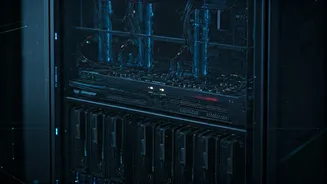
When we say AI training has entered 'scale mode,' it means the process has transformed into a massive industrial operation. Think less of a scientist in a lab and more of a factory consuming colossal resources. This involves three key ingredients: enormous
datasets, often scraped from the public internet; immense computational power from thousands of specialized processors, or GPUs, running for months on end; and staggering financial investment. It is a brute-force approach where progress is often achieved by dramatically increasing the size of the models, the data they learn from, and the computing power used to train them.
The Nine-Figure Training Run
The price tag for training a single, frontier AI model has become astronomical. According to the Stanford AI Index and other industry analyses, the cost for a state-of-the-art model like GPT-4 or Google's Gemini Ultra can range from $78 million to over $190 million for the computational power alone. Some industry leaders project that training costs for the next generation of models could approach $1 billion. These expenses are driven by the need for thousands of high-performance GPUs, which can each cost tens of thousands of dollars, running continuously in vast data centers. This represents an almost unbelievable increase from just a few years ago when training a breakthrough model cost less than a thousand dollars.
An Insatiable Appetite for Energy and Data
This new scale comes with significant externalities. The data centers powering these massive training runs have a voracious appetite for electricity. By 2030, the electricity consumed by data centers globally is projected to be nearly triple the combined annual use of Pakistan, Bangladesh, and Nigeria. This raises serious environmental concerns about carbon emissions. Beyond electricity, these facilities require immense volumes of water for cooling, sometimes straining local supplies. The process also relies on vast datasets, often containing copyrighted or personal information, which has ignited legal and ethical debates about data privacy and ownership.
A Game Only Giants Can Play?
The colossal cost of entry is reshaping the competitive landscape of AI. The ability to invest hundreds of millions or even billions of dollars creates a formidable barrier, concentrating power within a handful of tech behemoths. Companies like Microsoft, Google, Amazon, and Meta are pouring capital into building out their AI infrastructure, acquiring specialized chips, and attracting top talent. This has created a dynamic where smaller startups, even with brilliant ideas, are often forced into partnerships with these giants to access the necessary computing resources, raising concerns among competition authorities about market concentration.
The Search for Efficiency
While the race for scale continues, a parallel trend is emerging: the quest for efficiency. The 'bigger is always better' mantra is being challenged by a growing focus on smaller, specialized models that are faster, cheaper, and more sustainable to run. Researchers and companies are exploring new algorithms and architectures that can deliver powerful performance without the astronomical resource consumption. This shift could eventually lower barriers to entry and lead to a more diverse AI ecosystem where innovation is defined by cleverness and optimization, not just brute financial force. The focus is beginning to move from simply having the most powerful model to building reliable and efficient systems that solve real-world problems.