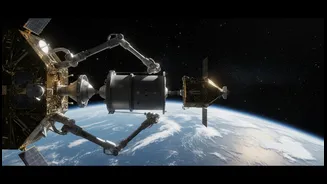







The Solar System's Data Highway
When we think of space collaboration, we often picture something like the International Space Station (ISS), a single project where multiple countries contribute hardware and personnel. But a quieter, more widespread form of cooperation is now essential:
missions helping other missions, even when they're not going to the same place. The most powerful example of this is the Mars Relay Network (MRN), an international constellation of orbiters that acts as a deep-space internet service provider. Rovers like NASA's Curiosity and Perseverance collect vast amounts of data on the Martian surface. Transmitting this data directly back to Earth would be slow and energy-intensive, limiting the time rovers can spend on science. Instead, they send their findings to nearby orbiters from both NASA and the European Space Agency (ESA), which then use their powerful antennas to relay the information home.
A Martian Telecommunications Network
This relay system is a prime example of interdependent collaboration. ESA's Mars Express and ExoMars Trace Gas Orbiter regularly provide data relay services for NASA's surface missions. In fact, the Mars Express spacecraft holds a record for having relayed data for seven different surface missions from multiple agencies, including those from NASA and China. This isn't just a backup plan; it's a core part of mission architecture. By sharing this communications infrastructure, agencies ensure a steady flow of data and provide crucial redundancy. If one orbiter is unavailable, another can pick up the slack, safeguarding the precious scientific return from these multi-billion dollar missions. This level of cooperation is a far cry from the head-to-head competition of the 20th century.
Standardisation as a Foundation for Teamwork
This type of cross-mission support is only possible because of a deliberate effort to create common standards, a concept central to frameworks like the Artemis Accords. The Accords, signed by dozens of countries, establish principles for peaceful and cooperative space exploration, including the key idea of 'interoperability'. This means designing systems—from communication radios to docking ports—that can work together, regardless of which agency built them. By agreeing on technical standards ahead of time, space agencies can build a flexible, interlocking system of support. One agency's orbiter can communicate with another's lander because their radios speak the same language. This managed approach prevents a future where space is filled with proprietary, incompatible technology, which would isolate missions and increase risks.
The Strategic Benefits of a Shared Network
The rationale behind this collaborative spirit is deeply strategic and economic. Pooling resources and sharing infrastructure significantly reduces costs for individual nations. Building and launching a dedicated communications orbiter is an enormous expense. By sharing the burden, more funds are freed up for scientific instruments and new missions. This approach also enhances mission resilience. The harsh environment of space means that failures can and do happen. A robust network of interoperable assets provides a crucial safety net, as seen with the ISS, where Russia's Soyuz spacecraft long provided a vital rescue capability. Ultimately, this collaborative model accelerates the pace of discovery for everyone involved, fostering goodwill and creating a more sustainable foundation for future exploration.