




First Things First: A Reality Check
Let's get the most important question out of the way: will the August 12, 2026, total solar eclipse be visible from India? The short answer is no. The eclipse path sweeps across the Arctic, Greenland, Iceland, and Spain, but the event will occur during
the night in India. By the time the moon's shadow falls, the sun will have already set for the entire subcontinent. So, while your friends in Europe might be posting incredible photos, you won’t be able to see it directly from your rooftop in Mumbai or Delhi. This means no special glasses are needed here, and there are no religious or cultural rituals like Sutak Kaal to observe, as it’s not visible locally.
So, What's All the Hype About?
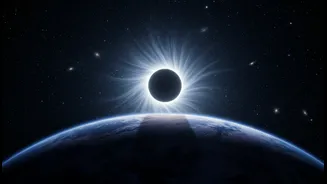
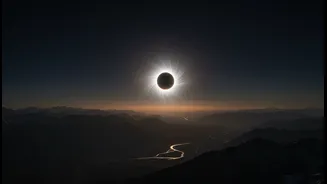
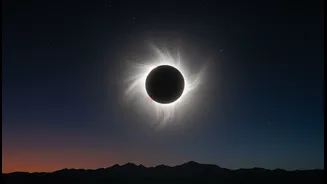
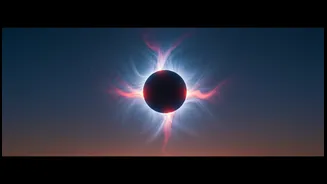
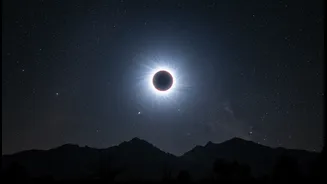
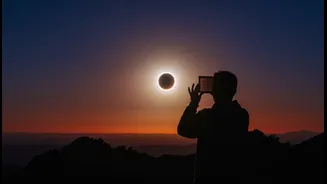
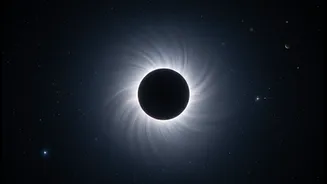
Even though India will miss out on a direct view, this eclipse is a massive deal for astronomers and sky-gazers globally. It’s the first total solar eclipse to be visible from mainland Europe since 1999, making it a once-in-a-generation event for millions. What makes it truly special is its timing in Spain, where totality will occur just before sunset. This creates a rare and breathtaking phenomenon known as a “sunset eclipse,” where the sun’s glowing corona will appear on the horizon. This promises to be one of the most photogenic eclipses in years, and the images are expected to dominate social media feeds.
How to Join the Global Viewing Party
Just because you can't see it in person doesn't mean you have to miss out entirely. The best way for Indians to experience the eclipse is through high-quality livestreams. Major space agencies like NASA and the European Space Agency (ESA) typically provide free, multi-hour broadcasts of such events. These streams feature expert commentary and multiple camera feeds from locations within the path of totality, offering views that are often better than what one could see from a single ground location. You'll get to see the moon's shadow racing across the Earth from space, the diamond ring effect, and the sun's ethereal corona — all from the comfort of your couch. Just search for the “August 12, 2026 total solar eclipse live” on YouTube closer to the date.
The Real Show for India That Night
Here's the silver lining and the best part of the service angle for you. A solar eclipse can only happen during a New Moon phase. This means the night of August 12-13 will be exceptionally dark, with no moonlight to wash out the stars. Coincidentally, this is also the peak of the annual Perseid meteor shower, one of the best and most reliable meteor showers of the year. While the eclipse itself isn't visible, its side effect—a dark, moonless sky—creates the perfect conditions for a fantastic night of stargazing. Instead of an eclipse, India gets a front-row seat to a brilliant display of “shooting stars.”
A Guide to Watching the Perseids
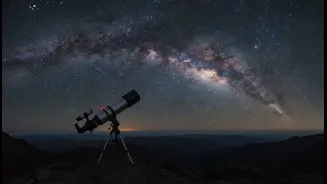
You don't need a telescope or binoculars to enjoy the Perseid meteor shower. The key is to find a location away from city lights, as light pollution is the biggest obstacle. Head to a dark park, a rural area, or even a high-rise rooftop with minimal direct lighting. Give your eyes about 20-30 minutes to fully adapt to the darkness. Then, simply lie back, look up towards the northeast, and be patient. The meteors will appear as quick streaks of light. For the best experience, put your phone away to preserve your night vision. It’s the perfect low-effort, high-reward celestial event to enjoy with friends.
Mark Your Calendar: Future Eclipses for India
If you're feeling the eclipse FOMO, don't worry. India has its own share of celestial events coming up. A partial solar eclipse will be visible across the country on August 2, 2027. And for those waiting for the magic of totality, mark your calendar for March 20, 2034. On that day, a total solar eclipse will pass directly over parts of India, offering a truly unforgettable experience. While 2026 might be Europe's year, India's turn in the sun's shadow is on the horizon.