



Understanding the Downhill Dilemma
Running up a hill is a battle of cardio and power, but running down is a battle against gravity. Each downhill stride requires your leg muscles to act as brakes, absorbing significant impact forces. This braking action involves an 'eccentric' muscle contraction,
where the muscle lengthens under tension—think of your quadriceps (thigh muscles) stretching as they control your descent and stop you from tumbling forward. This repetitive, high-force lengthening can lead to micro-tears in muscle fibers and place immense stress on the patellar tendon, located just below the kneecap. Without adequate strength to manage these forces, runners often experience that familiar ache around the kneecap, commonly known as 'runner's knee'.
What is Slow-Eccentric Training?
Eccentric training specifically targets this lengthening phase of muscle movement. A standard lift or push involves two phases: the concentric phase (when the muscle shortens, like lifting a weight) and the eccentric phase (when the muscle lengthens under control, like lowering the weight). Slow-eccentric training deliberately focuses on making this lowering phase slower and more controlled. For example, in a squat, it's not about standing up quickly, but about taking several seconds to lower yourself into the squat position. This slow, controlled load has been shown to be incredibly effective at building stronger, more resilient muscles and tendons. Studies have found it superior to concentric training for reducing pain and improving function in athletes with knee tendinopathy.
The Science of Knee Protection
So how does slowly lowering your body weight build 'bomb-proof' knees for running? The magic is in adaptation. Slow-eccentric exercises stimulate the production of collagen, the primary protein in tendons, helping to remodel and strengthen them. This increases the tendon's capacity to handle the repetitive loads of running. Furthermore, this type of training builds superior muscle strength and improves neuromuscular control—the communication between your brain and muscles. This makes your legs more efficient at absorbing shock, maintaining stability, and preventing the subtle collapses in form (like your knee diving inward) that often lead to overuse injuries. Essentially, you're training your muscles to be better brakes, so your joints don't have to take the hit.
Three Key Eccentric Exercises
Integrating these movements doesn't require a complete overhaul of your routine. Start by adding a couple of these exercises two to three times a week. The key is the tempo: aim for a slow, 3-to-5 second lowering phase on each repetition.
1. Eccentric Step-Downs: Stand on a small step or sturdy box. Keeping your hips level, slowly bend one knee and lower the heel of your other foot to the ground. Just tap your heel lightly without putting weight on it, then use the standing leg to return to the start. This directly mimics the controlled descent of downhill running.
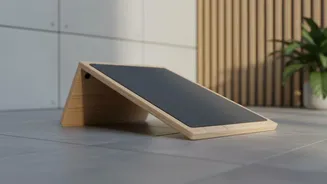
2. Slow-Tempo Squats: You can do this with your bodyweight or by holding a weight. Focus entirely on the downward phase. Take 3-5 seconds to lower yourself until your thighs are parallel to the floor, or as low as you can comfortably control. Pause for a second, then stand back up at a normal speed. To specifically target the patellar tendon, you can perform these on a decline board.
3. Nordic Hamstring Curls: This is an advanced move, so proceed with caution. Kneel on a padded surface and have a partner hold your ankles, or secure them under something heavy. Keeping your body in a straight line from your knees to your head, slowly lean forward, using your hamstrings to control the descent for as long as possible. Fall forward onto your hands, then push back up to the starting position. This exercise is one of the most effective for preventing hamstring injuries, which are also crucial for controlling your stride.