





A Flood of Cosmic Data
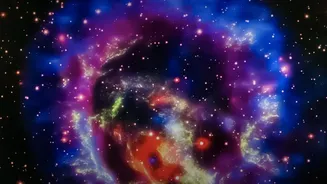
For decades, NASA has been humanity’s eyes and ears in the universe, with telescopes, probes, and rovers collecting an unimaginable volume of information. The agency has gathered over 150 petabytes of data from its deep space and Earth-science missions.
This archive is a treasure trove of potential discoveries, but its sheer scale presents a monumental challenge. Finding a single, significant event in this cosmic haystack can take scientists years of painstaking work. This is the core problem NASA’s AI strategy aims to solve: shrinking the time between data collection and scientific understanding from years to mere days. By deploying advanced artificial intelligence, the agency plans to unlock the full potential of its vast archives and real-time data streams.
Smarter Robots on Distant Worlds
One of the most visible applications of AI is in planetary exploration. On Mars, rovers like Perseverance are already using AI to navigate the treacherous terrain on their own. Rather than waiting for commands from Earth, which can take several minutes to arrive, the rover uses its onboard computer to analyze images, identify hazards like rocks and craters, and plot the safest and most efficient path forward. In fact, a large majority of the Perseverance rover's driving has been autonomous. This capability extends beyond just driving; AI also helps rovers become smarter scientists. Instruments can use machine learning to identify promising rock samples for chemical analysis in the search for ancient life, a task previously reliant on human guidance.
Finding New Worlds in Old Data
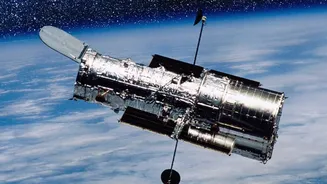
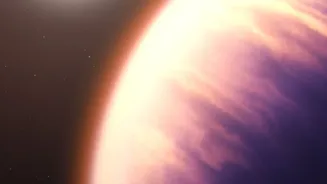
Beyond our solar system, AI is proving to be an invaluable partner in the search for exoplanets. Telescopes like Kepler have provided immense datasets of starlight, and buried within this data are the subtle dips in brightness that indicate a planet passing in front of its star. Manually verifying these signals is a slow, methodical process. To speed it up, NASA developed ExoMiner, a deep learning system trained to recognize these planetary patterns. The system has already successfully identified hundreds of new exoplanets by analyzing archival data, showcasing AI's power to make discoveries that were previously missed. The same techniques are being applied to forecast cosmic events like supernovae and even identify gravitational waves from massive celestial collisions.
The Genesis of a National Strategy
Recognizing AI's transformative potential, NASA recently formalized its approach by joining the Genesis Mission, a White House initiative launched in late 2025 to leverage AI for scientific discovery across federal agencies. This program unites NASA's deep domain expertise and data with the high-performance computing power of partners like the Department of Energy. The goal is to create powerful, shared AI tools that can accelerate not just space exploration, but also engineering and mission design. This includes using AI to optimize spacecraft subsystems, plan complex logistics for future lunar missions, and ensure spacecraft can operate safely in an increasingly crowded orbital environment.
An Intelligent Partner, Not a Replacement
NASA officials are clear that the goal of this strategy isn't to replace human scientists but to augment their capabilities. AI excels at tedious, data-intensive tasks like searching for patterns, monitoring spacecraft health, or managing mission schedules. This frees up human experts to focus on what they do best: interpreting results, asking creative questions, and developing new hypotheses. This human-AI partnership allows the agency to streamline scientific workflows and make research more efficient. The strategy emphasizes a responsible and ethical approach, ensuring that any AI-assisted outputs are transparent and traceable, allowing scientists to trust the tools they are using to explore the universe.