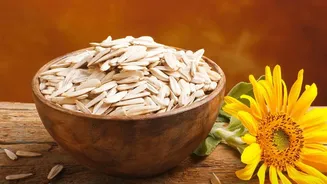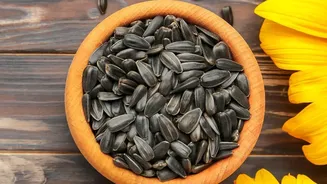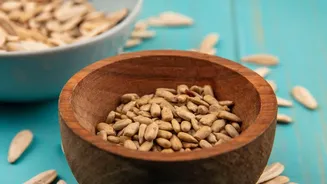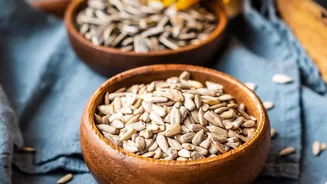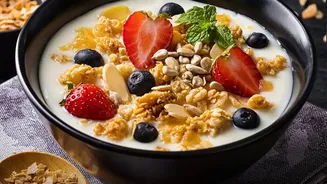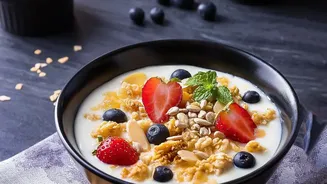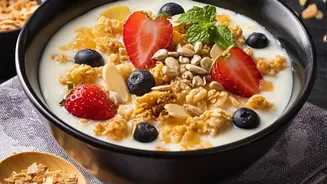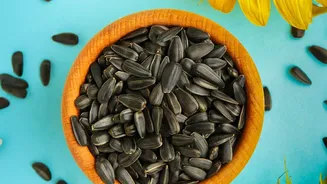


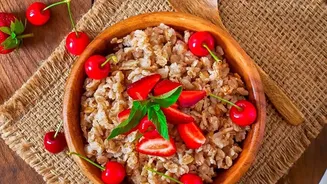
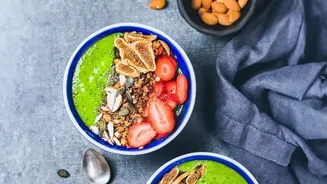
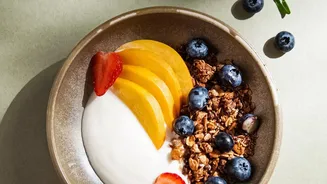
Sprinkled over yogurt or blended into a smoothie, sunflower seeds add a satisfying crunch and a nutty flavour to the first meal of the day. They are packed with nutrients, but their 'energy-dense' nature means moderation is key to a healthy habit.
What 'Energy-Dense' Really Means
The
term 'energy-dense' refers to the number of calories a food contains relative to its weight. Foods with high energy density pack a lot of calories into a small serving, primarily due to their fat or sugar content. Sunflower seeds fit this description perfectly. While they are full of 'good' fats, they are also high in calories. A standard one-ounce (about a quarter cup) serving of shelled, roasted sunflower seeds contains around 165 to 207 calories. This isn't a bad thing; these calories provide sustained energy. However, it does mean that mindlessly scooping them onto your breakfast can quickly lead to consuming more calories than you intended, which may contribute to weight gain over time.
A Tiny Seed with Big Nutritional Benefits
Despite their high calorie count, sunflower seeds are nutritional powerhouses. They are an excellent source of vitamin E, a powerful antioxidant that helps protect cells from damage and reduces inflammation. Just one ounce can provide a significant portion of your daily vitamin E needs. They are also rich in healthy fats, specifically monounsaturated and polyunsaturated fats, which are known to support heart health by helping to lower cholesterol levels. Additionally, these seeds are a good source of plant-based protein, fibre, and essential minerals like selenium, which supports immune function, and magnesium, which plays a role in regulating blood pressure.
Finding the 'Sensible Portion'
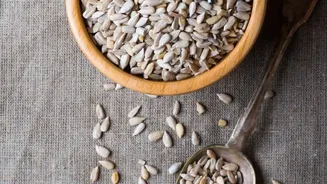
So, what constitutes a 'sensible portion'? Most nutrition experts agree on a standard serving size of about one ounce, which translates to roughly a quarter of a cup or a small handful of shelled seeds. This amount allows you to reap the nutritional rewards without overdoing the calories and fat. A one-ounce serving provides a good dose of protein (around 5.5 grams) and fibre (about 3 grams), both of which contribute to a feeling of fullness and can help you stay satisfied until your next meal. Sticking to this portion size helps maintain a balanced diet while still enjoying the seeds' benefits.
Risks of Overconsumption
Enjoying sunflower seeds in excess can lead to a few potential downsides. The most obvious is weight gain, due to their high calorie and fat content. It's also wise to choose unsalted varieties when possible. Salted sunflower seeds can contain a surprising amount of sodium; a single ounce of some salted brands can contribute over 10% of the ideal daily sodium limit, which can impact blood pressure over time. Furthermore, sunflower seeds are a source of omega-6 fatty acids. While these are essential fats that your body needs, most modern diets already provide plenty. Therefore, it's best to consume them in moderation as part of a varied diet that also includes other nuts and seeds.
Smart Ways to Add Them to Your Breakfast
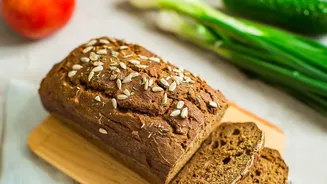
Incorporating a healthy portion of sunflower seeds into your breakfast is easy and delicious. The key is to use them as a topping or an ingredient rather than the main event. Try sprinkling a tablespoon or two over a bowl of oatmeal, yogurt, or poha for added crunch and nutrition. You can blend them into your morning smoothie to make it more filling and add a creamy texture. For those who enjoy baking, folding them into the batter for muffins or whole-grain bread adds a delightful texture and nutritional boost. You can even toast them with a little butter and scramble them with eggs for a savoury, protein-packed start to your day.