




A Partnership Already Proven in Orbit
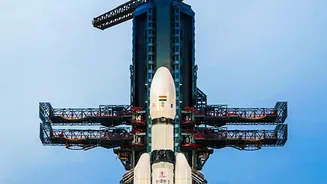
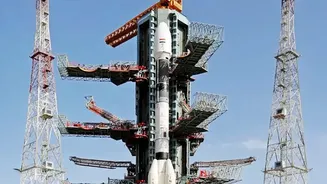
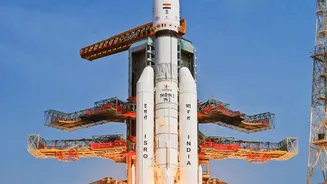
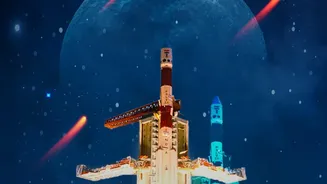
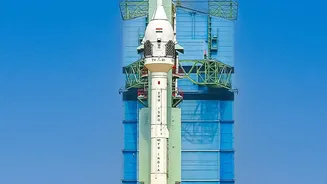
Before looking to the Moon, the partnership between NASA and the Indian Space Research Organisation (ISRO) has already delivered remarkable results closer to home. The most significant recent collaboration is the NISAR satellite, launched in mid-2025.
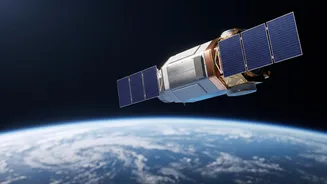
This joint Earth-observation mission, the world's most expensive of its kind, uses advanced radar technology to monitor changes in our planet’s surface, from ice sheet collapse to volcanic activity. The successful launch and operation of NISAR, a project years in the making, has served as a powerful proof-of-concept for the deep technical integration possible between the two agencies, setting the stage for more ambitious undertakings.
From Earth Science to Lunar Ambitions
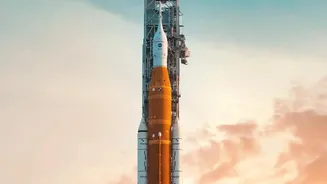
The relationship took a significant leap forward when India signed the Artemis Accords in June 2023, becoming the 27th nation to join the U.S.-led framework for peaceful and transparent lunar exploration. While a non-binding agreement, this act signaled India's shift from a historically independent space policy to one favoring international collaboration. It was a crucial prerequisite for deeper involvement in NASA's Artemis program, which aims to return humans to the Moon and establish a sustainable presence there. This alignment has now culminated in a formal invitation, extended in August 2026, for ISRO to participate in NASA's moon base program, moving the partnership’s focus from observing Earth to colonizing the Moon.
What a 'Moon Base' Really Means
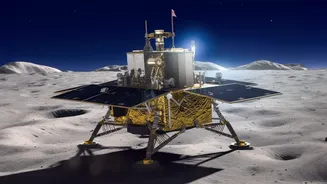
The term “moon base” might conjure images of a lunar city, but the reality is more practical and phased. NASA’s plan focuses on building a sprawling outpost near the Moon's south pole, a region believed to hold water ice in permanently shadowed craters. The program is divided into three main phases. Phase one (through 2029) involves robotic scouting missions to map the terrain and resources. Phase two (2029-2032) will focus on deploying foundational infrastructure like power systems, communication networks, and initial habitats. The final phase, from 2032 onward, aims to achieve a semi-permanent crewed presence. India's potential contribution isn't fully defined but could include providing scientific instruments, robotics, communications technology, or drawing on its own experience from the successful Chandrayaan-3 landing in the same polar region.
The Geopolitical Chessboard in Space
This deepening alliance isn't happening in a vacuum. It is a clear strategic move in a new era of great power competition that extends into space. While the U.S. and its Artemis partners (now over 70 nations) are building one coalition, China and Russia are collaborating on their own rival project, the International Lunar Research Station (ILRS). By bringing India, a formidable space power with a proven track record of cost-effective and successful missions, into its fold, the U.S. strengthens its own bloc. For the U.S., a strong partnership with India provides a key democratic ally in a critical domain. For India, it offers access to cutting-edge technology and a seat at the table in shaping the future of human activity beyond Earth, an opportunity that aligns with its own goal of landing an astronaut on the Moon by 2040.