




The Starting Point: India's Import Dependence
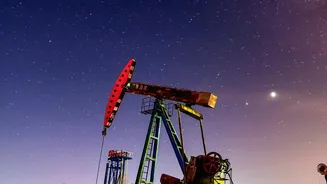
The story of India's fuel prices begins far from its shores. India imports nearly 89% of its crude oil requirements, making it highly vulnerable to fluctuations in global energy markets. When tensions rise in oil-producing regions or major economies change
their output, the price of Brent crude oil—the international benchmark—reacts. This global price, denominated in US dollars per barrel, is the foundational cost. Events in critical shipping lanes like the Strait of Hormuz, through which a significant portion of India's supply passes, can add a 'risk premium' that further elevates this base price. Because India is a price taker in this vast market, any sustained global rally forms the first and most significant link in the chain that eventually reaches the consumer.
From Barrels to Rupees: Currency Matters
Once crude oil is purchased, it must be paid for in US dollars. This introduces the second major variable: the USD-INR exchange rate. Even if the price of crude oil remains stable in dollars, a weakening rupee will make imports more expensive. For instance, if the rupee depreciates, Indian oil marketing companies (OMCs) have to spend more rupees to buy the same number of dollars, increasing the 'landed cost' of crude oil at Indian ports. This landed cost includes the price of the oil itself, plus freight charges, insurance, and port dues. Therefore, a volatile currency can amplify the effect of rising crude prices, creating a double impact on the initial cost before the fuel is even refined.
The Middlemen: Refiners and Marketers
After the crude oil arrives, state-owned OMCs like Indian Oil Corporation (IOCL), Bharat Petroleum (BPCL), and Hindustan Petroleum (HPCL) take over. They refine the crude oil into finished products like petrol and diesel. The price at which they sell to petrol pump dealers includes their refining costs, marketing margins, and inland freight charges to transport the fuel from the refinery to depots across the country. While these companies have some operational efficiencies, their costs form another layer of the final price. Since June 2017, prices have been revised daily based on a 15-day rolling average of international rates, meaning global price changes are passed on to dealers relatively quickly.
The Biggest Slice: Central and State Taxes
Taxes are arguably the most significant component of the retail fuel price in India, often accounting for nearly half of what consumers pay. This taxation is split into two parts. First, the Central government levies a fixed excise duty. This includes components like a basic duty, a special additional excise duty, and cesses for infrastructure development. Because this is a fixed amount per litre, it doesn't change with the base price of oil. Second, state governments impose a Value Added Tax (VAT). Unlike the fixed excise duty, VAT is typically an 'ad valorem' tax, meaning it is charged as a percentage of the total price, which includes the base cost, central taxes, and dealer commission. This means when the pre-tax price rises, the state's VAT collection in rupees increases automatically, further compounding the price hike for consumers.
The Ripple Effect: Beyond the Petrol Pump
The impact of a fuel price hike extends far beyond the direct cost of filling up your tank. Diesel is the lifeblood of India's logistics network, powering the trucks that transport everything from fresh vegetables and milk to industrial raw materials and consumer goods. When diesel becomes more expensive, freight costs rise. This increase is passed on by transporters to producers and wholesalers, and ultimately, to the retail price of everyday essentials. This is why a sustained period of high fuel prices often leads to broader inflationary pressures, squeezing household budgets from multiple directions and impacting the cost of living for everyone, not just vehicle owners.