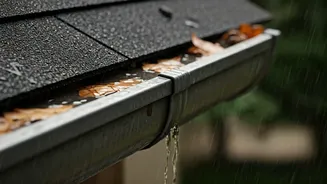









Clear Your Gutters and Drains
It’s arguably the most cliché piece of home maintenance advice, but for good reason. Gutters are your home's primary defence for directing rainwater away from your structure. When they become clogged with leaves, twigs, and other debris, water has nowhere
to go but over the sides, potentially seeping into your roof, walls, and foundation. This overflow can lead to significant water damage, erosion around your foundation, and even basement flooding. Spending an hour clearing them out is a small price to pay to ensure water flows freely and away from your home, preventing thousands in potential repairs. For best results, this should be done at least twice a year, especially if you have trees overhanging your roof.
Give Your Roof a Quick Inspection
You don’t need to be a professional roofer to spot obvious trouble. Before the heavy rains begin, take a few minutes to visually inspect your roof from the ground. Look for any missing, cracked, or curling shingles or tiles. These are weak spots where water can easily penetrate, leading to leaks that can damage your ceilings, walls, and insulation. Also, pay attention to the areas around vents, chimneys, and skylights, as the seals in these spots can degrade over time. Catching a small issue now allows for a simple repair, whereas discovering a leak during a downpour is a much more stressful and expensive problem to solve.
Check the Seals on Windows and Doors
Wind-driven rain can be surprisingly persistent, pushing water into even the smallest cracks and gaps. Take a walk around your home and inspect the caulking and weatherstripping around your windows and doors. Over time, these seals can dry out, crack, and peel away, creating a direct path for water to enter your home. This can lead to damaged window sills, warped door frames, and a prime environment for mould growth. Resealing these gaps with a quality waterproof sealant is a simple, low-cost task that boosts your home's defence against both water and energy-wasting drafts.
Trim Overhanging Trees and Shrubs
The combination of heavy rain and strong winds can put immense stress on trees. Branches, especially dead or overgrown ones, can easily snap off and fall onto your roof, break windows, or damage your home's exterior. Before the stormy season hits, it's wise to prune any large branches that are hanging over your house. This not only removes the immediate threat of falling limbs but also prevents leaves from constantly clogging your freshly cleaned gutters. It’s a simple safety measure that protects your property from predictable and avoidable damage.
Ensure the Ground Slopes Away
One of the most fundamental principles of keeping a home dry is ensuring that water on the ground flows away from the foundation, not toward it. After a heavy rain, take a look outside. If you see water pooling near your house, it’s a sign that the grading, or slope, of the soil might be incorrect. Over time, soil can settle, creating low spots where water collects. This consistent moisture against your foundation can lead to cracks and serious structural issues. While regrading your entire yard can be a big job, sometimes simply adding soil to low spots can make a significant difference.
Look for Warning Signs Inside
Your home often gives you clues about potential problems before they become catastrophes. Take a moment to check the ceilings and attic spaces for any faint water rings or discoloured stains. These are tell-tale signs of a small, existing leak that will only get worse under the pressure of sustained rainfall. Similarly, check under sinks and around appliance hoses, like those for your washing machine or dishwasher, for any dampness or signs of slow drips. Addressing these small interior issues now is part of a complete rainy season preparation plan.