






What Are These New Labels?
The Food Safety and Standards Authority of India (FSSAI) is introducing a new system called Front-of-Pack Labelling, or FOPL. The idea is simple: instead of having to turn a package over and decipher a complex nutrition table, key health information will
be displayed prominently on the front. Recent updates from court proceedings suggest India may adopt a system of clear warning labels. This is a major shift designed to give consumers a quick, easy-to-understand summary of a product's health profile, specifically focusing on nutrients that are a concern when consumed in excess.
Why the Change Is Needed
This initiative is a direct response to a growing public health challenge in India: the rise of non-communicable diseases (NCDs) like obesity, diabetes, and hypertension. Diets high in fat, sugar, and salt (often referred to as HFSS foods) are a major contributing factor to these conditions. Many packaged and processed foods, while convenient, are loaded with these ingredients. The new FOPL system aims to empower Indians to make healthier decisions by making it obvious which products are high in these critical nutrients, thereby helping to curb the negative health trends linked to their overconsumption.
Decoding the Warning Signs
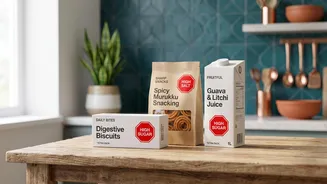
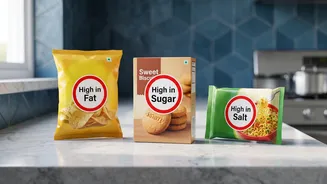
The most recent proposal, discussed in the Supreme Court in September 2026, centres on a clear warning system. The proposed design features a distinct red hexagon. Inside this symbol, text will specify if the product is 'High in Sugar', 'High in Salt', or 'High in Fat'. If a product exceeds the recommended threshold for more than one of these nutrients, the label will indicate all of them within the same hexagon. This single-phase approach means that any product high in even one of these components will carry the warning, making it an easy-to-spot red flag for shoppers.
Putting It to Use in the Supermarket
When these labels roll out, your shopping habits can become more intuitive. Imagine you're choosing between two brands of breakfast cereal. Instead of spending minutes comparing fine print on the back, you can look at the front. Cereal A might have no warning label, while Cereal B displays a red hexagon stating 'High in Sugar'. The choice becomes immediately clearer. This system is designed for quick comparisons. The primary goal is to use the warning as a quick filter. If the red hexagon is present, it's a signal to perhaps reconsider the purchase, check the detailed nutrition panel for more context, or choose that item less frequently.
What About Health Star Ratings?
Earlier discussions included another model known as the Health Star Rating (HSR) system. This would have rated foods on a scale from half a star (least healthy) to five stars (healthiest). The more stars a product had, the better its nutritional profile. However, this model faced criticism from health experts who argued it could create a 'health halo' around unhealthy products—for instance, a sugary snack might still get 1.5 or 2 stars, misleading consumers into thinking it's a reasonably healthy option. The recent focus on clear, unambiguous warning symbols like the red hexagon suggests a move towards a system that avoids this potential confusion.
The Bigger Picture: A Tool for Healthier Choices
It's important to remember that not all fats, sugars, or salts are inherently evil; they play roles in our body's functions. The issue is the excessive consumption of added fat, sugar, and sodium in highly processed foods. These new labels are not meant to demonise specific foods but to provide transparency and context at the point of purchase. The FSSAI has indicated that once the rules are finalised, food businesses will be given a one-year transition period to comply. This gives companies time to reformulate their products to be healthier, which is another potential benefit of the new regulation. For consumers, it's about having the power to make an informed choice for themselves and their families.