







The Challenge of a Perishable Fortune
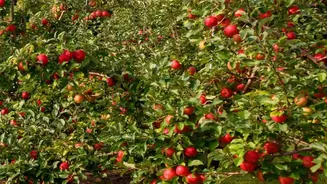
The apple industry is the backbone of Kashmir's rural economy, with over seven lakh families directly or indirectly dependent on horticulture. However, this fortune has always been fragile. The apple is a perishable fruit, and the harvest season, typically
from August to October, creates a massive glut. For decades, farmers have been forced into distress sales, selling their produce at rock-bottom prices to middlemen as soon as it is picked. A lack of adequate local storage meant that any delay in getting the fruit to markets across India, often due to weather or blockades on the Srinagar-Jammu National Highway, could lead to catastrophic losses from spoilage. This system left growers with thin margins and little control over their economic destiny.
The Rise of Cooperative Power
Frustrated by this cycle of uncertainty, local farmer cooperatives have emerged as powerful agents of change. By pooling their resources, growers are collectively investing in the one piece of infrastructure that can fundamentally alter their fortunes: the cold supply chain. These cooperatives are instrumental in building and managing modern storage facilities, a shift from relying solely on private entrepreneurs or waiting for government schemes. This collective approach allows even small and marginal farmers to access state-of-the-art technology that would be impossible to afford individually, giving them the power to hold their produce and sell it when market conditions are favourable. A recent push by the Jammu and Kashmir government to strengthen the role of marketing and processing corporations like JKHPMC further aims to create better opportunities for these growers.
Inside the Cold Chain Revamp
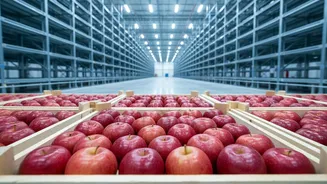
The revamp is centered around Controlled Atmosphere (CA) storage. Unlike conventional cold storage, CA facilities carefully regulate temperature, humidity, oxygen, and carbon dioxide levels. This technology slows down the ripening process, extending the shelf life of high-quality apples from a few weeks to several months without losing freshness. The expansion of CA capacity has been a game-changer, allowing A-grade apples to be sold as late as April or May, fetching significantly higher prices than during the harvest glut. The current operational capacity stands at over 2.92 lakh metric tonnes across 68 stores, with plans for further expansion to address the significant gap between production and storage. This revamp also includes integrated packhouses for sorting and grading, and refrigerated transport to ensure the cold chain is unbroken from the orchard to the end market.
A New Economic Equation for Farmers
The impact of this infrastructure is transformative. By storing their produce, farmers can bypass the harvest-season price crash and engage with markets throughout the year. This has already proven to protect growers from distress sales and improve their bargaining power. Access to CA storage has become a lifeline, allowing them to wait for favourable market rates and turning what was once a desperate sprint into a strategic, year-long business. The ability to guarantee a steady supply of high-quality apples also opens up possibilities for more direct market linkages, premium branding, and potentially higher export revenues, fundamentally changing the economic equation for thousands of farming families.