





The Annual Pothole Pandemic
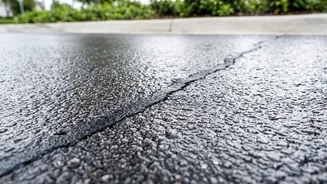
For commuters across India, the end of the monsoon season signals the beginning of a bumpy ride. Water seeps into tiny cracks in the asphalt, and under the pressure of traffic, these cracks grow into craters. The result is a nationwide obstacle course
that damages vehicles, slows traffic to a crawl, and poses serious safety risks. The traditional solution involves a costly and disruptive cycle of manual patching, where crews fill potholes that often reappear after the next heavy shower. This reactive approach consumes enormous budgets and resources, making it a temporary fix for a chronic problem.
A Road That Mends Itself
Imagine a road surface that can autonomously repair its own micro-cracks before they become dangerous potholes. This is the promise of self-healing asphalt, a field of material science that is gaining global attention. Instead of passively deteriorating, this innovative pavement is designed to actively respond to damage. The technology works by embedding special agents within the asphalt mixture that can seal cracks as they form, significantly extending the lifespan of the road and reducing the constant need for repairs. It’s a shift from reactive maintenance to proactive, built-in resilience.
How Eco-Binders Work Their Magic
The term “eco-binder” often refers to the core of this technology: microcapsules containing a rejuvenating agent. These are tiny, engineered spheres mixed into the asphalt, each holding a droplet of a special oil, often derived from sustainable sources like sunflower or waste cooking oil. When a micro-crack forms in the pavement due to stress from traffic, it breaks open these nearby capsules. The released oil, or rejuvenator, then seeps into the crack. This oil softens the aged, brittle bitumen (the black binder in asphalt), allowing it to flow and rebond, effectively sealing the damage from the inside out. Some advanced systems are even designed to be activated by water or pressure, making rainfall a trigger for repair rather than destruction.
More Than Just a Smooth Ride
The benefits of self-healing roads go far beyond driver convenience. By extending pavement life—some estimates suggest by 30-40%—this technology can lead to massive long-term cost savings for municipal corporations and national highway authorities. Fewer repairs mean less traffic disruption, reduced fuel consumption from idling vehicles, and lower carbon emissions from construction machinery. Furthermore, many of the rejuvenating agents being developed are bio-oils, which reduces the reliance on petroleum-based products and supports a more circular economy. This makes self-healing asphalt a promising solution for building more sustainable and economically efficient infrastructure.
Is India Ready for Self-Healing Roads?
The concept is no longer just theoretical; pilot projects are underway in countries like the Netherlands and the UK. In India, the potential is enormous, and the idea is gaining traction. The National Highways Authority of India (NHAI) is reportedly exploring self-healing materials for road construction. Research institutions like the IITs and the Central Road Research Institute (CRRI) are also experimenting with variants suited for India's unique climate and heavy traffic loads. While challenges like high initial costs and the need to scale up production remain, the technology is no longer science fiction. Early trials are focusing on different methods, including not only microcapsules but also asphalt mixed with steel fibres that can be healed using induction heating.