







The Power of Nitrate
For decades, sports nutrition focused on macronutrients like carbohydrates and protein. However, recent research has illuminated the performance-enhancing effects of specific micronutrients, chief among them being dietary nitrate. Green leafy vegetables
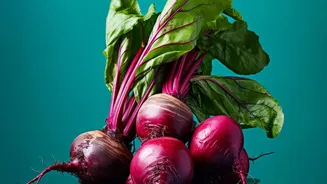
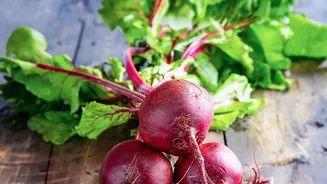
like spinach and arugula are rich in nitrates, but beetroot has become the go-to source for athletes due to its high concentration and ease of consumption in juice or powder form. When you consume beetroot, bacteria in your mouth convert the dietary nitrate (NO3) into nitrite (NO2). This nitrite then enters your bloodstream and is converted into nitric oxide (NO) in areas of the body with low oxygen availability, such as hardworking muscles during a sprint. This final step is where the magic happens for an athlete.
The Science of Speed
Nitric oxide is a powerful vasodilator, meaning it relaxes and widens your blood vessels. This process increases blood flow, allowing more oxygen and nutrients to be delivered to your muscles precisely when they need it most. For a sprinter, this is critical. But the benefits don't stop there. Studies suggest that nitrate supplementation also makes muscles more efficient. It can improve the function of mitochondria—the powerhouses of your cells—and enhance muscle contractility by influencing calcium handling within muscle cells. This means the muscle can produce more force and power. Specifically for high-power activities, some research indicates that nitrate preferentially enhances blood flow and contraction in fast-twitch (Type II) muscle fibers, the very fibers that are dominant in sprinting and explosive movements.
From 'More is Better' to Micro-Dosing
Early protocols for nitrate loading often involved drinking large quantities of beetroot juice (500ml or more) daily for several days leading up to an event. While effective for endurance events, this approach can lead to gastrointestinal distress and isn't always practical. The new strategy, often referred to as micro-dosing, focuses on smaller, more strategic doses. The goal is to achieve the performance benefits without the side effects. Research has shown that the effective dose for performance gains is around 300–600mg of inorganic nitrate. Taking more doesn't seem to produce proportionally larger gains. This has led to the rise of concentrated beetroot 'shots' (typically 70ml) or specific powders which provide this optimal dose in a small, manageable volume. This precision allows athletes to fine-tune their intake based on their training and body weight.
Timing is Everything for Sprinters
For a sprinter, the window of opportunity is short, and so is the window for nitrate's peak effect. After consumption, plasma nitrite levels in the blood peak approximately 2 to 3 hours later. This means an athlete should take their beetroot dose well before their race, not right before heading to the blocks. Some studies focusing on explosive power have identified even more specific timing. One recent study on basketball players found that neuromuscular performance (like jump height and power) was enhanced in the first eight minutes after a warm-up that followed a 2.5-hour waiting period post-supplementation. This highlights a targeted strategy: ingest the nitrate, wait for it to become bioavailable, and then time your final warm-up to conclude just before competition. This precision ensures the muscles are primed for maximal power output right at the start of the race.
Is It a True Transformation?
The evidence strongly suggests that dietary nitrate is a valuable tool, particularly for short-duration, high-intensity events. Studies have shown it can improve sprint performance and enhance muscle power. One study noted a significant improvement in 1500m time trial performance, a race that relies heavily on both speed and endurance. The International Olympic Committee has even recognized nitrate as one of the few legal and effective performance-enhancing supplements, citing the extensive research behind it. While it won't replace rigorous training, the strategic use of beetroot nitrate represents a significant evolution in sprint preparation. It’s a shift towards using natural, food-based compounds with a scientifically validated mechanism to unlock those final, crucial percentages of performance that can mean the difference between winning and losing.