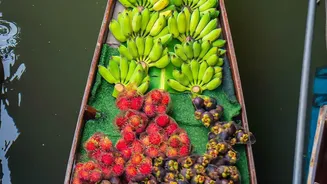




Jamun (Indian Blackberry)
The quintessential monsoon fruit, Jamun is known for its deep purple colour and a unique sweet-and-tart flavour. It's a favourite for a reason, but picking the best ones requires a keen eye. How to Choose: Look for jamuns that are a deep purple or almost
black, as this indicates ripeness. They should be plump with smooth, glossy skin and feel firm but yield slightly to gentle pressure. Avoid fruits that are reddish, green, overly hard, or have wrinkled skin. Storage Tip: Jamun is delicate and spoils quickly. It's best to store them in the refrigerator and consume them within a day or two. Importantly, wash them only right before you plan to eat them, as washing earlier shortens their shelf life.
Litchi
This fragrant, juicy fruit appears at the tail end of summer and the beginning of the monsoon. Its sweet, floral flavour makes it a seasonal treat worth seeking out. How to Choose: A ripe litchi will have a vibrant, bright pinkish-red shell. It should feel firm but give a little when pressed. A good litchi will also feel heavy for its size, indicating plenty of juice. Sniff the fruit; a light, floral fragrance is a great sign, while a fermented smell means it's past its prime. Storage Tip: Fresh litchis can last for a couple of days at room temperature. For longer life, wrap them in a paper towel, place them in a perforated plastic bag, and store them in the refrigerator.
Pears (Nashpati)
The Indian pear, or Nashpati, is a crisp, juicy, and subtly sweet fruit that is perfect for the monsoon. It's known for being gentle on the stomach and is a great source of dietary fibre. How to Choose: A good pear should feel firm and heavy for its size. The skin should be smooth without any major blemishes or soft spots. Unlike other fruits, colour isn't always the best indicator of ripeness for all pear varieties, so focus on the feel and condition of the skin. Storage Tip: Firm pears can be left at room temperature to ripen. Once they yield slightly to pressure near the stem, they are ready to eat and can be moved to the refrigerator to slow down further ripening.
Peaches (Aadoo)
Peaches from the hill states make their welcome appearance during the monsoon. These fuzzy-skinned fruits are prized for their sweet aroma and juicy, flavourful flesh. How to Choose: Look for peaches with a rich, yellowish-orange background colour. A good peach should have a distinct, sweet aroma and feel firm when gently pressed. Avoid fruits that are overly soft, mushy, or have green patches, as they were likely picked too early. Storage Tip: If you buy slightly firm peaches, you can ripen them by placing them in a paper bag at room temperature for a day or two. Ripe peaches are best stored in the refrigerator and eaten within a few days.
Pomegranate (Anaar)
Available through the monsoon, pomegranates are packed with antioxidants and known for their jewel-like seeds. How to Choose: A ripe pomegranate should feel heavy for its size, which indicates juicy seeds inside. Look for fruit with a shape that is slightly angular or hexagonal, not perfectly round, as the ridges show the seeds have pushed against the skin. The skin should be firm, smooth, and a deep, bright red. Tapping the fruit should produce a hollow, metallic sound. Storage Tip: Whole pomegranates can be stored in a cool, dark place for over a week, or in the refrigerator for up to two months. Their tough rind protects them well in the monsoon humidity.
A Note on Monsoon Fruit Safety
The high humidity during the rainy season means fruits can spoil faster and are more susceptible to contamination. Always wash all fruits thoroughly under running water before cutting or eating them. It's best to avoid pre-cut fruits from street vendors, as the risk of contamination is higher. Be extra vigilant about consuming only fresh produce and discard anything that looks overripe, mouldy, or has a broken peel.