


The Invisible Contaminant
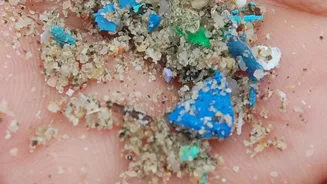
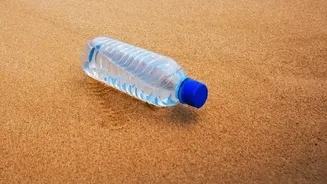
Microplastics are tiny plastic particles, typically smaller than five millimetres, that have unfortunately become a ubiquitous part of our environment. They originate from various sources, including the breakdown of larger plastic waste, fibres from synthetic
clothing, and wear from car tyres. These minuscule fragments find their way into our rivers, lakes, and eventually, our drinking water systems. Studies have shown that tap water across India is not immune, with a significant percentage of samples containing these plastic fibres. While the long-term health effects are still being studied, the presence of these particles—which can absorb other harmful pollutants—in our water is a growing concern for public health.
From Agricultural Waste to Water Purifier
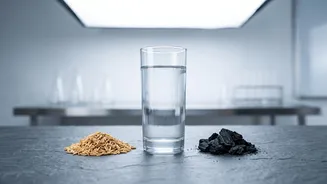
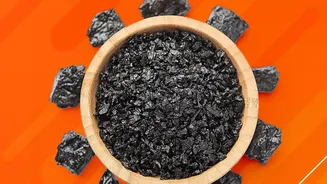
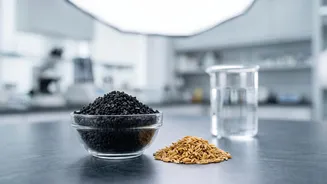
The solution may lie in a common agricultural byproduct: rice husks. India is a major rice producer, generating millions of tonnes of rice husks every year, which are often treated as waste. However, through a process called pyrolysis—heating the biomass in a low-oxygen environment—these husks can be transformed into a charcoal-like substance called biochar. This process not only provides a valuable use for agricultural residue but also creates a highly effective filtration medium. The resulting biochar is a carbon-rich material with a remarkably porous, honeycomb-like structure, making it an ideal candidate for trapping contaminants.
The Science of a Super-Sponge
The power of rice husk biochar lies in its physical and chemical properties. Its incredibly large surface area and extensive network of pores act like a microscopic sieve. As water passes through a biochar filter, microplastic particles are physically trapped and entangled within this complex structure. But it's not just a simple filter. The process also involves mechanisms like adsorption and electrostatic interactions, where the particles effectively 'stick' to the biochar's surface. This combination of physical trapping and surface attraction allows biochar to effectively capture a wide range of microplastic sizes and types. Studies have demonstrated that biochar can remove a very high percentage of microplastics from water, with some lab results showing removal rates of over 90%.
More Than Just Plastics
The benefits of rice husk biochar extend beyond just microplastics. Its versatile surface chemistry allows it to adsorb other harmful pollutants that may be present in water. Research has shown its effectiveness in removing heavy metals, such as lead, as well as organic pollutants like pesticides. This makes it a multi-purpose filtration tool that can tackle several contamination issues at once. Furthermore, using biochar is a sustainable approach. It repurposes agricultural waste that might otherwise be burned or left to rot, and the production process itself sequesters carbon, preventing it from being released into the atmosphere.
The Path to Cleaner Taps
While laboratory results are very promising, the next step is scaling this technology for real-world applications. Challenges include integrating these systems into existing municipal water treatment plants and ensuring cost-effectiveness on a large scale. The efficiency of the filters can also be affected by factors like water flow rate and may decrease over time, requiring replacement. However, researchers are actively working on engineering and modifying biochar to enhance its performance and longevity. The potential to use a low-cost, locally available resource to tackle a widespread pollution problem makes rice husk biochar a compelling solution for ensuring safer drinking water in cities and towns across the country.