



Day 1: The Blues of Jaipur
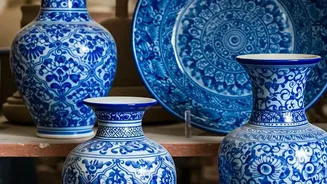
The journey begins in Jaipur, a city whose very air seems tinted with creativity. While the magnificent forts capture the eye, the real magic is found in the workshops of its artisans. First stop: the world of Blue Pottery. Unlike most pottery, this craft
uses no clay. Instead, a dough of quartz powder, glass, and other materials is shaped and fired at low temperatures. Originating from Perso-Mongol techniques, it was embraced by Jaipur's royalty in the 19th century and has since become a city icon. Watching an artist paint intricate cobalt-blue florals onto a semi-transparent vase is mesmerising. This isn't a relic of the past; it's a living art form, adapting into everything from decorative tiles to contemporary jewellery boxes that find their way into modern homes.
Day 2: The Prints of Sanganer and Bagru
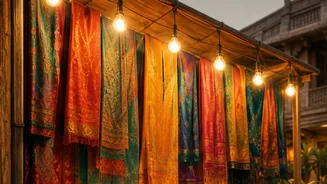
Just outside Jaipur lie the villages of Sanganer and Bagru, the epicentres of Rajasthani block printing. Though often grouped together, their styles are distinct. Sanganer is known for its delicate floral motifs on pristine white backgrounds, a direct-print technique requiring immense precision. A short drive away, Bagru offers a more earthy aesthetic with its famous 'dabu' mud-resist printing. Here, artisans print fabric with a mud paste, which is then dried and dipped in dye, often natural indigo. Once the mud is washed away, the pattern emerges in reverse. Walking through these villages feels like stepping into an open-air workshop, with long stretches of printed cotton drying under the sun, a testament to a 400-year-old tradition that continues to define global textile trends.
Day 3: The Leather Legacy of Jodhpur
The Blue City, Jodhpur, is home to another iconic craft: the leather 'mojari' or 'jutti'. Once made for royalty, this handcrafted footwear is now a staple of ethnic fashion. In the narrow lanes of the old city, communities like the Jingar have been working with leather for generations, a skill that earned the craft a GI tag. Traditionally, women in the household perform the intricate embroidery on the uppers, while men handle the tough work of cutting and stitching the vegetable-tanned leather. The result is a shoe that is both durable and beautiful, designed for the desert climate but equally at home in a modern wardrobe. This isn't just about footwear; it's about preserving a community's identity, stitch by stitch.
Day 4: The Miniature Marvels of Udaipur
Udaipur, the city of lakes, offers a more delicate, contemplative art form: miniature painting. The Mewar School of painting, patronised by Rajput rulers, flourished here. Unlike the Mughal style, Mewar art retained a bold, expressive quality, focusing on religious tales and courtly life. In the city's galleries and workshops, artists continue this painstaking tradition. Using brushes often made of a few squirrel hairs, they create incredibly detailed works on paper, silk, or even marble. The pigments are made from natural minerals and stones, giving the paintings their vibrant, lasting colours. Watching an artist bring a mythological scene to life with such precision is a lesson in patience and devotion, proving that this royal art form still captivates creators and collectors alike.
Day 5: The Weavers of Salawas
The final day is spent away from the cities, in the artisan village of Salawas near Jodhpur. This community is famous for its 'durries', handwoven rugs made from cotton, wool, or camel hair. The rhythmic sound of the pit looms is the village soundtrack. Families welcome you into their homes to demonstrate the weaving process, a skill passed down through generations. The designs are often geometric, inspired by the desert landscape and local symbolism. Buying a durry here is more than a transaction; it's a direct connection to the artisan, ensuring the money supports the community that keeps this tradition alive. It’s a powerful reminder that the heart of Rajasthani craft beats strongest not in a museum, but in the homes of its makers.