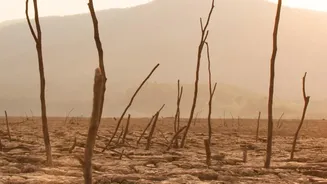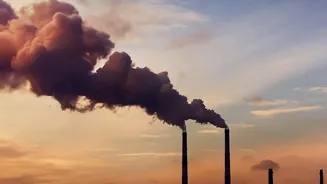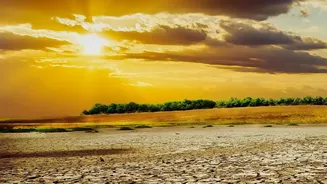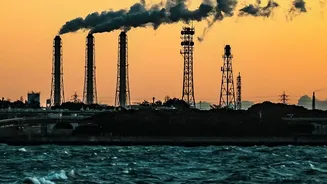






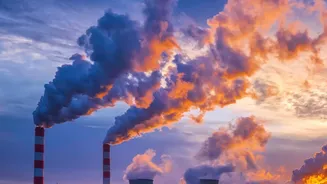

A stark new report released during a UN climate meeting in Antalya, Türkiye, confirms what many have feared: global climate action has stalled, placing the critical 1.5°C warming target in grave jeopardy. This isn't just a number; it's a tipping point.
The UN's Sobering Assessment
The latest analysis from the United Nations paints a grim picture of the world's fight against climate change. According to reports discussed at the UN's COP31 climate summit in Türkiye, momentum has significantly slowed. The UN Environment Programme's (UNEP) Emissions Gap Report for 2026, a key scientific assessment, concludes that the window to limit global warming to 1.5°C above pre-industrial levels without a temporary 'overshoot' has now closed. For five consecutive years, progress has been largely cancelled out by setbacks and a failure to implement promised plans. Even with all current pledges fulfilled, the world is on track for a temperature rise of 2.6°C to 2.7°C by the end of the century, a catastrophic outcome.
What is the 1.5°C Goal?
The 1.5°C target is the cornerstone of the 2015 Paris Agreement, a landmark accord where nations agreed to limit global warming to 'well below 2°C' and 'pursue efforts' to cap it at 1.5°C. This lower limit is not arbitrary. Scientists consider it a critical guardrail to prevent the most devastating and irreversible impacts of climate change, including extreme heatwaves, catastrophic flooding, ecosystem collapse, and submergence of small island nations. Every fraction of a degree beyond this threshold dramatically increases risks for human societies and natural systems. The UN reports now suggest a temporary breach is 'inevitable', shifting the focus to minimizing how high and for how long temperatures exceed this limit.
Why Has Momentum Stalled?
Several factors are contributing to this dangerous inertia. The Climate Action Tracker report, released at the COP31 summit, points to five years of stalled progress where positive steps, like the rapid growth of renewable energy, are offset by negative ones, such as continued investment in fossil fuels. Geopolitical conflicts and economic pressures are diverting resources and political will. Furthermore, there is a massive gap in climate finance. Wealthy nations have not delivered on their promises to help developing countries adapt to climate impacts and transition to clean energy. UN reports show that funding for adaptation is flat or falling, leaving vulnerable nations to face a crisis they did little to create with insufficient support.
The Stakes for India and the Global South
For India, the implications of a stalled global effort are particularly severe. The nation is exceptionally vulnerable to climate change, from melting glaciers in the Himalayas that threaten water security for billions to rising sea levels and more intense monsoons and heatwaves. A world that warms by more than 1.5°C will see these impacts intensify dramatically. While India has made significant strides in renewable energy and has its own climate targets, it, along with other developing nations, argues for 'climate justice'. This principle holds that historically high-emitting developed nations have a greater responsibility to lead in emissions cuts and provide financial and technological support to countries like India, which are balancing development needs with climate action.
Is There Any Hope Left?
The UN reports, while alarming, are not a call for surrender. Instead, they are framed as an urgent call for a radical acceleration of action. The UNEP report outlines a 'peak and decline' pathway, where warming overshoots 1.5°C to around 1.7–1.8°C before being brought back down by the end of the century. Achieving even this 'best–case' scenario requires staggering annual emission cuts of nearly 6% and a massive scale–up of carbon removal technologies, whose feasibility is still uncertain. Success stories, such as the faster–than–expected growth in solar and wind power, show that rapid change is possible. However, these bright spots are not enough to alter the overall trajectory without a fundamental, system–wide transformation.