





Meet India's 'Friend in Space'
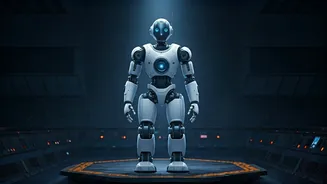
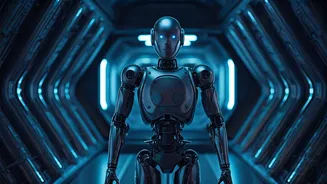
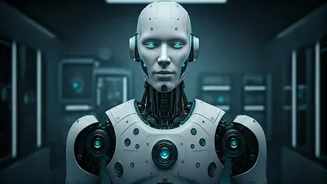
Vyommitra, whose name is a blend of the Sanskrit words for 'space' (Vyoma) and 'friend' (Mitra), is the face of the crucial testing phase for India's ambitious human spaceflight program, Gaganyaan. Developed by the Indian Space Research Organisation (ISRO),
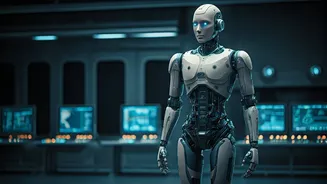
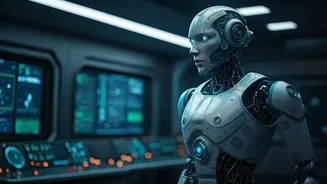
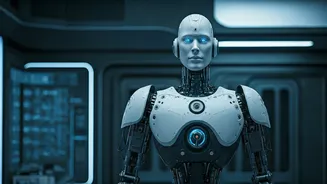
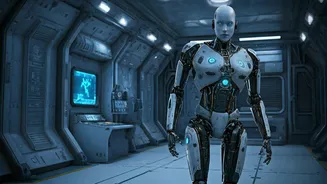
she is a 'half-humanoid'—possessing a torso, head, and arms, but no legs, a design optimised for the confines of a space capsule. First unveiled in 2020, Vyommitra is far more than a simple test dummy; she is an AI-enabled robot built to simulate human functions and provide invaluable data before astronauts, or 'Gaganyatris', make the historic journey. Her construction from a high-strength aluminium alloy is designed to withstand the intense vibrations and pressures of a rocket launch.
A Robot with a Critical Mission
Vyommitra's primary role is to be the sole occupant on uncrewed Gaganyaan test flights. During these missions, she will act as a proxy for a human astronaut, interacting with the spacecraft's systems in a remarkably lifelike way. Her mission objectives include operating switch panels, monitoring the life support systems, and communicating with the ground control station. She is programmed to monitor vital cabin parameters such as temperature, humidity, and carbon dioxide levels, and can even issue alerts if environmental conditions change. By mimicking the actions and presence of a human, Vyommitra will help ISRO engineers understand exactly how the capsule and its life support systems perform in the harsh environment of space.
More Than Just a Passenger
What makes Vyommitra so special is her ability to do more than just occupy a seat. She can mimic human activity, recognise people, and respond to queries in both English and Hindi. Her systems allow her to read the displays in the crew module and operate controls just as an astronaut would. This capability is crucial, as it provides a realistic test of the crew interface and control systems. Her AI module allows for a degree of autonomous decision-making, letting her respond to routine events or anomalies during the flight. This is a key feature for future missions where communication delays with Earth might occur. Essentially, she serves as ISRO's eyes, ears, and hands inside the capsule, ensuring every system is rigorously tested under human-like conditions.
Why Send a Humanoid?
The decision to develop and fly a humanoid robot is a strategic one for ISRO. Instead of just loading a capsule with passive sensors, sending Vyommitra allows for a dynamic, interactive testing process. The goal is to better understand the effects of prolonged exposure to radiation and microgravity on the human body, using the robot as a surrogate. She will gather crucial data on how the flight environment impacts a human-sized and human-acting body, helping to refine the design for a safe and comfortable space capsule. This human-centric data is something that simple instrument readings cannot fully provide. It reflects a cautious, thorough approach to human spaceflight, where every variable is tested to mitigate risk before putting a human crew on board.
The Road to Gaganyaan
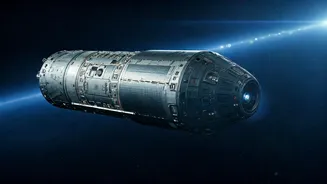
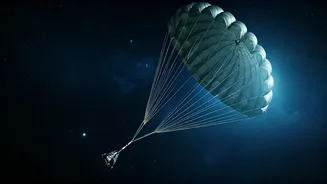
Vyommitra is a vital part of the Gaganyaan program's multi-step plan. Before the first crewed flight, which is anticipated for 2026 or 2027, ISRO has scheduled a series of uncrewed test missions. Vyommitra is expected to fly on the first of these uncrewed orbital missions. These preparatory flights are designed to validate the performance of the human-rated LVM3 launch vehicle, the crew escape system, and the capsule's re-entry and recovery procedures. Each successful test, with Vyommitra at the helm, builds confidence and brings India one step closer to joining the elite club of nations capable of independent human spaceflight.