
The Perfect Post-Monsoon Window
While Sohra is famous for being one of the wettest places on earth, the period from October to November offers a magical balance. The relentless downpours of the monsoon season give way to clearer skies and pleasant temperatures, which range from a cool
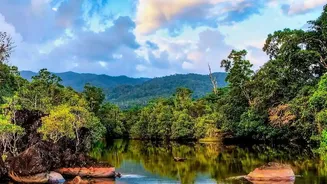
15°C to a comfortable 22°C. This is the season when the landscape, freshly nourished by the rains, is at its most lush and green. The waterfalls, still fed by the monsoon's bounty, flow with impressive force but without the travel-disrupting intensity of the peak wet months. This makes autumn an ideal time for sightseeing and photography, offering crisp views of the deep valleys that are often shrouded in mist during other times of the year.
Chasing Sohra's Legendary Waterfalls
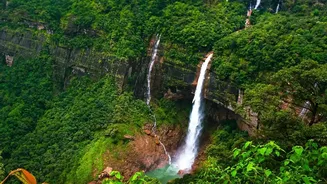
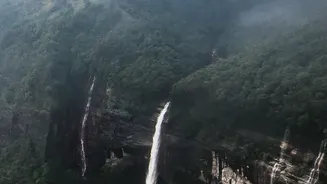
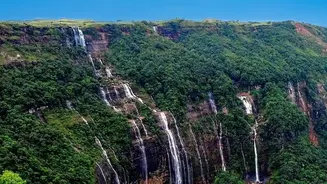
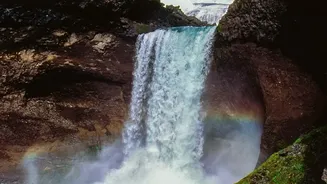
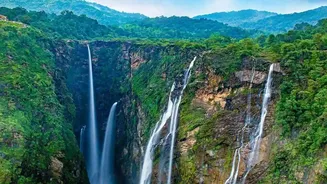
Autumn is prime time for waterfall-hopping. The most famous of these is Nohkalikai Falls, India's tallest plunge waterfall, which drops dramatically for over 340 metres. The post-monsoon flow is powerful, and the clear weather often provides unobstructed views of the turquoise pool it crashes into below. Another must-see is Nohsngithiang Falls, popularly known as the Seven Sisters Falls. Here, seven distinct streams cascade side-by-side down limestone cliffs, creating a mesmerising spectacle. While they can merge into a single curtain of water during the monsoon, autumn allows you to see the individual streams distinctly. For those with more time, Dainthlen Falls and the three-tiered Wei Sawdong Falls are also spectacular sights, each with its own local Khasi legend.
The Living Marvels of Nongriat
No trip to this region is complete without witnessing the bio-engineering marvels of the living root bridges. These structures are not built but grown by the Khasi people, who have for centuries guided the aerial roots of the Ficus elastica (rubber fig) tree across rivers and streams. The most celebrated example is the Jingkieng Nongriat, or the Double Decker Living Root Bridge, located in the village of Nongriat. Reaching it requires a significant trek of over 3,500 steps down into a valley from the starting point in Tyrna village, a short drive from Sohra. The journey is as rewarding as the destination, taking you through dense forests and across shaky suspension bridges. These bridges grow stronger over time, with some being hundreds of years old, representing a perfect harmony between nature and human ingenuity.
Planning Your Autumn Escape
To reach Sohra, the most convenient route is to fly into Shillong Airport (approximately 80 km away) or the larger Guwahati Airport in Assam (around 167 km away) and then hire a taxi for the scenic road journey. The drive from Shillong to Sohra itself takes about two hours and is filled with stunning viewpoints. Accommodation in and around Sohra ranges from comfortable resorts to intimate homestays that offer a glimpse into local life. For the trek to the Double Decker bridge, it's advisable to start early in the morning and carry water and wear shoes with good grip. While the trek can be completed in a day, an overnight stay in a Nongriat homestay allows for a more relaxed experience. Pack layers of clothing, as mornings and evenings can be cool, and always keep a raincoat or umbrella handy for occasional showers.