



Time Travellers in Your Window
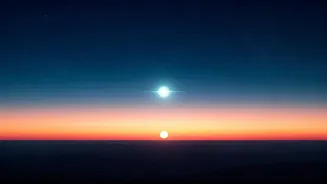
It sounds like science fiction, but it’s a simple, beautiful fact of physics. The universe is so incomprehensibly vast that even light, the fastest thing we know, takes time to travel. When you look at a star, you are not seeing it as it is right now.
You are seeing it as it was when the light first left its surface. A light-year is the distance light travels in one year—about 9.5 trillion kilometres. So, if a star is 10 light-years away, the light you see from it tonight began its journey a decade ago. That faint shimmer hitting your retina is a 10-year-old photon that has travelled across the void of space, undisturbed, until it landed in your eye. Every star in the night sky is a time capsule, and your gaze is the key that opens it.
A Glimpse into the Ancient Past
This isn't just about a few years here and there. Some of the starlight reaching Earth is astonishingly old. Sirius, the brightest star in our night sky, is 8.6 light-years away. Its light started travelling towards you around the time the first iPhone was being launched. The light from Vega, another bright star, is 25 years old; it left when many of us were children. Look towards the constellation of Orion, and the scale explodes. The light from Betelgeuse, the reddish star marking Orion's shoulder, is over 640 years old. It began its journey to your window around the time of the Tughlaq dynasty in Delhi. And if you are in a place with very dark skies, you might even see the faint, fuzzy patch of the Andromeda Galaxy. That light is 2.5 million years old, having started its journey long before modern humans walked the Earth. You are, quite literally, looking at pre-history.
From Science to Serenity
Knowing these facts is one thing. But *feeling* their weight is where mindfulness comes in. In our daily lives, we are trapped in the urgent 'now'—emails, deadlines, traffic, chores. Our sense of time shrinks to the next hour or the next day. Stargazing offers a powerful antidote. It’s a direct, visceral connection to 'deep time'. When you mindfully observe a star, you are not just seeing a point of light. You are participating in the final moment of an ancient journey. This simple act can radically shift your perspective. Your immediate worries and stresses, seen against a backdrop of million-year-old light, can seem a little smaller, a little less overwhelming. It’s an exercise in humility and wonder, available for free every clear night.
Your 5-Minute Cosmic Meditation
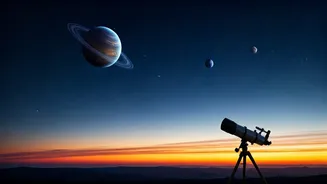
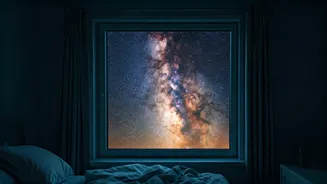
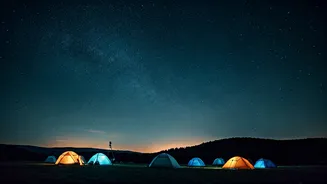
You don't need a telescope or a degree in astrophysics. All you need is a window, a clear patch of sky, and five minutes. Here’s how to do it: 1. **Find your spot:** Turn off the lights in your room and go to a window or balcony. Let your eyes adjust to the darkness for a minute or two. You’ll be surprised how many more stars become visible. 2. **Pick a star:** Don't worry about its name. Just choose any point of light that catches your eye. Focus on it. 3. **Breathe and receive:** As you breathe in and out slowly, imagine that ancient light completing its long journey by entering your eye. It travelled for decades, centuries, or millennia just for this moment of connection. 4. **Contemplate the journey:** Think about what was happening on Earth when that light began its trip. Was it during your parents' childhood? The Mughal era? Before recorded history? Let the scale of it wash over you. 5. **Acknowledge your place:** Feel your own small, precious place in this vast, unfolding story. You are a conscious being on a small planet, witnessing light from a time long past. Simply hold that thought for a few breaths before you turn away.