







First, It's Not Tahini
Let’s get the most important distinction out of the way. While both are made from sesame seeds, toasted sesame paste and tahini are fundamentally different products with different flavour profiles. Tahini, a cornerstone of Middle Eastern and Mediterranean
cooking, is typically made from raw or very lightly toasted white sesame seeds. It has a mild, subtly nutty, and sometimes slightly bitter flavour. Toasted sesame paste, often found in Chinese, Japanese, and Korean cuisines, is made from seeds that have been deeply roasted before being ground. This simple difference in process creates a world of difference in taste. Think of it as the difference between a raw peanut and a roasted one; the flavour is exponentially deeper, more complex, and more pronounced.
The Science of Deep, Nutty Flavour
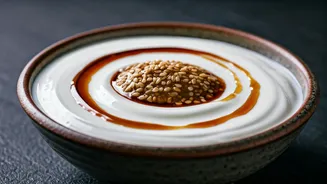
The magic is in the toast. When sesame seeds are roasted, they undergo the Maillard reaction and caramelization—the same chemical processes that give browned butter, toasted bread, and roasted coffee their incredible aromas and flavours. This process develops hundreds of new flavour compounds that simply don't exist in raw seeds. The resulting paste is intensely nutty, smoky, and savoury, with a richness that can’t be replicated. When you stir this into a yogurt dip, you’re not just adding a hint of sesame; you're layering in a foundational depth of flavour. It moves the dip from being simply tangy and fresh to something complex, satisfying, and umami-rich. It complements the tartness of the yogurt rather than just sitting alongside it.
A Shortcut to Unbelievable Creaminess
Beyond flavour, toasted sesame paste is an emulsifying champion, contributing to a luxuriously smooth and creamy texture. The paste is incredibly fine-ground, and the oils released during the deep roasting process help it blend seamlessly into the yogurt. While tahini can sometimes be grainy or prone to splitting (especially if it’s not fresh), high-quality toasted sesame paste has a velvety consistency that melts into the yogurt base. This creates a dip with a fuller, more substantial mouthfeel, preventing that watery texture that can sometimes happen when you mix in acidic ingredients like lemon juice. A single spoonful can make your dip feel richer and more cohesive without adding any extra dairy or thickeners.
The Ultimate Flavour Bridge
One of the most essential roles of toasted sesame paste in a yogurt dip is as a 'flavour bridge.' Its robust profile helps to marry the other ingredients. The sharp bite of raw garlic is mellowed by the paste's nutty warmth. The bright acidity of lemon juice finds a savoury counterpoint, creating a more balanced and rounded taste. It has enough character to stand up to bold herbs like mint and coriander, weaving them into the fabric of the dip instead of letting them float on top. This harmonizing effect is what elevates a simple mix of ingredients into a thoughtful composition. The paste ensures that no single flavour screams for attention; instead, they all work together to create a more sophisticated and delicious whole.
How to Use It for Best Results
Using toasted sesame paste is incredibly simple. You can find it at most Asian supermarkets or online; look for brands from Japan or China, often in a glass jar. Because its flavour is so concentrated, a little goes a long way. Start by whisking one tablespoon of the paste into one cup of thick, full-fat yogurt (like Greek yogurt or labneh) before adding any other ingredients. Whisk until it's completely smooth, then proceed with your recipe, adding garlic, lemon juice, salt, and herbs. You might find you need less garlic or salt than usual, as the paste brings its own savoury depth. Don't stop at dips, either. A small amount can transform salad dressings, marinades for grilled vegetables, or even a simple bowl of noodles.