


The Challenge of Modern Science
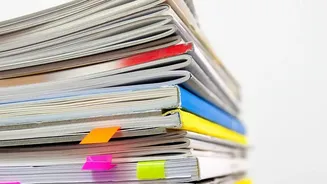
Academic publishing is the bedrock of scientific progress, but it's under immense pressure. The sheer volume of new research makes the traditional peer-review process, which relies on human experts, a slow and overburdened system. This strain can lead
to errors slipping through the cracks—from simple typos and incorrect data to more significant issues like flawed methodology or data manipulation. These mistakes, if left uncorrected, can persist for decades, influencing future research in the wrong direction and eroding trust in science itself. The problem isn't a lack of effort but a lack of bandwidth. Human reviewers, no matter how diligent, are simply unable to manually check every data point, verify every citation, and re-run every statistical analysis at the speed and scale required.
Enter the AI Auditor
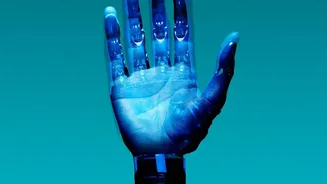
This is where AI agents come in. These are not sentient robots, but sophisticated software systems trained to perform specific, rule-based tasks with incredible speed and precision. In the context of scientific auditing, these AI agents can be programmed to systematically scan research papers for a wide range of potential issues. They can check for grammatical mistakes, inconsistencies in terminology, and ensure that every reference in the text matches the bibliography. More advanced agents can even perform initial plagiarism checks, flag statistical anomalies, and identify potential image manipulation. One chemist, for instance, used an AI model that flagged an error in a 75-year-old reference database that had been considered fact for generations. By automating these technical checks, the AI acts as a powerful first-pass filter, freeing up human experts to focus on what they do best.
What AI Catches (and Misses)
AI agents excel at spotting objective, pattern-based errors. They can verify calculations, check for formatting compliance with journal guidelines, and flag inconsistencies in data reporting across a manuscript. For example, an AI can quickly identify if a paper's abstract exceeds the word count or if the references don't follow the required citation style. Some systems are now being used to systematically audit papers at major conferences, revealing high rates of reproducibility issues and mathematical errors. However, AI has significant limitations. It lacks the nuanced understanding of a human expert. It cannot evaluate the novelty of a hypothesis, the appropriateness of a research method in a specific context, or the significance of a study's conclusions. It can flag a statistical anomaly, but it can't always understand why it's there or whether it's a genuine discovery or a simple error.
The Indispensable Human Element
This is why the process is not about AI replacing humans, but augmenting them. The headline of this article gets it right: it’s about the human review of machine-flagged mistakes. An AI might flag dozens of potential issues in a paper, but many of these could be false positives or require contextual understanding that only a human possesses. The ultimate responsibility for interpreting the AI's output and making a final judgment must always rest with an experienced professional. This human-in-the-loop model ensures that the efficiency of the machine is balanced with the wisdom and critical thinking of the expert. The human reviewer validates the AI's findings, dismisses irrelevant flags, and investigates the complex issues that a machine cannot grasp. This collaborative approach is essential for maintaining the integrity and quality of academic work.
A New Era of Scientific Collaboration
The future of scientific integrity lies in this partnership between human intellect and machine-scale analysis. Rather than viewing AI as a judge, the scientific community sees it as a powerful detector that helps find potential problems on a scale humans could never manage alone. Already, major publishers like Springer Nature are developing in-house AI tools to screen for issues like irrelevant references or AI-generated fake content. As these tools become more sophisticated, they will become an indispensable part of the research workflow, not just for journal editors but for authors themselves. Researchers are increasingly using AI assistants to pre-check their own work before submission, catching errors early and improving the quality of their manuscripts from the start. This collaborative model promises to accelerate publication timelines, improve the reliability of research, and ultimately strengthen the foundation of scientific knowledge.