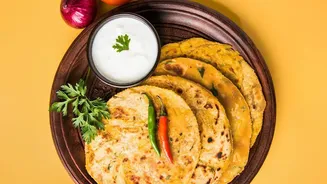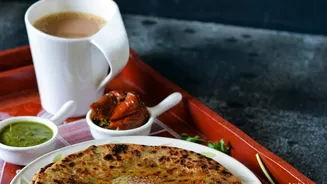







Tired of the usual poha or toast for breakfast? It’s time to introduce a touch of indulgence to your mornings. Reshmi Paratha, with its unbelievably soft, silky texture, is the perfect way to elevate your first meal of the day.
What Makes a Paratha 'Reshmi'?
The word 'Reshmi' translates
to 'silky' in Hindi, and that perfectly describes this unique flatbread. Unlike its crispier counterparts, the Reshmi Paratha is prized for its melt-in-your-mouth tenderness. The secret lies in a special dough, which often incorporates ingredients that ensure a soft and pliable texture. While some recipes call for cream or yeast, a popular and accessible method uses boiled and mashed potatoes to achieve that signature softness without altering the taste significantly. This method creates a paratha that is both delicate and flavourful, making it a standout choice for a special breakfast or brunch.
Gathering Your Essential Ingredients
The beauty of the Reshmi Paratha lies in its simplicity. You won't need to hunt for exotic ingredients; most are likely already in your pantry. For this recipe, which uses the potato method for softness, you will need: two medium boiled potatoes, about one cup of whole wheat flour or a mix of whole wheat and all-purpose flour (maida), finely chopped green chillies, coriander leaves, and spices like cumin seeds, chilli flakes, and salt. You will also need ghee or oil for kneading and cooking. The potatoes should be boiled until very tender and then grated or puréed to ensure there are no lumps in the dough.
Crafting the Perfect Silky Dough
This is the most crucial step. Start by grating your cooled, boiled potatoes into a large mixing bowl. To this, add your flour, chopped chillies, coriander, salt, cumin seeds, and chilli flakes. The key here is to knead the dough without adding any water. The moisture from the boiled potatoes is sufficient to bring the flour together. Begin mixing the ingredients, and as they combine, the mixture will start forming a dough. Add a tablespoon of oil to make it smooth and prevent it from sticking. Knead for a few minutes until you have a soft, pliable, and non-sticky dough. Cover it and let it rest for at least 20 to 30 minutes. This resting period is essential as it allows the gluten to relax, which contributes to the paratha's softness.
Rolling and Cooking to Golden Perfection
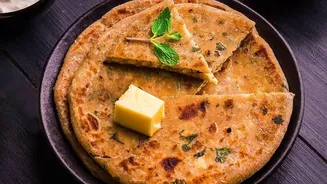
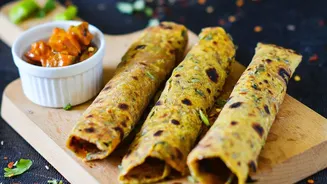
After the dough has rested, divide it into equal-sized small balls. These parathas are meant to be thin, so don't make the balls too large. Lightly flour a rolling surface and roll out each ball into a thin circle, much like a chapati. Some recipes create layers by brushing the rolled circle with ghee, sprinkling it with flour, and then rolling it into a log and coiling it before rolling it out again. However, for a simpler, soft Reshmi Paratha, you can simply roll it thin. Heat a tawa or skillet on medium_high heat. It's important that the tawa is hot before you place the paratha on it, otherwise it can become stiff. Cook the paratha for about a minute on one side before flipping. Apply ghee or oil to both sides and cook, pressing gently with a spatula, until you see golden_brown spots. The goal is a soft, cooked paratha, not an overly crispy one, so cook it quickly.
Perfect Pairings for a Varied Breakfast
Now that you have a stack of warm, silky Reshmi Parathas, how should you serve them? The options are wonderfully diverse. For a simple and classic breakfast, serve them with a dollop of butter, a side of plain yogurt, or your favourite pickle. They are also fantastic with a hot cup of masala chai, a pairing that is pure comfort. If you're looking for a more substantial meal, these parathas are the perfect vessel for a savoury side. They pair beautifully with a simple potato curry (aloo sabzi), a protein_rich chickpea curry, or Indian_style scrambled eggs (egg bhurji). The soft texture of the paratha beautifully complements the flavours of these hearty dishes, making your breakfast anything but boring.