


The Motivation Behind Fake Pepper
The reason for black pepper adulteration is simple: money. As one of the world's most traded spices, pure black pepper has a high economic value. To increase profits, some sellers mix whole peppercorns with cheaper substitutes that look strikingly similar
to the naked eye. The most common adulterant is dried papaya seeds, which are chosen for their low cost and visual resemblance to real peppercorns. Other fillers can include 'light berries' (immature peppercorns without a kernel), pinheads, and in ground pepper, substances like spent pepper husks, buckwheat flour, and sawdust. Some adulterated pepper may also be coated with mineral oil to give it an artificial sheen.
Your First Check: The Visual Inspection
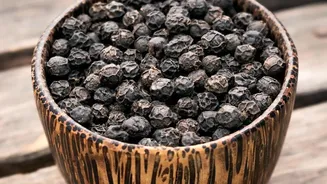
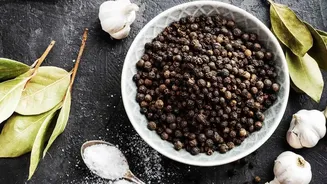
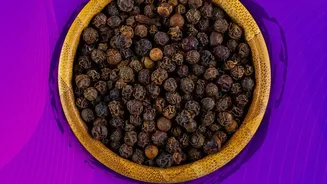
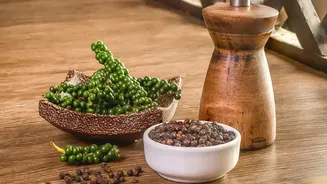
You can often spot fakes with a careful look. Pour some peppercorns onto a white plate to examine them under good light. Genuine black peppercorns are typically dark brown to black, with a distinctly rough and wrinkled surface. While sizes can vary slightly, they should look relatively uniform. Adulterants like papaya seeds often appear different upon closer inspection. According to the Food Safety and Standards Authority of India (FSSAI), papaya seeds are more oval-shaped, with a shrunken but smoother surface, and can have a greenish-brown or blackish hue. An unnaturally glossy or shiny appearance could be a red flag for a mineral oil coating.
The Simple Float Test
One of the easiest and most reliable at-home methods is the water test, recommended by food safety authorities like the FSSAI. Simply drop a spoonful of whole peppercorns into a glass of plain water. Pure, mature black peppercorns are dense and will sink to the bottom. Many common adulterants, including dried papaya seeds and hollow, light berries, are less dense and will float to the surface. While a few floating pieces may not be a major concern, a large number of floaters is a strong indicator that the pepper has been mixed with inferior or fake ingredients.
The Crush, Smell, and Taste Test
Your other senses are powerful tools for detecting fakes. Place a few peppercorns on a hard surface and press down firmly with your finger or a spoon. A pure, mature peppercorn is hard and will resist breaking. Adulterants like papaya seeds or light berries are often softer and will crush or crumble easily. When crushed, real pepper releases a strong, pungent, and spicy aroma. A fake may have a weak, bland, or repulsive smell. If you detect a faint chemical or kerosene-like odour, it may indicate a mineral oil coating. Finally, a taste test can be revealing; genuine pepper has a sharp, pungent flavour, while adulterants often taste bland or starchy.
The Challenge with Ground Pepper
While identifying whole adulterants is straightforward, spotting fakes in pre-ground pepper is much harder. Once ground, the spice's visual identity is lost, making it easy to mix in fillers like sawdust, bran, various flours, or even brick powder. One simple test is to sprinkle a small amount of pepper powder into a glass of water. Pure pepper will largely sink, while lighter fillers like sawdust may float. An iodine test can also reveal the presence of starch-based fillers; a few drops of iodine will turn the powder a blue-black colour if starch is present. However, given the difficulty in detection, the safest approach is to buy whole peppercorns and grind them at home as needed.
How to Buy with Confidence
To avoid bringing adulterated pepper into your kitchen, prevention is key. Always try to buy whole peppercorns rather than pre-ground powder. Purchase spices from trusted, reputable brands and retailers who are transparent about their sourcing. Be wary of prices that seem too good to be true, as extremely cheap spices are a major red flag for adulteration. When you have a choice, look for packaging that includes an FSSAI license number, a batch number, and clear manufacturing and expiry dates. By being a mindful shopper and using these simple checks, you can ensure the pepper in your jar is the real deal, delivering the flavour and quality you expect.