
The Sun's Constant Fiery Breath
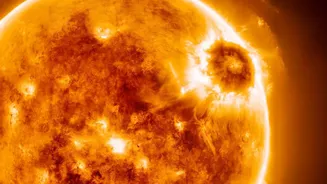
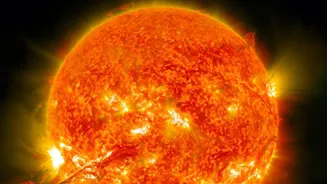
Imagine the sun not just as a source of light and heat, but as an entity that is constantly breathing out a stream of material across the solar system. This is the solar wind. It's not like the wind we feel on Earth; instead, it's a superheated, fast-moving
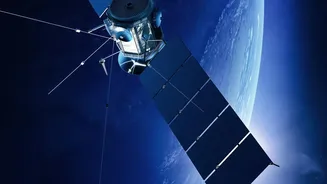
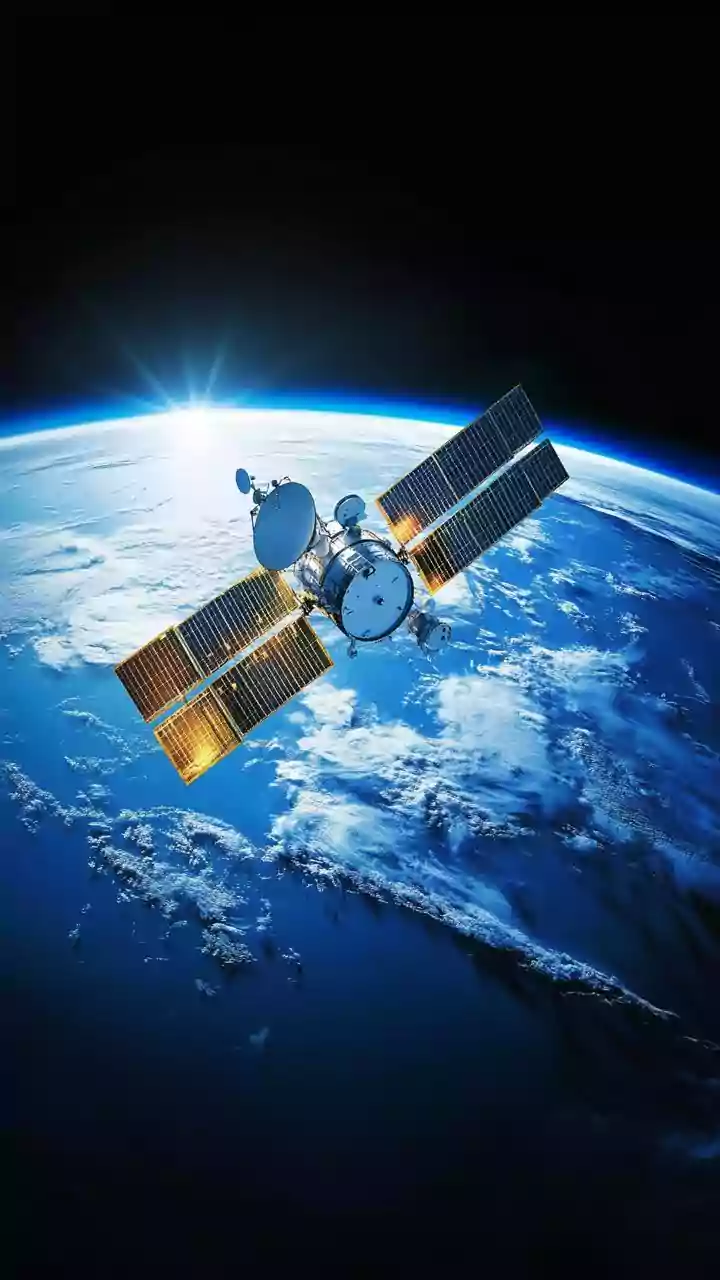
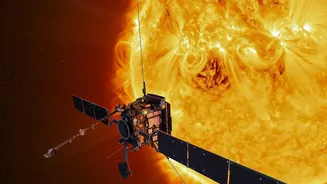
flow of plasma—a state of matter where electrons are stripped from their atoms, creating a mix of charged particles like ions and electrons. This solar wind travels at incredible speeds, often between 300 to 800 kilometers per second. Understanding its properties is vital because disturbances in this flow, known as space weather, can impact our satellites, power grids, and communication systems. Aditya-L1 is strategically placed at the first Lagrange point (L1), about 1.5 million kilometers from Earth, to get an uninterrupted view and act as an early warning system.
The Right Tools for an Invisible Foe
To study the solar wind directly, Aditya-L1 has what are called 'in-situ' instruments, which means they measure the environment right around the spacecraft. For decoding plasma temperature and velocity, two key payloads are at the forefront: ASPEX (Aditya Solar wind Particle EXperiment) and PAPA (Plasma Analyser Package for Aditya). These aren't cameras that take pictures, but highly sensitive detectors designed to 'catch' and analyze the particles of the solar wind as they fly past the spacecraft. ASPEX was developed by the Physical Research Laboratory in Ahmedabad, while PAPA comes from the Vikram Sarabhai Space Centre in Thiruvananthapuram, showcasing a nationwide scientific collaboration.
Measuring Speed: How Fast is the Wind?
The Aditya Solar wind Particle EXperiment, or ASPEX, is the mission's primary speedometer for the solar wind. It has a subsystem called the Solar Wind Ion Spectrometer (SWIS). Think of SWIS as a sophisticated net that catches solar wind ions, mainly protons and alpha particles (the nuclei of helium atoms). When these particles enter the sensor, it doesn't just count them; it measures their energy. By analyzing how much kinetic energy each particle has, scientists can precisely calculate its velocity. The higher the energy of a captured ion, the faster it was moving. With two sensors providing a 360-degree view, SWIS can build a comprehensive map of the solar wind's speed and direction, giving a clear picture of how fast this interplanetary 'breeze' is blowing at any given moment.
Taking the Temperature: How Hot is Plasma?
Measuring the temperature of a plasma millions of degrees hot isn't about using a thermometer. Instead, it's about measuring the energy distribution of the particles. This is where the Plasma Analyser Package for Aditya (PAPA) comes in. PAPA’s sensors, named SWEEP (Solar Wind Electron Energy Probe) and SWICAR (Solar Wind Ion Composition Analyser), measure the range of energies of electrons and ions in the solar wind. Temperature in a plasma is a measure of the random motion and energy spread of its particles. If all the particles are moving at roughly the same speed in the same direction, the temperature is low. But if the particles are zipping around chaotically with a wide range of energies, the temperature is high. PAPA precisely measures this energy distribution, allowing scientists to determine the 'kinetic temperature' of the solar wind.
Building a Complete Weather Report
By combining the data from ASPEX and PAPA, scientists get more than just two numbers for speed and temperature. They get a detailed 'velocity distribution' and 'temperature distribution.' This means they can see how many particles are moving at different speeds and have different temperatures within the same stream of solar wind. This detailed profile is crucial for understanding the physics of how the sun heats its own atmosphere (the corona) to millions of degrees and accelerates the solar wind to such incredible speeds. These continuous, detailed measurements from Aditya-L1 provide vital data for building and improving our models of space weather, helping to predict solar storms and protect our technological infrastructure both in space and on Earth.