
Beyond the Visible Rainbow
Our eyes are only tuned to a tiny fraction of all the light that exists, which astronomers call the electromagnetic spectrum. This spectrum is a vast range of light, from low-energy radio waves and microwaves to high-energy ultraviolet (UV), X-rays, and gamma
rays. Visible light, the rainbow we know, sits right in the middle. Think of it like a radio dial; if you only listen to one station, you miss all the other music being played. To get the full story of a galaxy, astronomers need to tune their telescopes to all these different 'stations' of light. What an object emits depends on how energetic it is; cooler objects glow in lower-energy light, while hotter, more violent events produce high-energy light.
The Familiar View in Visible Light
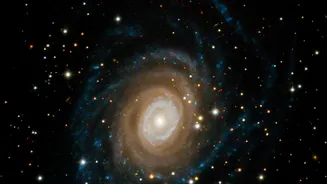
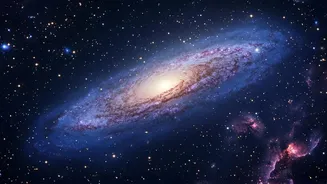
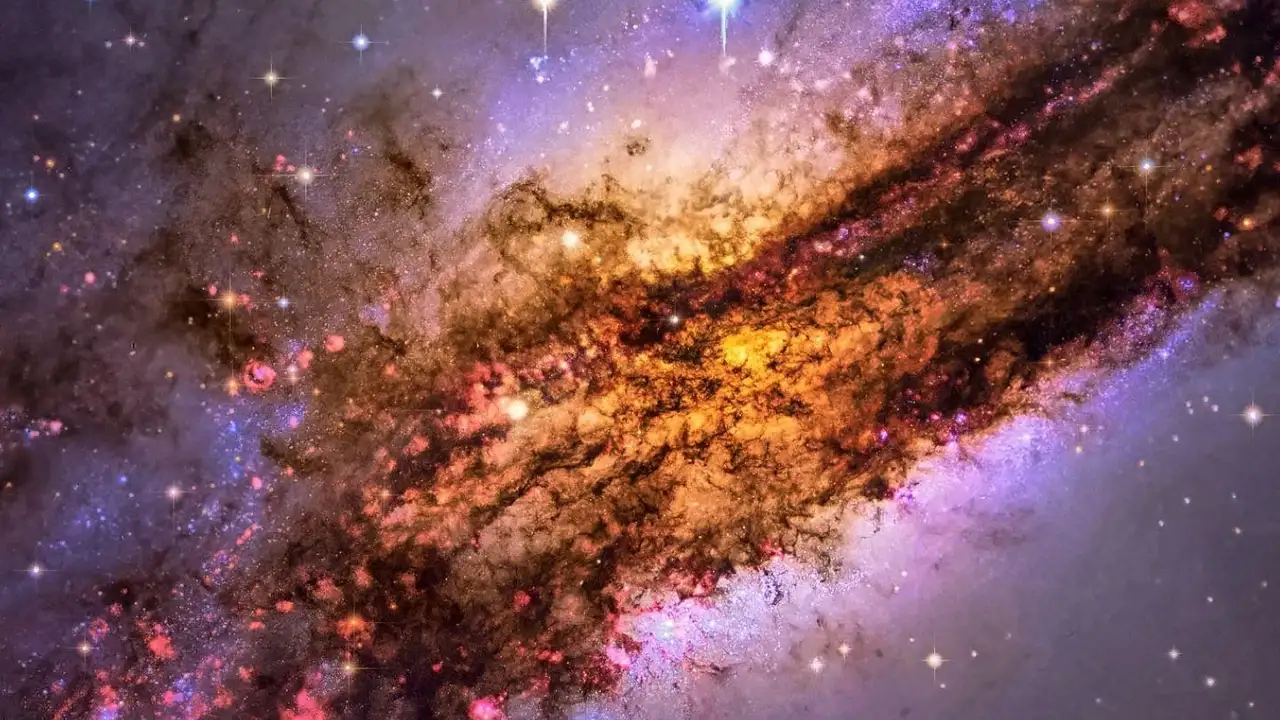
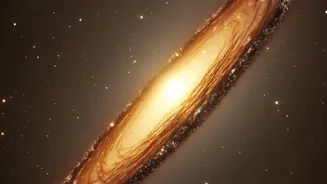
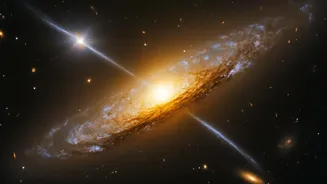
When we see a 'standard' picture of a galaxy, like our neighbour Andromeda, we're typically looking at it in visible light. This view shows us the glow of stars, much like how we see our own Sun. It reveals the grand spiral arms and the bright central core, painting a beautiful but incomplete picture. The problem is that vast clouds of cosmic dust often block this light, acting like a thick fog. These dark dust lanes, while dramatic, hide what's going on behind or within them, especially the birth of new stars. To see through this veil, astronomers need to switch to a different kind of light.
Peering Through Dust with Infrared
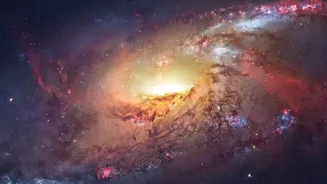
This is where infrared light becomes a superstar. Telescopes like the James Webb Space Telescope are masters of the infrared universe. Infrared light has a longer wavelength that can pass through the dense clouds of dust that obscure visible light. When astronomers switch to an infrared view, those dark, obscuring dust lanes suddenly glow, revealing their own heat. More importantly, this light unveils the nurseries where new stars are being born, which are usually hidden deep within gas and dust clouds. The brightest infrared galaxies are often those furiously creating new stars, an event known as a starburst. By capturing this light, we get a completely different perspective, one focused on creation and cosmic construction.
Uncovering Violence with X-Rays
If infrared light shows where stars are born, high-energy light like X-rays reveals where cosmic drama unfolds. The universe in X-rays is a place of extreme heat and violence. This light is produced by matter heated to millions of degrees, often by cataclysmic events. X-ray telescopes, like NASA's Chandra X-ray Observatory, can spot material spiralling into a supermassive black hole at a galaxy's centre. They also see the remnants of exploded stars (supernovae) and pairs of stars where one is a dead stellar core siphoning gas from its partner. In X-ray light, the calm-looking spiral galaxy disappears, replaced by a map of its most energetic and violent hotspots.
Assembling the Cosmic Puzzle
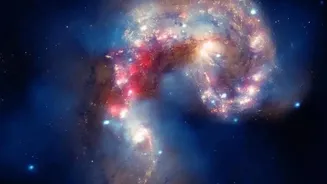
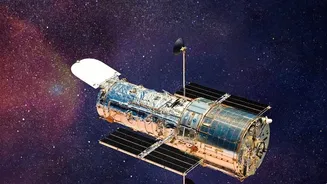
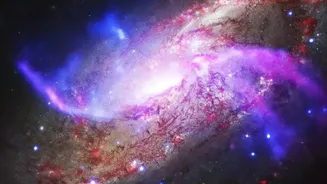
No single wavelength tells the whole story. The true magic happens when astronomers combine these different views into a single, multiwavelength image. In these composite images, data from different telescopes are layered together. Scientists assign visible colours (like red, green, and blue) to the invisible wavelengths. For example, infrared data might be coloured red, visible light green, and X-rays blue. The result is a vibrant, colourful portrait that reveals the intricate relationships between stars, dust, and high-energy phenomena. These combined images, like those of galaxy cluster MACS0416, allow us to see how hot gas, star-forming regions, and the galaxy's overall structure all fit together. By combining the views of Hubble and Webb, astronomers create some of the most colourful and detailed pictures of the universe ever seen.