


The Best Meteor Shower of the Year
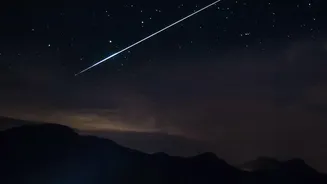
August is famous for the Perseid meteor shower, and 2026 is an exceptionally good year to watch it. The shower peaked on the nights of August 12 and 13, but it remains active until late August. The reason this year is so special is that the peak coincided
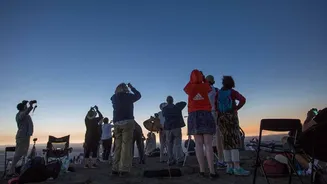
with a new moon, creating perfectly dark skies that make it easier to spot the fainter meteors. If you find a dark spot away from city lights, you might still catch some of these shooting stars, which are actually tiny debris particles left behind by the comet Swift-Tuttle. For the best chance, look towards the northeastern sky after midnight, but meteors can appear anywhere. Patience is key, so give your eyes at least 20 minutes to adjust to the darkness.
A Parade of Planets
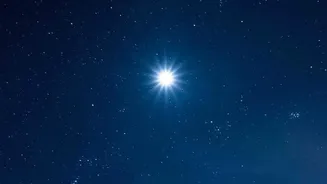
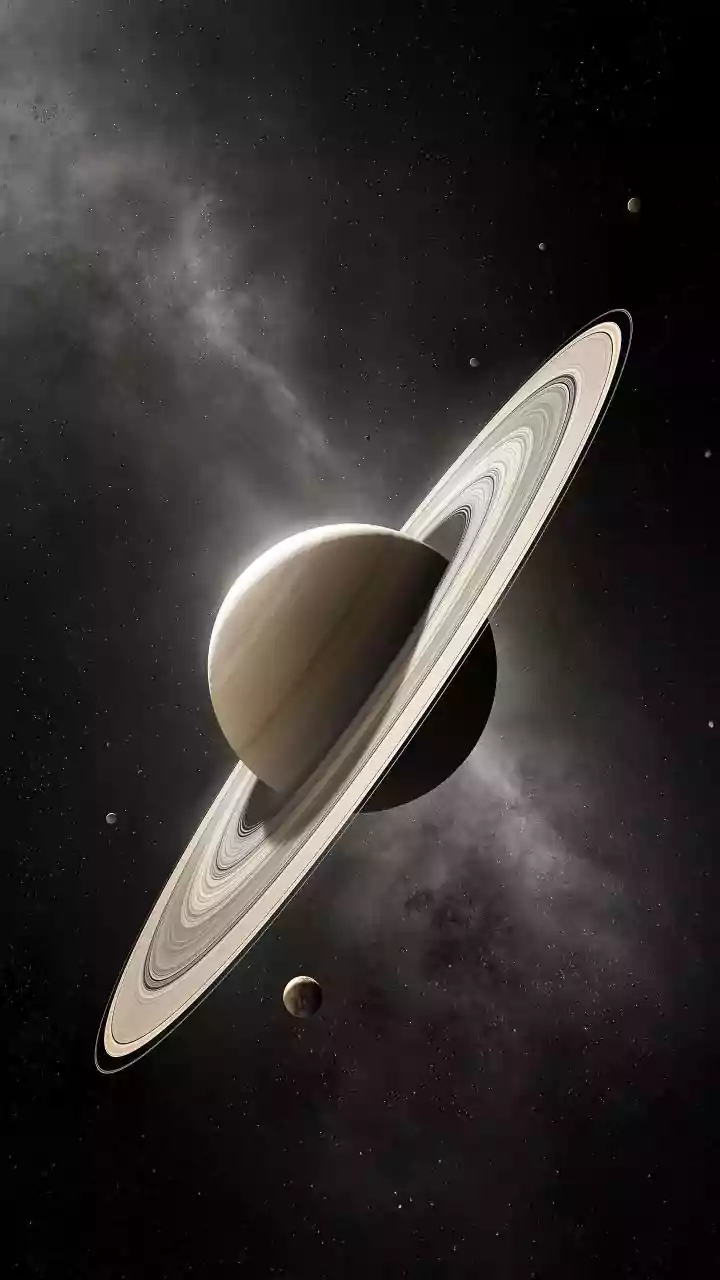
Several planets are making an appearance in the August sky. Yellowish Saturn rises in the evening and is a brilliant, steady light high in the sky before dawn. Reddish Mars is also visible in the pre-dawn hours, appearing as a distinct orange-red point of light in the eastern sky. On August 9, the crescent moon passed close to Mars, providing a helpful guide to locate the Red Planet. Venus shines brightly as an 'evening star' in the western sky right after sunset. A planetary parade featuring Mercury, Jupiter, Mars, and Saturn was visible around August 12, though some planets like Mercury and Jupiter were very low on the horizon and harder to spot.
Constellations to Look For
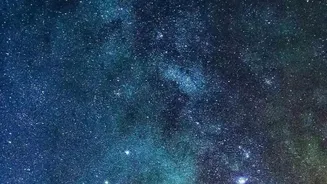
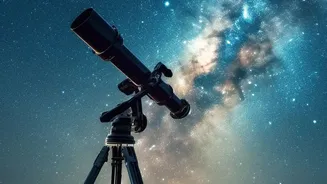
Even as a beginner, you can learn to spot some of the sky's most famous patterns. This month, look high overhead for the Summer Triangle, a large and bright asterism formed by three stars: Vega, Deneb, and Altair. It's so bright it can be seen even from light-polluted areas. Looking towards the south, you can find the constellations Sagittarius and Scorpius. From a dark location, the band of our own Milky Way galaxy appears as a hazy, glowing cloud of stars running through this part of the sky. Sagittarius is often imagined as a teapot, with its spout pointing toward the dense, bright core of the Milky Way.
A Late-Month Lunar Eclipse
Mark your calendar for August 28, when a partial lunar eclipse will be visible from India, weather permitting. During this event, a portion of the full moon will pass through the Earth's darkest shadow, causing that part of the moon to appear noticeably dimmer. Unlike a solar eclipse, a lunar eclipse is perfectly safe to view with the naked eye, binoculars, or a small telescope. It's a slow-moving and beautiful event that offers a great opportunity to watch the mechanics of our solar system in action.
Your Stargazing Starter Guide
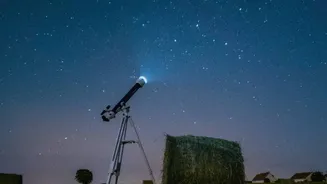
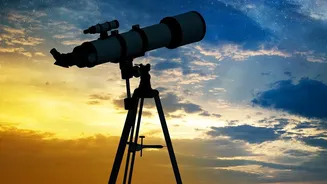
Getting started with stargazing is simple. The most important step is to get away from city lights. The darker the location, the more you will see. For the best views in India, consider travelling to high-altitude, dry regions like Ladakh or Spiti Valley, or arid zones like the Rann of Kutch and Rajasthan. If that's not possible, even a local park or a rural area outside your city will make a huge difference. Dress comfortably for the weather and bring a reclining chair or a blanket to lie on. Allow your eyes about 20-30 minutes to fully adapt to the dark; avoid looking at your phone screen. While you don't need a telescope, a pair of binoculars can dramatically enhance your view of star clusters and the moon.