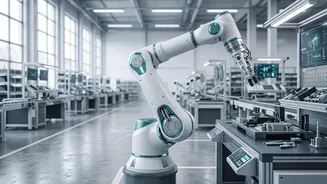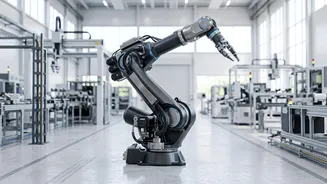






In a landmark move for the robotics industry, Eka Robotics has secured a staggering $150 million in funding. This isn't just about the money; it's a vote of confidence in a technology that promises to solve one of automation's biggest challenges.
A Funding Milestone
Eka Robotics,
a Cambridge, Massachusetts-based startup, recently announced its $150 million Series A funding round. The investment was co-led by prominent venture capital firms Andreessen Horowitz (a16z) and F-Prime, which is affiliated with Fidelity Investments' parent company. The substantial fundraise, which values the company at an impressive $1.45 billion, also saw participation from previous seed investors and several major strategic partners, including Samsung Next. For a company focused on the complex field of dexterous manipulation, this level of investment is a significant endorsement of its vision and technology. It provides the capital needed to scale its operations, accelerate customer deployments, and further develop its unique approach to making robots more versatile and performant in real-world settings.
The Challenge of a Gentle Touch
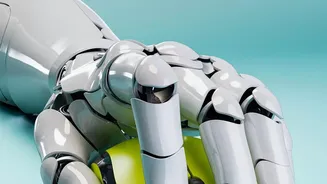
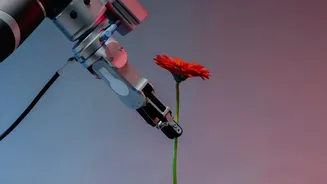
For decades, industrial robots have been the workhorses of manufacturing, excelling at tasks defined by repetition, strength, and precision, such as welding car frames or lifting heavy components. However, their utility has been limited by a fundamental clumsiness. Traditional robots often lack the finesse to handle objects that are fragile, irregularly shaped, or varied in size—think of sorting different fruits, assembling delicate electronics, or packing mixed goods for an e-commerce order. This is where 'soft robotics' and advanced manipulation come in. The goal is to move beyond rigid, pre-programmed movements and create systems that can adapt, sense, and interact with the world in a more human-like way, gently handling an egg or a strawberry with the same confidence they might apply to a metal part.
Vision, Force, and Action
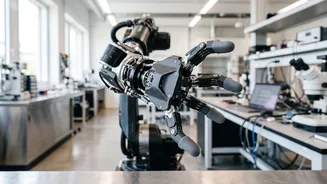
Eka's breakthrough lies in its proprietary Vision-Force-Action (VFA) model. Unlike systems that rely primarily on computer vision to guide a robot's actions, Eka integrates a crucial third element: force. Their custom-designed robotic hands are equipped with advanced sensors that provide real-time tactile feedback, allowing the robot to 'feel' an object. This enables it to detect if a grip is slipping and adjust its pressure and trajectory instantly, much like a person would. This AI-driven approach is honed through reinforcement learning in a simulated environment, where the robot can practice tasks millions of times, learning the physics of manipulation far faster than through human demonstration. The result is a robot that can not only see where an object is but also understand how to hold it securely and gently.
Unlocking New Industries in India
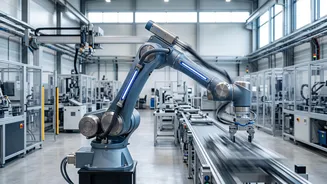
The implications of this technology are vast, particularly for India's burgeoning industrial and consumer sectors. In the massive e-commerce and logistics industry, these robots could automate the complex task of sorting and packing a near-infinite variety of products, boosting warehouse efficiency. In agriculture, they offer a solution for the delicate post-harvest handling of fruits and vegetables, a critical step where significant waste can occur. India's electronics and automotive manufacturing sectors also stand to benefit, as such robots can perform intricate assembly tasks involving small, fragile components with greater reliability. By automating tasks that were previously too complex for machines, this technology can help Indian companies scale operations, improve quality control, and enhance worker safety by taking over strenuous, repetitive jobs.
The Future of Smart Factories
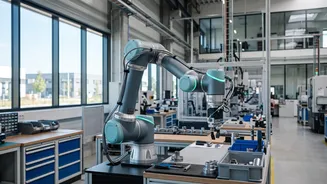
The success of companies like Eka Robotics is a critical component of the global push towards Industry 4.0 and initiatives like 'Make in India'. Developing this advanced robotics capability domestically reduces reliance on foreign technology and builds a more competitive, self-sufficient manufacturing ecosystem. As investors pour more capital into the Indian robotics space, which saw funding jump significantly in recent years, the foundation for this transformation is growing stronger. Eka's technology demonstrates a path forward where robots are not just powerful, but also intelligent and adaptable. They become collaborative partners ('cobots') that can work safely alongside humans, handling the delicate and unpredictable tasks that have long been beyond the reach of automation. This shift promises to redefine the factory floor, making it more efficient, flexible, and resilient.