


The Hunt for Frozen Treasure
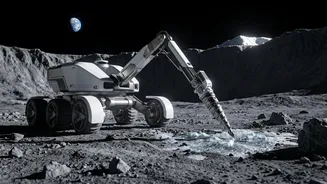
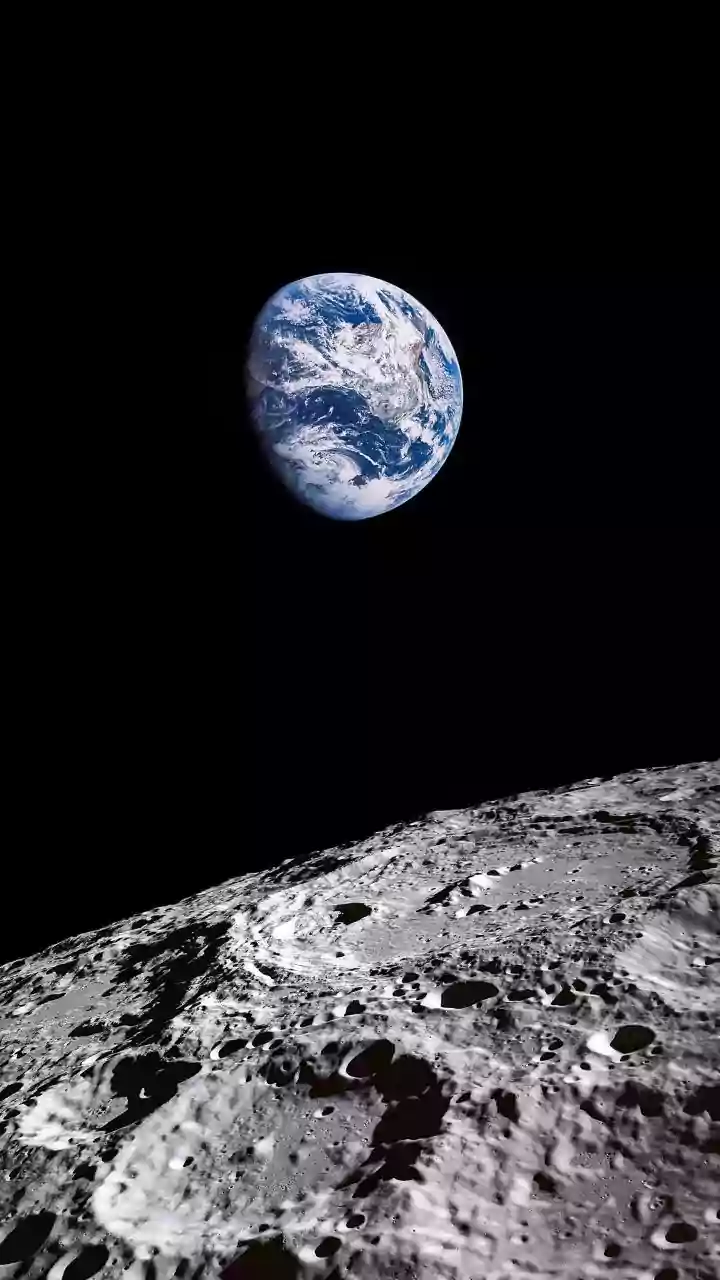
The first step is finding the water. It’s not flowing in rivers; it’s locked as ice crystals mixed with lunar soil, or regolith. This icy mixture is concentrated in Permanently Shadowed Regions (PSRs) near the Moon's poles. These are some of the coldest
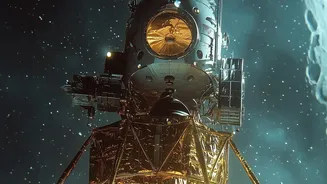
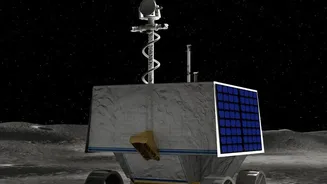
spots in the solar system, having been shielded from direct sunlight for billions of years. To locate and analyze these deposits, NASA is relying on a new generation of robotic explorers. Through its Commercial Lunar Payload Services (CLPS) initiative, NASA partners with private companies to send rovers and landers to the surface. These machines will be equipped with instruments like drills and mass spectrometers to map the distribution and purity of the water ice, confirming exactly where the most valuable resources are located.
From Solid Ice to Liquid Water
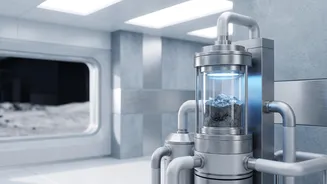
Once an icy patch of regolith is identified, robotic miners will get to work. The process involves excavating the frozen soil and moving it to a processing plant. Inside a contained unit, the regolith is heated to hundreds of degrees. This causes the ice to skip the liquid phase and turn directly into water vapor, a process called sublimation. The soil is left behind, while the water vapor is collected. This vapor is then channeled into a cold trap, a much cooler part of the system where it condenses back into liquid water. This initial water will likely be mixed with other trapped volatile compounds and dust, requiring a purification step before it's ready for the next stage. Several methods are being tested to ensure the water is clean enough for its critical future uses.
The Magic of Splitting Water
This is where basic chemistry becomes the key to survival in space. The purified water is moved to an electrolyzer. Electrolysis is a process that uses electricity to split water (H₂O) into its two core components: hydrogen and oxygen. An electric current is passed through the water, causing the oxygen atoms to collect at one electrode (the anode) and the hydrogen atoms at another (the cathode). It’s a well-understood and reliable technology on Earth, but engineers are now designing rugged, compact systems that can perform flawlessly in the harsh lunar environment. These electrolysis units are the heart of the resource-generation plant, transforming a simple molecule into two of the most valuable resources in space.
Two Essential Products, One Process
The output of electrolysis yields two incredibly valuable products. The first is oxygen. This is, of course, essential for creating a breathable atmosphere inside astronaut habitats and rovers. But its other major use is as a rocket propellant oxidizer. When combined with fuel, liquid oxygen provides the powerful thrust needed for rockets to launch from the lunar surface, either returning to Earth or heading for more distant destinations like Mars. The second product is hydrogen, which is the other key component of the most efficient rocket propellant. By producing both components on the Moon, NASA can essentially create an extraterrestrial refueling station. This capability is known as In-Situ Resource Utilization, or ISRU.
Why This Changes Everything for Space Exploration
The ability to generate water, oxygen, and rocket fuel on the Moon is a complete game-changer. The biggest challenge for deep space exploration is the sheer amount of mass that needs to be launched out of Earth's strong gravity. Every gallon of water or pound of fuel is incredibly expensive to transport. By manufacturing these supplies on the Moon, the Artemis program can dramatically reduce its dependence on Earth-based supply chains. This makes long-duration missions more sustainable, affordable, and safer for astronauts. It transforms the Moon from a temporary visiting spot into a true logistical hub—a foundational step that will enable humanity to establish a permanent presence and prepare for the even greater journey to Mars.