


A Glimpse into Alien Skies
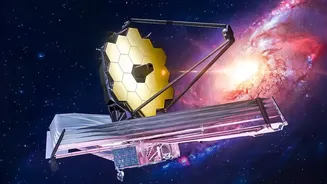
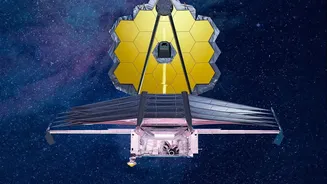
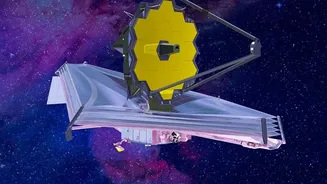
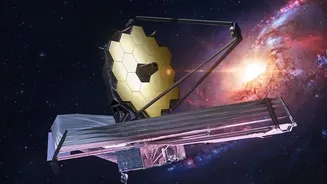
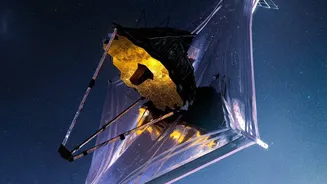
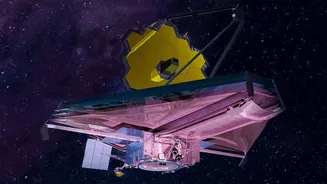
The James Webb Space Telescope (JWST) has once again demonstrated its remarkable power, providing clear evidence of water vapour in the atmospheres of planets far beyond our solar system. This capability allows astronomers to analyse the chemical makeup
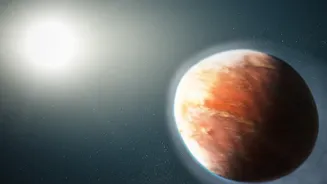
of these distant worlds, a crucial step in understanding planetary formation and identifying which planets might have the right conditions for life. The detection of water, even on inhospitable gas giants, showcases the telescope's sensitivity. For instance, observations of planets like WASP-18 b, a 'hot Jupiter' with scorching temperatures, have revealed subtle water signatures. It’s a feat that was difficult with previous telescopes, but JWST’s advanced instruments are making it almost routine, paving the way for a deeper understanding of the diverse range of planets in our galaxy.
The Power of Infrared Light
So how does JWST 'see' water from hundreds of light-years away? The magic is in its ability to see infrared light. When a planet passes in front of its host star from our point of view—an event called a transit—the starlight filters through the planet's atmosphere. Different molecules in that atmosphere absorb specific wavelengths, or colours, of light. Water vapour, for example, blocks very specific shades of infrared light. The JWST is equipped with a suite of incredibly sensitive instruments, like the Near-Infrared Spectrograph (NIRSpec) and Mid-Infrared Instrument (MIRI), that can spread this filtered starlight into a spectrum, much like a prism creates a rainbow. By looking for the dark lines in this spectrum where light is missing, astronomers can identify the definitive chemical fingerprint of water.
The Search for Habitable Worlds
Finding water is a monumental step in the quest for habitable planets. On Earth, liquid water is essential for every known form of life. While detecting water vapour in the atmosphere of a gas giant or a scorching hot rocky planet doesn't mean we’ve found an ocean, it’s a critical proof of concept. It confirms that a fundamental ingredient for life is common throughout the galaxy and, more importantly, that we have the technology to find it. The goal is to eventually use this same technique on smaller, rocky planets orbiting within their star's 'habitable zone'—the region where temperatures could allow for liquid water on the surface. Discoveries of water on planets like GJ 9827d, while too hot to be habitable, show that even smaller worlds can retain water-rich atmospheres, bringing us closer to that ultimate goal.
Managing Expectations: Water Doesn't Equal Life
It's important to remember that finding water vapour is not the same as finding life. Many planets where JWST has detected water are extremely hostile. Worlds like WASP-18 b are gas giants with temperatures reaching thousands of degrees, far too hot for life as we know it. Even on rocky planets, the presence of water vapour can be complex. On the planet GJ 486 b, for example, scientists detected hints of water, but they have to carefully determine if the signature comes from a potential planetary atmosphere or from cool spots on the star itself. The atmosphere could be made of inhospitable steam, like on a world as hot as Venus. These findings are milestones in scientific capability, but they are just the first step on a long road. They refine our search, telling us what to look for and how to interpret the signals we receive from these alien worlds.
What Comes Next?
Each detection of water vapour sharpens the skills of astronomers and improves the models they use to understand exoplanets. The data from JWST is helping scientists understand how planets form, why some retain atmospheres while others don't, and what makes a planet truly habitable. Future observations will focus on smaller, cooler, and more Earth-like planets. By combining the capabilities of JWST's various instruments, scientists can build a more complete picture of a planet's atmosphere, looking for not just water, but other molecules like methane, carbon dioxide, and oxygen. This comprehensive chemical inventory could one day reveal a planet with an atmosphere that shows the telltale signs of biological processes. The detection of water is the foundational discovery that makes this exciting future possible.