



A Personal Bubble of Air
The most immediate threat in space is the vacuum. Here on Earth, we live under a constant, gentle pressure from the atmosphere. Without it, the world changes. In a vacuum, there's no oxygen to breathe, and an unprotected person would lose consciousness
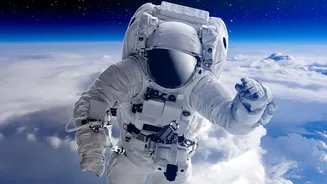
in about 15 seconds. Worse, the lack of external pressure causes a gruesome phenomenon called ebullism, where the liquids in your body, like saliva and the moisture in your tissues, would begin to boil at body temperature. A spacesuit solves this by creating a pressurized bubble around the astronaut. Modern suits, like NASA's Extravehicular Mobility Unit (EMU), are pressurized with pure oxygen at about one-third of Earth's atmospheric pressure. This is enough to keep the body's fluids stable and provide breathable air, while keeping the suit flexible enough for an astronaut to work. A backpack, called the Primary Life Support System (PLSS), not only supplies the oxygen but also scrubs the exhaled carbon dioxide, making it a complete life-support system.
Surviving Fire and Ice
In Earth's orbit, temperatures can swing wildly. An object in direct sunlight can bake at 120°C (250°F), while in shadow it can plummet to a frigid -157°C (-250°F). A spacesuit must act as a personal thermostat against these extremes. The first line of defense is the suit's outer layer, which is typically white to reflect the intense solar radiation. But the real genius is on the inside. Closest to the skin, astronauts wear a Liquid Cooling and Ventilation Garment (LCVG). This is essentially a set of long underwear woven with hundreds of feet of thin plastic tubing. Chilled water circulates through these tubes, absorbing the astronaut's body heat and carrying it away to a radiator on the backpack, where it is released into space. This system is so effective that overheating, due to an astronaut's physical exertion, is often a bigger challenge than the cold of space. For insulation, the suit uses multiple layers of aluminized Mylar, which functions like a high-tech thermos to prevent heat from leaking in or out.
A Shield Against Tiny Bullets
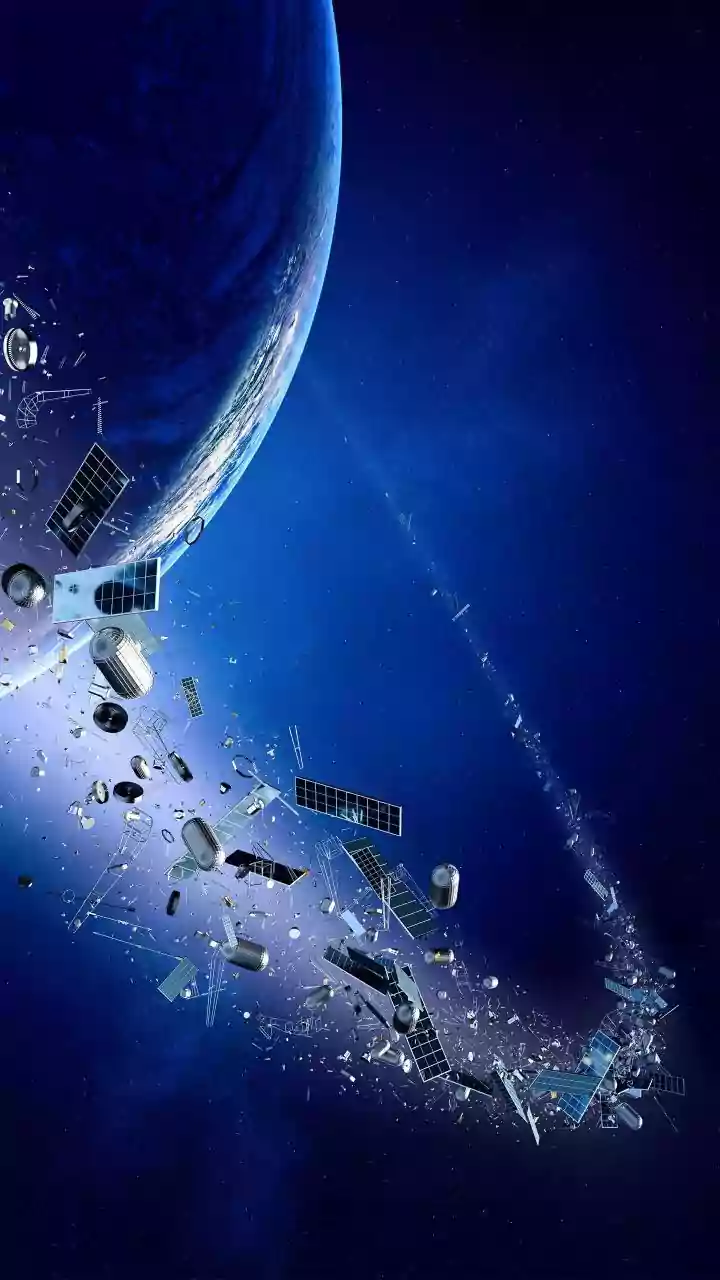
Space may look empty, but it's filled with tiny, fast-moving particles. Micrometeoroids and orbital debris, some no bigger than a grain of sand, travel at speeds of thousands of kilometers per hour. A direct hit from one of these could puncture a suit, causing a fatal depressurization. To guard against this, the outer layers of a spacesuit, known as the Thermal Micrometeoroid Garment, are incredibly tough. This garment is composed of multiple layers, including durable, slash-resistant materials like Kevlar and Nomex—the same fabrics used in bulletproof vests. These layers are designed to break up and slow down incoming particles before they can reach the critical pressure bladder inside. The suit also provides limited protection against solar and cosmic radiation. While it can't stop the most energetic particles, the layers and a special gold-coated visor on the helmet help shield astronauts from harmful UV radiation.
More Than Just Clothes
Beyond these primary threats, a spacesuit is a fully integrated system designed for work. The helmet provides a clear, wide view and has a special visor to protect the astronaut's eyes from the unfiltered glare of the sun. It also includes a communications system with a microphone and earpiece for constant contact with the spacecraft and mission control. Since spacewalks can last for over six hours, suits even have a built-in drink bag so astronauts can stay hydrated. For other biological needs, astronauts wear a Maximum Absorbency Garment, essentially a high-tech diaper, under their cooling garment. Every part of the suit, from the hard upper torso that serves as the central frame to the carefully designed joints that allow for mobility, is a piece of a complex puzzle. It is a self-contained, human-shaped spacecraft that makes life possible in the most unforgiving place we know.