




Your Simple Stargazing Toolkit
Before you start, prepare for the best experience. First, download a stargazing app on your phone. Apps like Stellarium or SkyView use your location to create a real-time map of the sky, helping you identify what you're looking at. Second, give your eyes
time to adjust. Turn off the balcony lights and avoid looking at your phone for at least 15-20 minutes. This allows your pupils to dilate, revealing fainter stars. Finally, remember that planets look different from stars. Stars twinkle, while planets shine with a steady, unwavering light.
The Main Event: Saturn at Opposition
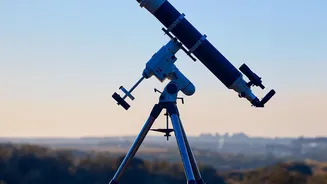
October 2026 is a banner month for Saturn. The ringed planet reaches opposition on October 4. This means Earth is directly between Saturn and the Sun, making the planet appear at its biggest and brightest for the year. It will be visible all night long, rising in the east around sunset and tracing a path across the sky until sunrise. You can't miss its bright, yellowish, and steady glow in the constellation Pisces. While you’ll need a basic telescope to see its famous rings, Saturn is a brilliant naked-eye object throughout the month, making it a perfect first target for any budding astronomer.
A Pre-Dawn Planetary Dance
Set an early alarm for a beautiful celestial gathering in the first week of October. In the hours before sunrise, look to the eastern sky. On October 5, you'll find the waning crescent Moon in a close pairing with Mars, identifiable by its distinct reddish-orange hue. The following morning, October 6, the Moon will have moved to sit near the brilliant giant Jupiter. Jupiter is one of the brightest objects in the night sky, making this trio an easy and rewarding sight for beginners.
Catch a Shooting Star: The Orionids
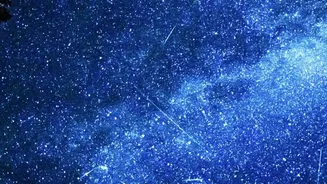
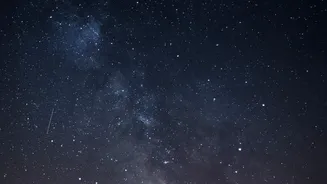
October hosts one of the year's most famous meteor showers: the Orionids. These shooting stars are actually tiny pieces of debris left behind by Halley's Comet. The shower peaks on the night of October 21-22, when you might see 15 to 20 meteors per hour from a dark location. For the best view, look up in the hours after midnight, especially before dawn. The meteors will appear to radiate from the constellation Orion, but they can streak across any part of the sky. While a bright Moon will interfere early in the night this year, it sets a few hours before dawn, leaving a dark window for some prime meteor-spotting.
Autumn's Giant Constellations
As the night deepens, you can hunt for some of the signature constellations of the autumn sky. Look high overhead for the Great Square of Pegasus, a large box-shape of four stars that forms the body of the mythical winged horse. This asterism is a fantastic landmark for navigating the autumn sky. Later in the evening, look to the east for the glorious return of Orion, the Hunter. Marked by its famous three-star belt, Orion is perhaps the most recognizable constellation in the world and a sign that the magnificent winter skies are on their way.