



Why Stepwells at Night?
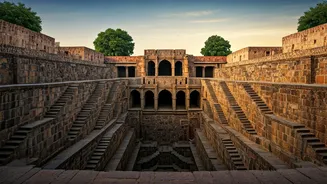
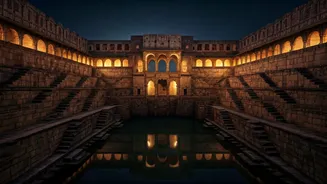
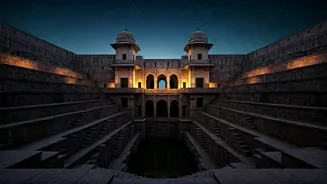
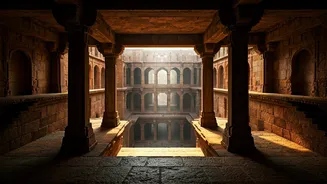
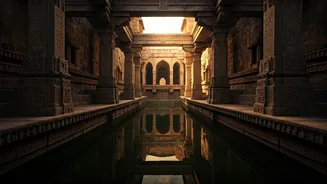
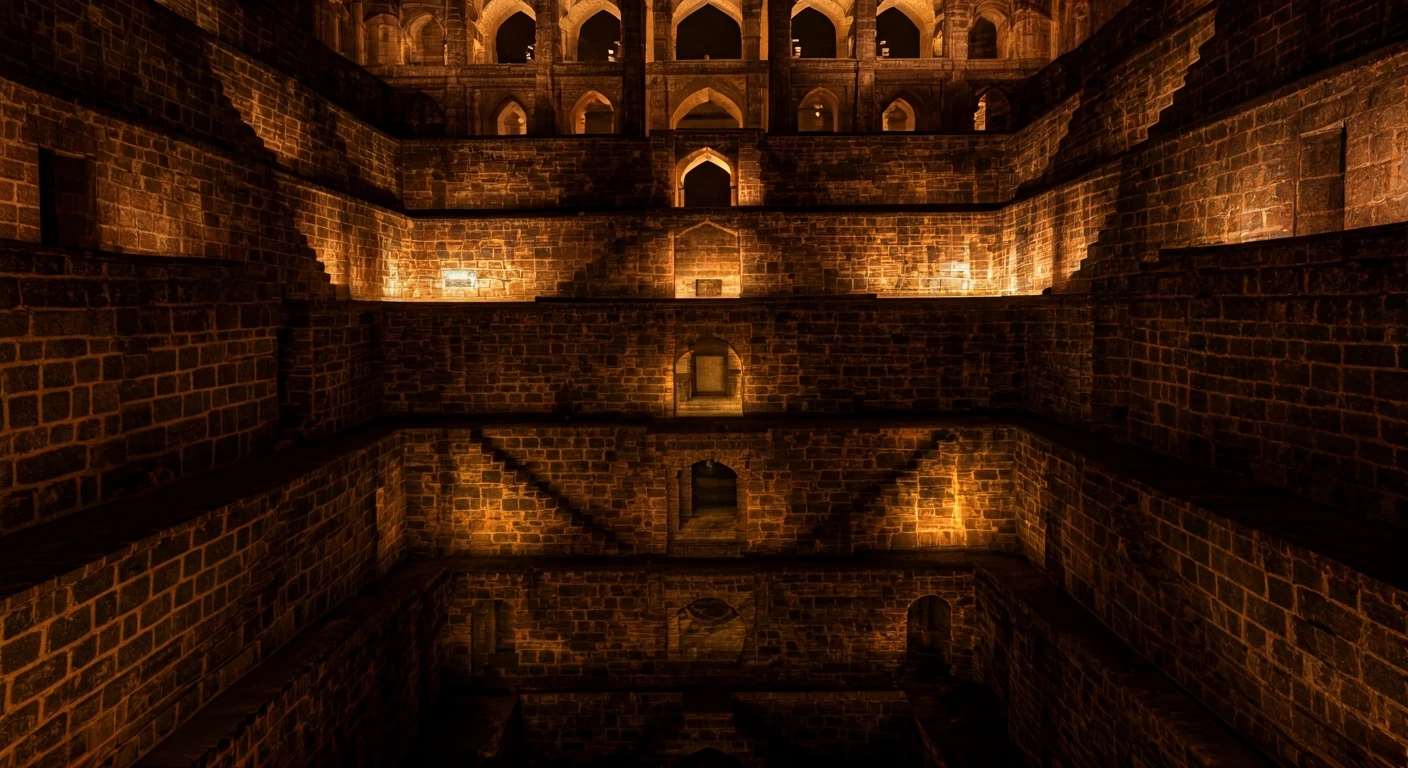
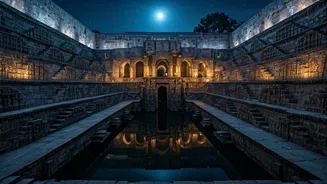
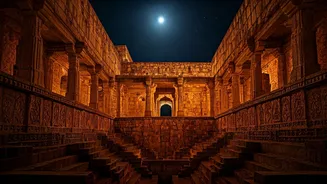
By day, India's stepwells (or baolis) are marvels of subterranean architecture, providing a cool respite from the sun. But at night, they transform. Under the stars or illuminated by carefully placed lights, their steep, symmetrical steps become a dramatic
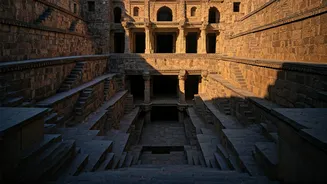
canvas of light and shadow. The oppressive heat of the day gives way to a cool, quiet atmosphere, making the experience more intimate and mysterious. For photographers, this is a golden opportunity. The high-contrast scenes allow for stunning long-exposure shots, capturing the texture of the stone and the eerie stillness of the water below. It’s a chance to see these heritage sites not just as historical monuments, but as living, breathing spaces with a completely different personality after dark.
Chand Baori, Rajasthan: A Geometric Dream
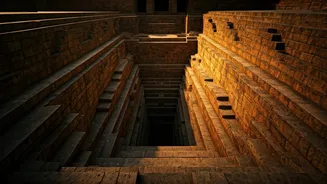
Located in the village of Abhaneri, about 95 km from Jaipur, Chand Baori is arguably India's most famous stepwell. Its staggering scale, with 13 stories and 3,500 perfectly symmetrical steps descending into the earth, makes it a photographer's dream. While public access at night can be restricted, many local guides and specialized photo tours can arrange permission or take you during sanctioned events. The way light plays across its intricate geometry is breathtaking. The sharp angles create a labyrinth of shadows, making the structure feel even deeper and more complex. Capturing the Milky Way above this 8th-century marvel is a bucket-list shot for many astro-photographers. It's an ideal anchor for a weekend trip from Delhi or Jaipur, combining history with a unique creative challenge.
Agrasen ki Baoli, Delhi: An Urban Legend
You don't even need to leave the city for this one. Tucked away amidst the high-rises of Connaught Place, Agrasen ki Baoli offers an accessible yet otherworldly experience. This 108-step-deep well has a reputation for being one of Delhi’s most haunted spots, an urban legend that only adds to its nocturnal allure. While official closing times are typically at sunset, heritage walks and photo groups often explore its periphery or capture its brooding silhouette against the city's ambient light. The contrast between the ancient, dark structure and the glow of the modern city around it creates a powerful visual narrative. Its rectangular shape offers a different compositional challenge than the square-based Chand Baori, with long, dramatic leading lines perfect for capturing its eerie depth.
Adalaj ni Vav, Gujarat: Carved in Starlight
A stunning example of Indo-Islamic architecture, the Adalaj stepwell near Ahmedabad is famous for its intricate carvings and five-story depth. Unlike other stepwells built solely for water, Adalaj was also a spiritual refuge, and its ornate pillars and galleries tell stories of a bygone era. At night, when illuminated, these carvings truly come to life. The play of light highlights the detailed floral motifs, animal carvings, and depictions of daily life, which can be lost in the harsh light of day. Its octagonal landings provide multiple vantage points for photography. Many visitors find the atmosphere here less imposing and more serene than other, larger stepwells, making it a perfect spot for a contemplative evening of photography and history.
Tips for Your Night Tour
To make the most of your trip, planning is key. First, confirm access. Many stepwells are protected monuments with strict hours, so book a tour with a reputable operator who has the necessary permissions. For photography, a tripod is non-negotiable for sharp, long-exposure shots. A wide-angle lens will help you capture the scale of the architecture, while a prime lens with a wide aperture is great for low-light detail. Don’t be afraid to experiment with your camera’s manual settings—a low ISO (if possible), a slow shutter speed, and a narrow aperture will yield the best results. Finally, travel with a companion or in a group. These sites are often isolated, and safety should always be a priority.