








The Algorithm's Gaze
Modern astronomy is a science of immense scale. Telescopes like the Giant Metrewave Radio Telescope (GMRT) near Pune and international projects generate petabytes of data, creating digital maps of the universe far too vast for any single astronomer, or even
a large team, to examine manually. To navigate this data deluge, scientists rely heavily on AI and machine learning algorithms. These digital assistants are trained to sift, sort, and classify celestial objects at incredible speeds, identifying galaxies, stars, and other phenomena with remarkable accuracy. They are the workhorses of 21st-century astronomy, finding the predictable patterns they have been taught to look for and flagging them for further study.
The Enduring Human Spark
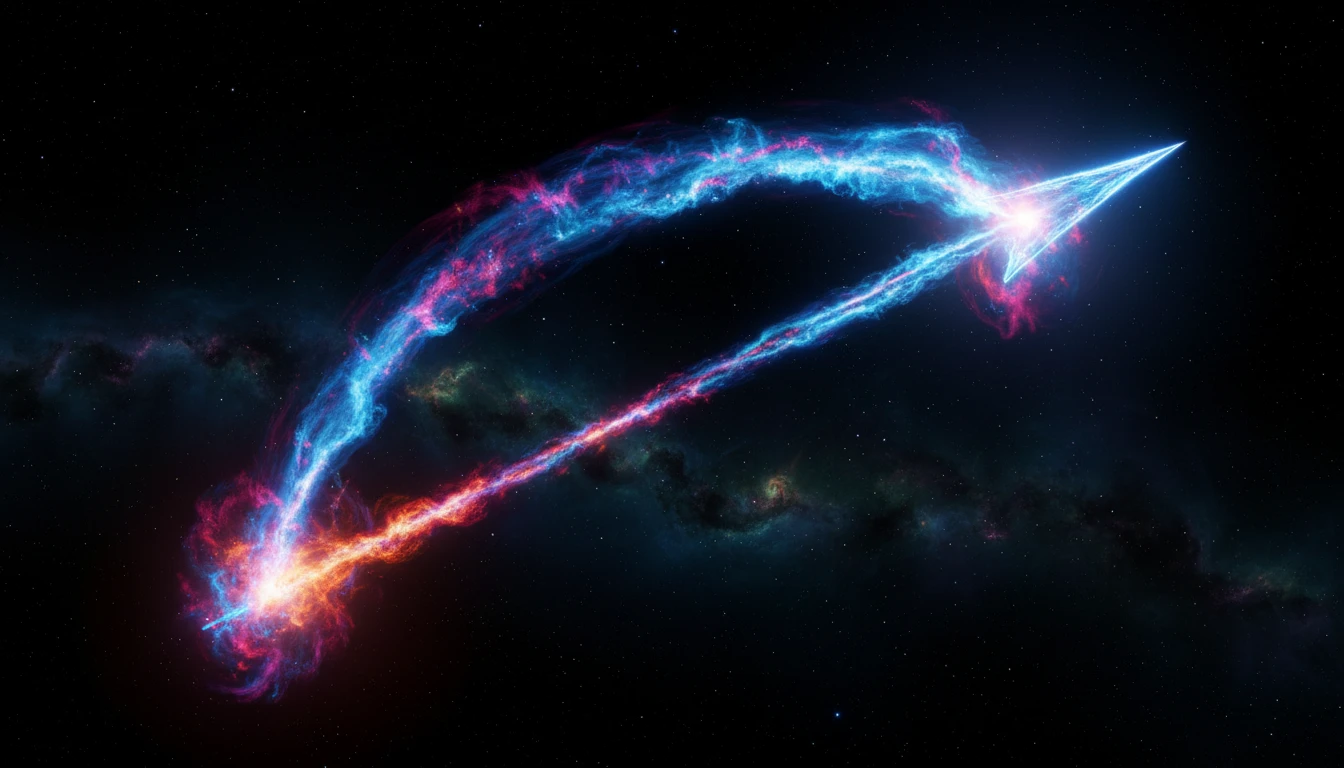
But what happens when something truly unexpected appears? Algorithms are trained on known patterns, and their great strength—speed and efficiency—can also be a limitation. They can sometimes miss the truly novel, the wonderfully weird, or the subtly unusual object that doesn't fit neatly into a pre-defined category. This is where the human eye, with its innate ability for nuanced pattern recognition, context, and intuition, remains irreplaceable. A human analyst can spot something that just looks “interesting” or “different,” an anomaly that an algorithm might dismiss as noise. This was highlighted recently when a citizen scientist discovered a unique 'bow-and-arrow' shaped radio galaxy that automated systems had previously overlooked.
A New View From the Himalayas
While there isn't one single, large-scale project under the name 'Sikkim Citizen Science Astronomy', the state represents a perfect confluence of opportunity. Sikkim's high-altitude, remote locations, and clear, unpolluted night skies offer some of the best potential vantage points for astronomy in India. This geographical advantage, combined with a growing scientific temper, sets the stage for a powerful new movement. The real-world connection was recently cemented when Pranim Limbo, a citizen scientist from a remote village in Sikkim, made a significant astronomical discovery. Working with the RAD@home network, India's first citizen science astronomy platform, Limbo was the first to spot the clues that led to the identification of the unique galaxy.
A Blueprint for Discovery
The model for this success already exists. Platforms like RAD@home, founded in 2013, train undergraduate students and members of the public to analyse complex astronomical data from telescopes like the GMRT. Participants are taught to look at multi-wavelength images, essentially combining different types of light to spot features of galaxies and black holes. This is not a passive exercise. Citizen scientists like Limbo actively participate in real research, looking for clues about galaxy evolution and other cosmic events. This collaborative model, which can be done from a laptop anywhere, proves that cutting-edge science doesn't require being physically present in a high-tech lab. It empowers individuals in places like Sikkim to contribute directly to the frontiers of knowledge.
More Than Just Stargazing
The rise of citizen science in astronomy, exemplified by the success story from Sikkim, changes more than just how we find new galaxies. It redefines who can be a scientist. It democratises access to research, fostering scientific skills and critical thinking in regions far from major urban research hubs. For every major discovery like the bow-and-arrow galaxy, there are hundreds of participants gaining invaluable skills and a deeper connection to science. These initiatives prove that in the age of big data, our greatest resource isn't just computational power; it's the collective intelligence and unique perceptive abilities of engaged human minds. It's a powerful reminder that while AI is a tool, curiosity and the ability to see the unexpected are fundamentally human traits.